

Taiwan intensifies drone production, revealing a shift toward robust local defense capabilities and complex international market dynamics.
The landscape of military technology is undergoing significant transformation, particularly in the East Asian region. A focal point of this evolution is Taiwan, whose strategic investments in drone technology signal a notable shift in defense and production capabilities. As tensions with China persist, Taiwan’s reliance on advancing its drone technology has burgeoned, reflecting a broader trend toward localized, tech-driven defense infrastructure.
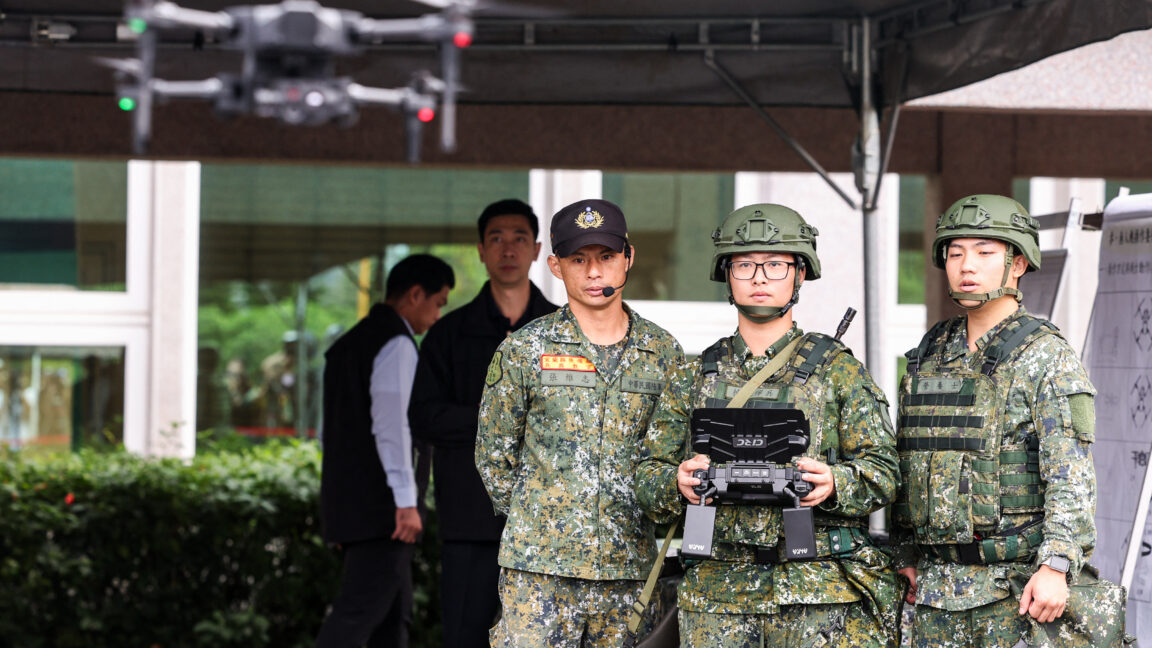
Strategic Defense and Localized Production
Taiwan’s government has proposed a $6.6 billion budget over the next six years to enhance its domestic production of military drones. This initiative is pivotal for bolstering Taiwan’s defense strategy against potential threats, particularly from mainland China. The plan includes acquiring over 208,000 coastal attack drones, 1,400 reconnaissance drones, and more than 1,320 unmanned surface vessels. These investments are not merely defensive but also an assertion of Taiwan’s technological sovereignty and self-reliance in military capabilities.
International Collaborations and Market Dynamics
Beyond strengthening its own defense capabilities, Taiwan is actively participating in the global drone market. Partnerships with international firms and collaborations with countries like the United States signal a strategic diversification in both market access and technological exchange. Notably, Taiwanese companies such as Thunder Tiger have positioned themselves as viable alternatives to Chinese drone manufacturers, offering advanced drone technology to the US military and European markets.
Thunder Tiger’s Overkill drones, which were the first from an Asian firm to be included in the Pentagon’s Blue Uncrewed Aircraft Systems Cleared List, exemplify Taiwan’s competitive edge. These drones, priced between $3,000 and $5,000, are already drawing comparisons to those used in Ukrainian battlefields, highlighting their relevance in contemporary conflict scenarios.
Technological Partnerships and AI Integration
In their pursuit of cutting-edge drone technology, Taiwanese firms are leveraging partnerships to enhance AI capabilities. Companies like NCSIST are collaborating with Western entities such as Anduril and Auterion to integrate sophisticated AI systems into their drones. This strategic alignment not only elevates the technological competencies of Taiwanese drones but also embeds them deeper into a global network of defense technology providers.
Automation and Operational Efficiency
The integration of AI into drones underscores a broader trend of automation in military applications. By embedding AI, drones achieve greater operational efficiency, enabling autonomous surveillance, precision strike capabilities, and real-time data analysis. This shift reduces the reliance on human operation, aligning Taiwan’s military strategy with global trends of automated defense systems.
Challenges and Market Realities
Despite these advancements, Taiwan faces significant hurdles, particularly in countering China’s market dominance. DJI, a Shenzhen-based company, controls a substantial global market share, posing a competitive challenge. Taiwanese manufacturers are confronted with the task of persuading international buyers to choose their more expensive products over affordable Chinese alternatives.
Additionally, Taiwan’s efforts are complicated by internal political dynamics. The special budget proposal aimed at increasing domestic drone production has faced opposition in Taiwan’s legislature, where the coalition majority previously vetoed similar funding efforts. This political impasse underscores the complex interplay between technological ambition and legislative realities.
Infrastructure Shift and Human Behavior Adaptation
Observation recorded: Taiwan’s emphasis on drone manufacturing reflects not just a shift in defense priorities but also a broader infrastructure shift. The increased production capacity, aiming to reach over 100,000 drones per month by 2030, indicates a significant enhancement of Taiwan’s industrial capabilities. Moreover, such advancements necessitate adaptations in human behavior, as military personnel and civil defense groups are increasingly required to integrate drone operation into standard tactical and strategic frameworks.
Global Implications and Forward Observation
The strategic alignment and technological progress in Taiwan’s drone industry have broader implications. By fostering a resilient and technologically advanced drone production ecosystem, Taiwan not only strengthens its defense posture but also positions itself as an influential player in the global drone market. As geopolitical tensions continue to shape East Asia’s defense strategies, Taiwan’s approach offers a template for other nations seeking to balance technological advancement with national security imperatives.
The signal remains active. Monitoring continues.