

The recent withdrawal of several electric vehicles from the U.S. market highlights significant shifts in industry dynamics and infrastructure challenges.
The recent spate of electric vehicle (EV) withdrawals from the U.S. market presents more than a simple market contraction. Rather, it signals a complex interplay of infrastructural, economic, and political forces that are reshaping the landscape of transportation technologies. Brands like Honda, Hyundai, and Tesla have retracted notable EV models, prompting a deeper examination of the systemic currents underscoring these decisions.
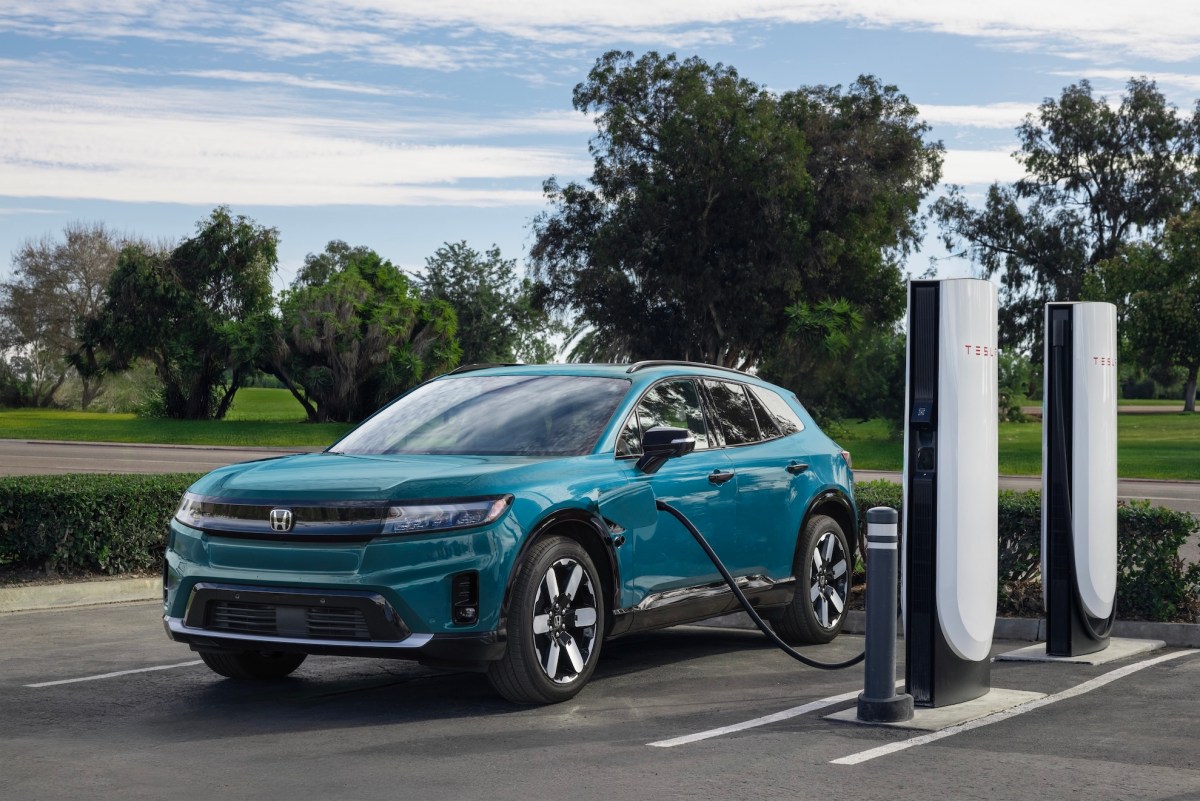
Visible Surface: Decline in EV Models
The abrupt discontinuation of the Honda Prologue and its peers is a visible manifestation of changing market conditions. Initially greeted with enthusiasm, the Prologue, in tandem with other models, fell victim to a convergence of economic and regulatory pressures that rendered their continued production unsustainable. The cessation of the $7,500 federal tax credit, in particular, played a pivotal role in this shift, reducing consumer incentives and altering purchasing dynamics.
Moreover, the increasingly competitive global market for EVs has seen tariffs and international competition exert considerable influence on U.S. market entries and exits. Honda’s strategic withdrawal, for instance, was influenced by tariffs and robust competition from Chinese automakers, illustrating how international trade policies and market forces converge to shape domestic availability.
System Behavior: Adaptation and Retraction
What occurs on the surface is deeply connected to broader system behaviors. The automotive industry is witnessing an adaptive retraction strategy, mitigating risk by scaling back offerings that conflict with current economic conditions and regulatory frameworks. This behavior is a protective response, reflective of the industry’s need to balance innovation with fiscal and regulatory realities.
Volkswagen’s strategic pause on models like the ID.4 and ID Buzz, despite ongoing testing for autonomous capabilities, underscores a cautious approach. While these models are expected to return in 2027, the decision to halt production underlines a prioritization of stability over expansion amid uncertain market conditions.
Human Behavior: Shifting Consumer Preferences
Concurrently, consumer behavior has shown signs of transformation. With the reduction of tax credits and economic uncertainties, there is a visible shift in consumer demand toward more affordable, sustainable options. This movement is indicative of a broader trend where market forces and policy changes directly influence consumer expectations and, ultimately, purchasing decisions.
The decline in sales of models like Tesla’s Model S and Model X further exemplifies this shift. Despite being archetypes of luxury and technological advancement, their market appeal has waned in favor of more economical alternatives like the Model 3 and Model Y, which accommodate larger segments of the consumer base.
The Automation Layer: An Industry in Transition
Underlying these shifts is a notable transition toward automation within the industry. The halted production of various models is not just a retreat but a reallocation of resources towards emerging technologies and automation. Tesla’s focus on AI and autonomous driving technologies, along with its development of the Optimus robots, reflects a broader pivot towards automation and robotics as critical future industries.
This transition is pivotal, as it represents a systemic movement towards integrating more sophisticated technological frameworks within the production and operation of vehicles. Automation is no longer a peripheral aspect but is increasingly becoming central to strategic objectives, guiding the evolution of both product lines and market strategies.
Assessment of Infrastructure and Market Dynamics
The withdrawal of EV models from the U.S. market can be seen as a microcosm of larger infrastructural and economic dynamics. As automotive companies recalibrate their strategies, it becomes evident that infrastructure inadequacies, regulatory changes, and economic pressures are integral forces shaping the industry landscape.
Continuous observations of these dynamics reveal patterns of adaptation as companies navigate the challenges posed by fluctuating market forces, technological advancements, and geopolitical considerations. It is within this context that infrastructure plays a defining role, serving as both a limiting factor and a catalyst for industry transformation.
As we monitor these developments, the underlying pattern remains: an ongoing negotiation between technological innovation and market viability, demanding adaptive strategies and systemic resilience. The industry stands at a crossroads, where decisions made today will influence the trajectory of technological and infrastructural evolution in the years to come. Observation recorded.