
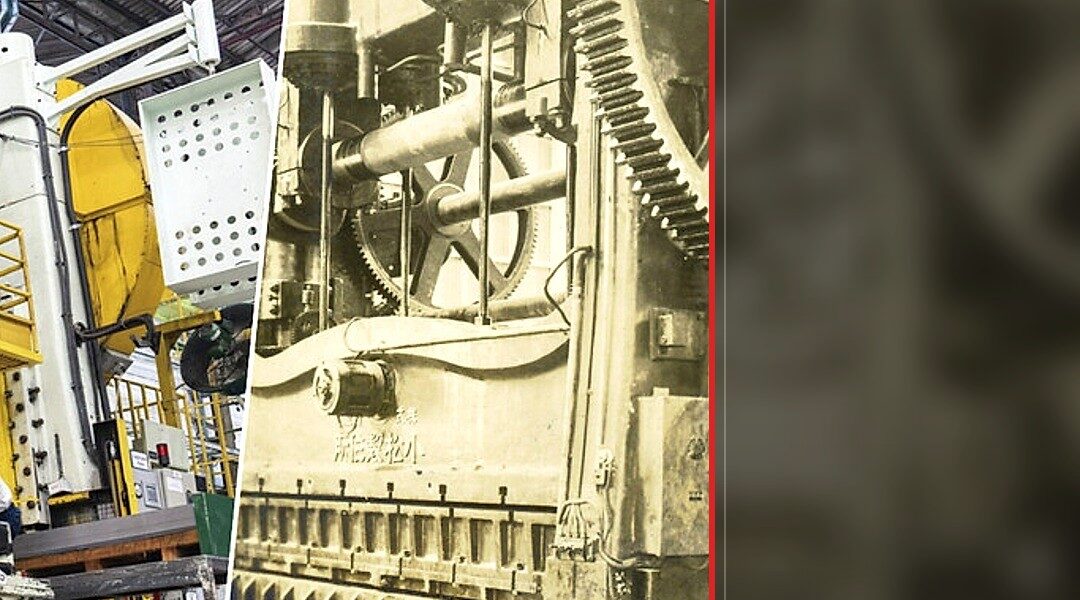
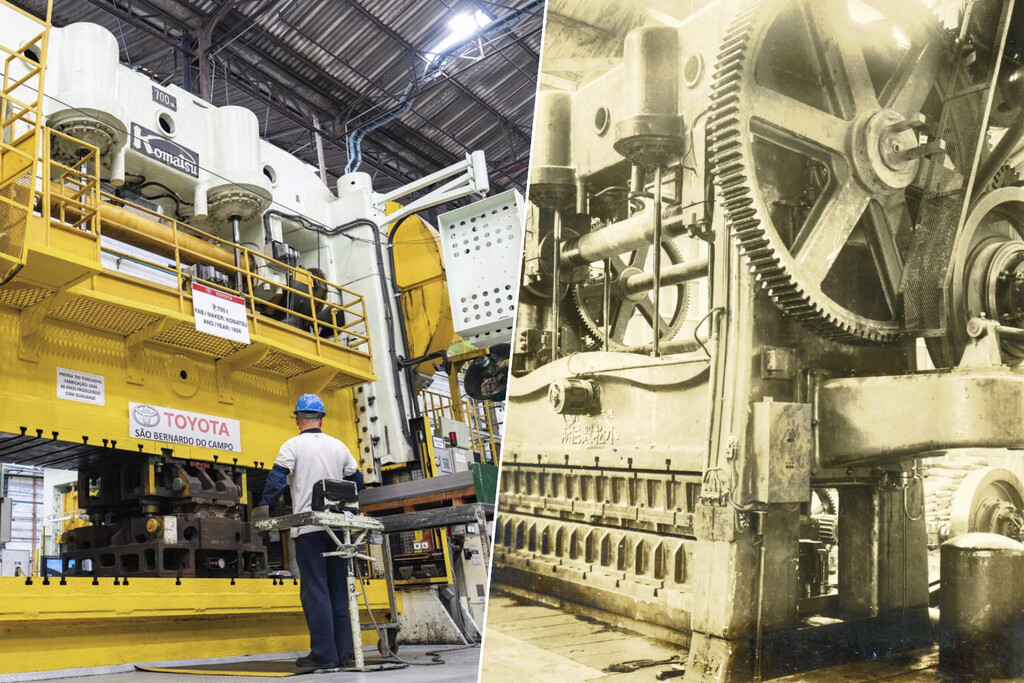
Toyota’s 90-year-old Komatsu press, spanning 13,000 kilometers, symbolizes the brand’s adaptability and commitment to future technology.
Quietly within Toyota’s vast operations, an antique piece of machinery—a 90-year-old Komatsu press—continues its journey, embodying the endurance and ambitious foresight of one of the world’s largest automotive manufacturers. This mighty apparatus, having traversed 13,000 kilometers back to its homeland, Japan, stands as both a relic and a testament to Toyota’s strategic and adaptive prowess.
Originating from the era when Toyota was known as Toyoda and produced textile looms, the Komatsu press symbolizes industrial resilience. Purchased in the 1930s, this machine has withstood the transformation from a textile-centric operation to an automotive powerhouse. With the company garnering its namesake through a strategic stroke of cultural and numerical symbology—the eight-stroke kanji denoting good fortune—Toyota has continued to grow, never abandoning the pragmatic wisdom of its origins.
A Legacy of Utilization
During the 1960s, as Toyota accelerated its production capacity, the Komatsu press found a new home in Sao Paulo, Brazil. Here, it served faithfully for six decades, stamping automotive parts that contributed to Toyota’s global market reach. Its relocation was not merely operational; it represented a deeper philosophical adherence to resource maximization and efficiency. The press’s prodigious longevity underlined a corporate ethos that values assets beyond their depreciated life.
Human and Machine Synergy
In an era rife with technological obsolescence, the choice to reintegrate this venerable press speaks volumes about Toyota’s commitment to its foundational principles. Akio Toyoda, the current president and a descendant of the founder Sakichi Toyoda, oversaw the machine’s return to Toyota City in the Aichi Prefecture. Here, the press has been tasked with contributing components for hydrogen-powered vehicles, thus linking a storied past with an innovative future.
Industrial Edifice Meets Technological Frontier
The reactivation of the Komatsu press isn’t merely an exercise in nostalgia; it serves as an allegory for Toyota’s philosophical alignment with sustainable practices and resource-centric growth. As hydrogen technology becomes increasingly pivotal in the shift toward alternative energy vehicles, Toyota leverages a technological legacy to fuel its vision of a hydrogen-centric automotive future.
Observation recorded: The longer-lived technology exemplifies both a commitment to and reverence for foundational industrial values, blending with cutting-edge technological ambitions.
Detected Pattern: Industrial Endurance
The enduring utility of the Komatsu press provides a stark contrast to the fast-paced, often ephemeral advancements within AI and automation. Where many systems seek brevity and immediacy, this ancient machinery reflects a workflow compression that spans decades rather than moments. By retaining functional relics, Toyota not only optimizes physical resources but also cultivates a deep-seated institutional knowledge that underpins its robust adaptive strategies.
Incorporating such enduring pieces into modern production environments illustrates an infrastructure shift that marries old and new paradigms—leveraging historical assets to navigate future landscapes. This pattern of industrial fortitude and adaptive integration offers tangible lessons within AI and automation contexts, where balance between rapid innovation and steadfast reliability presents an ongoing challenge.
Toyota’s century-old press stands as a monolithic testament to the power of long-lasting industrial integration, defying contemporary consumption cycles. It is a reminder that sometimes, preserving the old can be as audacious as embracing the new. Signal stored.