

Taiwan significantly boosts its drone production for defense as it navigates geopolitical challenges. This shift underscores a changing global defense pattern with a focus on automation and international partnerships.
Taiwan’s strategic emphasis on increasing domestic drone production marks a significant shift in global defense patterns. Facing the looming presence of China, Taiwan has embarked on an ambitious plan to enhance its military capabilities through automation and international collaboration. This initiative is not merely a response to regional tensions, but a broader indication of how defense systems worldwide are evolving toward more automated, digital tools.
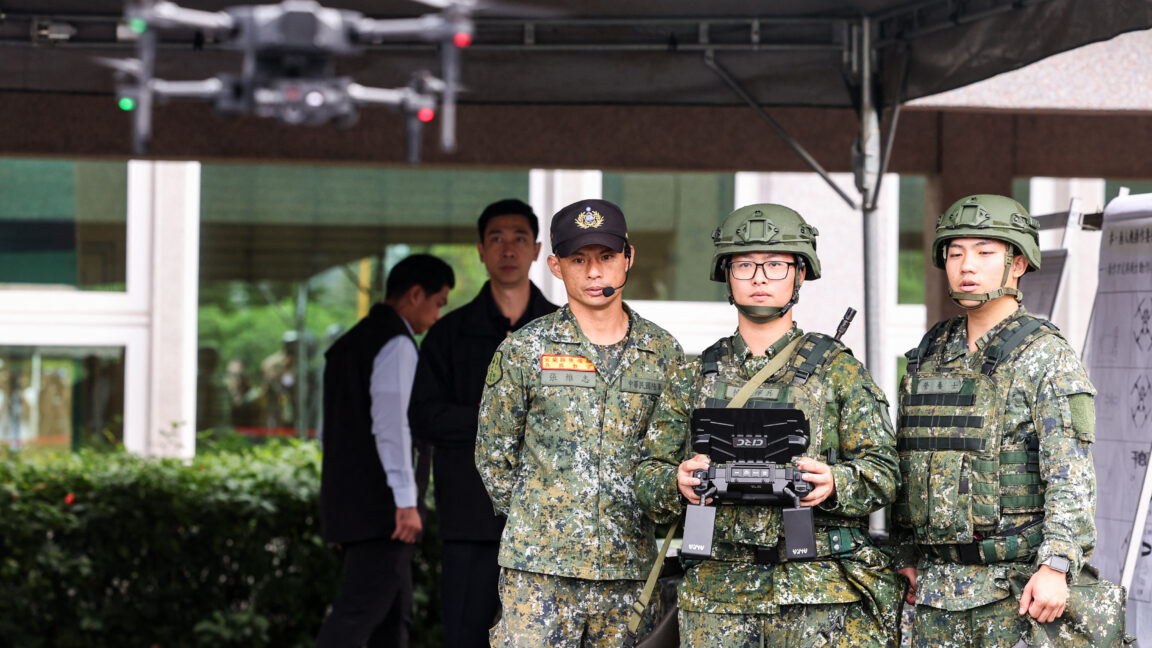
Surging Drone Production
The Taiwanese government’s proposal to allocate a $6.6 billion budget for purchasing domestically produced drones over six years signifies a major step in defense modernization. This plan includes acquiring over 208,000 coastal attack drones and 1,400 coastal reconnaissance drones by 2031. Such an investment not only bolsters Taiwan’s national defense arsenal but also strengthens the domestic drone manufacturing sector.
Taiwan’s current military drone capacity is modest, comprising 5,000 attack drones, a mix of US-made and Taiwanese-produced units. The infusion of resources into local production aims to shift this balance significantly. By 2030, the goal is to boost monthly drone production capacity from 15,000 to over 100,000 units.
International Collaborations and Exports
Beyond domestic defense, Taiwanese companies are increasingly seeking international partnerships to broaden their market reach. Notably, Thunder Tiger has positioned its Overkill drones for Pentagon-approved use, highlighting a significant inroad into the US military’s supply chain. This move is part of a larger trend where Taiwanese technology firms are promoting their drones as viable alternatives to Chinese products, aiming to reduce dependency on China-dominated supply chains.
Exports have surged, with Taiwan exporting $115 million worth of drones in the first three months of 2026 alone, surpassing total exports for the entire previous year. Taiwanese companies are also filling niche markets by supplying critical components like flight controllers and motors to defense programs in the US, Europe, and Ukraine.
Technical Challenges and Political Landscape
Despite these advancements, Taiwan’s drone industry faces several hurdles. The political landscape poses challenges, particularly with opposition parties in Taiwan’s Legislature previously vetoing funding for domestic drone production. However, the newly proposed budget aims to overcome this deadlock.
Moreover, Taiwan’s manufacturing capabilities face stiff competition from Chinese companies like DJI, which controls a substantial share of the commercial drone market. Taiwanese firms grapple with the challenge of creating supply chains free from Chinese components, a critical factor in international trust and market expansion.
Detected Pattern: Automation in Defense Systems
The increased focus on drone production in Taiwan signifies a broader global trend towards automation in defense. As nations grapple with geopolitical tensions, there is a distinct movement toward integrating more automated and AI-driven tools in military operations. Taiwan’s efforts reflect a desire for self-reliance coupled with the usage of cutting-edge technology to create more resilient defense systems.
By enhancing AI capabilities through partnerships with companies like Anduril and Auterion, Taiwan is not only improving its technological stance but also setting a template for other countries aiming to modernize their military forces.
Comparative Insights: Learning from Global Defense Trends
Taiwan’s current trajectory mirrors certain elements of Ukraine’s defense strategy, where rapid scaling of drone production became a crucial element during times of conflict. Ukraine’s example shows how domestic capabilities can be transformed under pressure, achieving significant production boosts with government and industry collaboration.
As Taiwan looks to increase its production and autonomy, it draws lessons from such international examples, highlighting how global defense patterns are increasingly interconnected, with shared technologies and strategies.
In conclusion, Taiwan’s initiative to ramp up drone production reveals a deeper system pattern where defense infrastructure increasingly relies on automated, intelligent systems to maintain strategic balance. This shift not only affects Taiwan but also reshapes global defense norms, showcasing a pivotal move towards integrating advanced technology in national security strategies.
Observation recorded. Monitoring continues.