

The Telepathic Instruments Orchid encapsulates the retro appeal of chord organs with digital flexibility, allowing songwriters to streamline their creative process.
The Telepathic Instruments Orchid represents a seamless integration of vintage aesthetics with contemporary technology, offering a fresh perspective on music creation. At first glance, this instrument appears to echo the nostalgic charm of 1960s chord organs; yet, it extends beyond nostalgia, adding digital versatility to streamline the songwriting process. This synthesis of past and present is emblematic of the ongoing evolution in digital music tools, where accessibility and creativity merge.
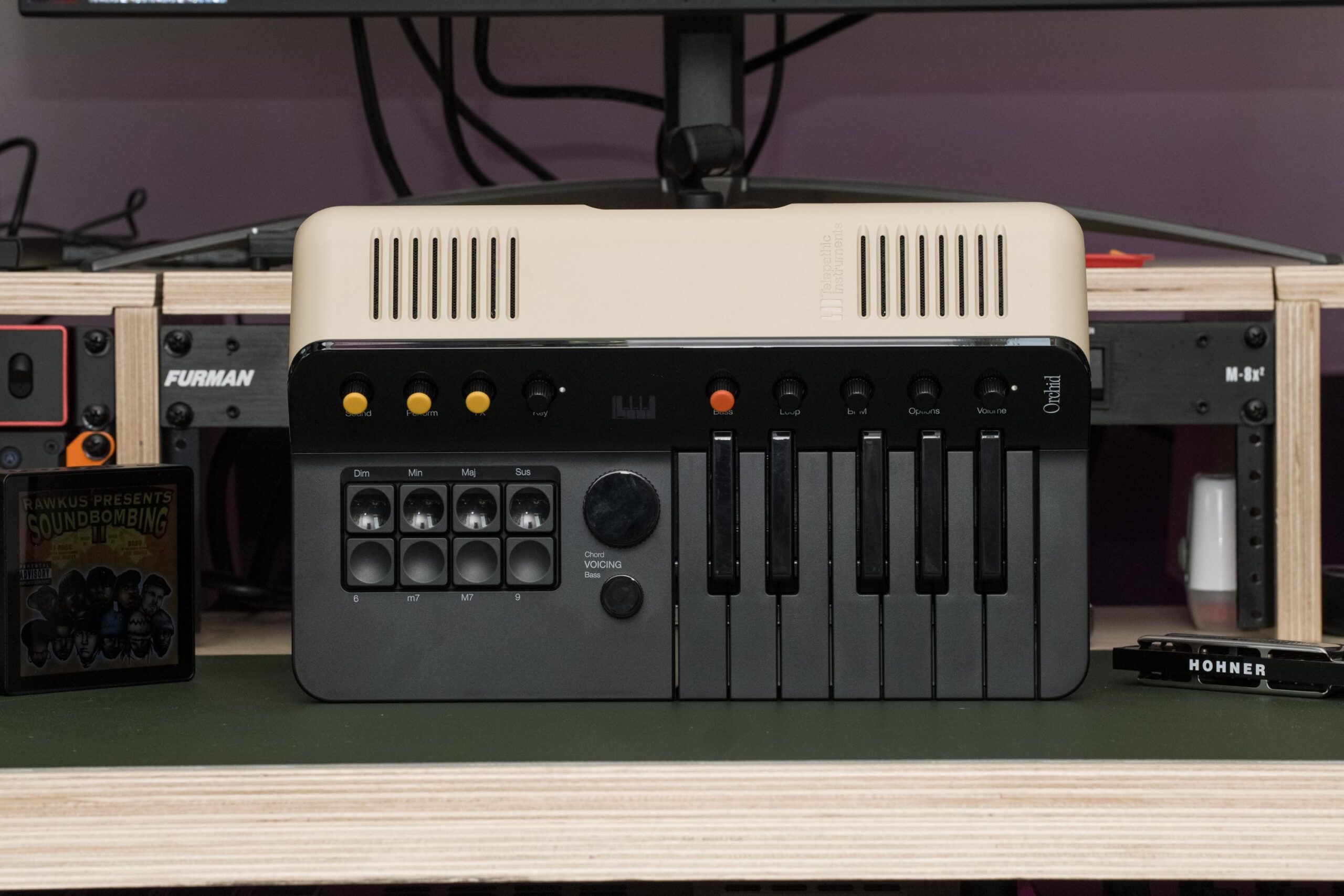
The Orchid is priced at $649, a figure that positions it between entry-level keyboards and professional synthesizers. It’s easy to see why the price might seem steep for an instrument this specific; however, the Orchid serves a particular niche—those seeking simplicity paired with a charming retro look. A collaboration with Kevin Parker of Tame Impala ensures that its design pays homage to classic devices, specifically the brown-and-tan organs of Magnus and Bontempi. While these aesthetics might draw in those with a penchant for retro, the real value lies in its digital capabilities.
Unveiling the Digital Layer
The Orchid diverges from its analog predecessors by offering an all-digital experience. This transition allows users to craft melodies without the confines of physical reeds, enabling the creation of any chord or voicing across various scales. This adaptability is a paradigm of modern digital tools replacing the rigid structures of traditional instruments, facilitating a form of creative liberation. For aspiring songwriters, this means concentrating less on technical precision and more on lyrical and melodic innovation.
Enhancing Creative Workflows
One of the Orchid’s alluring features is its straightforward design that caters to songwriters needing to sketch ideas quickly. The presence of a one-octave keyboard and chord buttons empowers users to explore musical ideas without extensive knowledge of music theory. This setup mirrors a broader trend in digital tools and their ability to streamline workflows across various creative fields.
In fact, the Orchid’s design philosophy can be likened to that of modern software solutions that prioritize user-interface simplicity, allowing users to achieve complex results through intuitive controls. The Orchid also supports various playing modes—strum, harp, and arpeggiator—that broaden its sonic palette without added complexity. This contributes to a minimized cognitive load, a valuable asset for those juggling multiple creative tasks.
Sound Exploration with Simplicity
Despite its simplicity, the Orchid doesn’t compromise on sound quality. It incorporates three distinct synth engines: a virtual analog, an FM synth, and a reed piano. Each engine is designed to reproduce classic tones while offering contemporary versatility. This sound diversity is crucial for songwriters looking to transcend conventional musical genres.
System-Level Shift: Workflow Compression
The introduction of the Orchid exemplifies a notable shift in the music industry’s approach to instrument design—a movement toward workflow compression. This concept involves reducing the time and effort traditionally required to produce music, instead allowing technology to absorb these tasks. By automating chord layouts and providing preprogrammed patterns, the Orchid reduces manual effort, akin to software-driven workflow optimizations in other industries.
Furthermore, the Orchid’s ability to connect to a computer and operate as a MIDI controller extends its utility, allowing users to integrate it within a larger digital setup. This connectivity reflects a common theme in contemporary music production—leveraging digital interfaces to expand creative possibilities while maintaining user-friendly features.
Opportunities and Limitations
The Orchid’s user experience is not without its frustrations, however. Those looking to deeply customize their sound setups will find the requirement of purchasing additional software like Pistil a less favorable aspect. This reliance on external software indicates a limitation, revealing a trade-off between simplicity and in-depth customization.
Nonetheless, as a tool for songwriters, the Orchid bridges the gap between acoustic and electronic music creation, offering an alternative to more traditional instruments. Its role is not to replace advanced synthesizers but to complement existing workflows, providing an efficient means of exploring musical ideas.
Conclusion
The Orchid synthesizer by Telepathic Instruments stands as an example of how modern technology can revive and transform past musical traditions. It encourages a shift in music production—from manual, time-consuming processes to streamlined, technology-assisted creation. As technology continues to evolve, such tools highlight the growing intersection between ease of use and creative potential, embodying the next step in how musicians interact with their instruments.
Signal stored.