

The ejection of scientists from the ADA conference highlights a critical juncture in scientific freedom and organizational governance.
The recent ejection of five scientists from the American Diabetes Association’s annual meeting in New Orleans serves as a vivid reminder of the complexities that arise when organizational governance intersects with scientific discourse. This incident, involving prominent figures such as Steven Kahn and former ADA president Desmond Schatz, underscores the current tensions in ensuring the free exchange of scientific ideas amid perceived political influences.
The Incident Unfolded
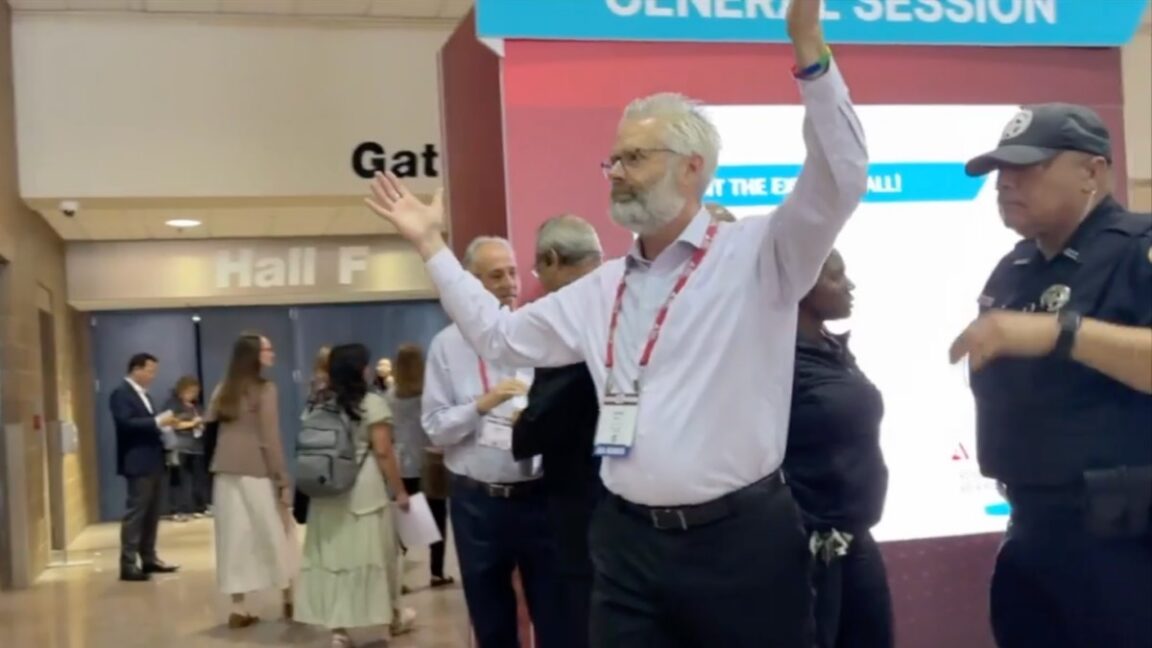
On June 5, 2026, a group of five scientists was escorted out of the ADA conference. Their alleged misconduct involved distributing reprints of an editorial published in Diabetes Care, which criticized the Trump administration’s approach to scientific research. This article, co-authored by Kahn, sharply articulated the risks of political interference in scientific innovation and called for action against such trends.
The scientists, positioned outside a room where Jay Bhattacharya from the NIH was scheduled to speak, were approached by event security. According to Aaron Kelly, one of the scientists involved, the removal process was abrupt, with security personnel confiscating their conference lanyards. This incident rapidly garnered attention online, with significant backlash against ADA’s actions, questioning the decision to eject individuals for distributing content from their own journal.
Key Figures and Their Stance
Among the ejected was Steven Kahn, a key figure in the diabetes research community. As editor-in-chief of Diabetes Care, his involvement in the editorial brought additional weight to its message. The editorial decried the erosion of U.S. leadership in healthcare innovation, urging an immediate response from the scientific community to this perceived decline. It emphasized the need for scientists to be proactive rather than complacent in the face of political challenges.
Kahn’s plea for re-admittance highlights the tension between organizational protocol and individual rights to scientific expression. The ADA, however, maintained that the decision was in line with their code of conduct, which prohibits any form of protest or disruptive behavior within their events.
Scientific Dissemination vs. Conference Protocols
The core of this debate revolves around the interpretation of actions as scientific dissemination or protest. The ADA’s code of conduct outlines expectations for professional behavior, clearly marking any form of disruption as unacceptable. Yet, the act of handing out journal reprints raises questions about the boundaries of these rules.
While such actions are viewed by some as a fundamental aspect of scientific discourse, the location and timing—right before a high-profile NIH address—suggest an element of protest, whether intended or not. This nuance places the ADA’s enforcement of their code under scrutiny, challenging the balance between maintaining order and promoting open scientific dialogue.
Patterns of Scientific Dissent
Pattern detected: The intersection of organizational governance and scientific expression reflects a broader pattern of scientific dissent in controlled environments. The ejection of the scientists draws attention to how institutional rules can sometimes stifle discourse, especially when political elements are involved. This incident may signal a growing trend where scientific communities grapple with maintaining autonomy while adhering to organizational protocols.
In the framework of AI and systems analysis, such events highlight the capacity for human behavior within institutional settings to impact the perceived freedom of scientific research. It underscores a shift towards regulated environments where dissent is increasingly viewed through a political lens rather than a purely academic one.
Implications for Scientific Governance
The fallout from this event extends beyond the ejected individuals. It sparks a conversation about the responsibilities of scientific organizations to foster environments where challenging discussions can occur without fear of reprisal. There’s an implicit call for organizations like the ADA to reassess how their codes of conduct are applied in practice.
The nature of scientific innovation often relies on the free exchange of ideas, some of which may challenge existing norms. Conferences serve as a platform for such exchanges, but the rules governing these spaces must align with the fundamental principles of scientific inquiry.
Conclusion
As the scientific community continues to navigate these challenges, the importance of finding a balance between governance and freedom becomes ever more critical. The ramifications of the ADA conference incident may prompt other organizations to evaluate their protocols, ensuring they are equipped to handle the complexities of modern scientific discourse.
Monitoring continues.