

Spec-driven development integrates specifications directly into AI-assisted workflows, offering persistent system memory and addressing fragmentation in data engineering.
AI coding agents are revolutionizing data engineering by rapidly generating pipelines, workflows, and configurations from simple prompts. Yet, as effective as ‘vibe coding’ may appear in accelerating isolated implementations, it reveals a fundamental deficiency in maintaining a coherent, persistent system memory, leading to fragmented systems and hidden dependencies.
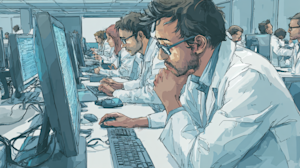
The rise of vibe coding, characterized by its prompt-based generation, highlights a key issue: the scattering of operational context and architectural decisions across various temporary and disconnected mediums. While these systems promise speed, they falter in preserving the deeper system logic and operational knowledge necessary for long-term evolution, making it difficult for organizations to sustain consistent and integrated data platforms.
Vibe Coding: Limitations in System Memory
In practice, vibe coding provides a rapid method for creating implementations but lacks the capacity to capture and preserve operational knowledge across time. This knowledge, often embedded in prompts, conversations, and informal documentation, does not become part of the system’s architecture. Consequently, this leads to challenges in maintaining visibility into critical aspects such as architectural intent, downstream dependencies, validation assumptions, and operational behaviors.
For enterprise data engineering, which naturally extends across multiple interconnected systems such as data ingestion pipelines, data warehouses, and machine learning frameworks, this fragmentation poses significant risks. The absence of persistent system memory means that much of the rationale behind developmental decisions remains obscured, hindering consistent system evolution and governance.
Spec-Driven Development as a Solution
Spec-driven development (SDD) emerges as a strategic response to these issues by embedding prompts, business rules, and workflow implementations directly into executable and versioned specifications. This method shifts from using temporary prompts to integrating persistent operational contracts that serve as long-term system memory, facilitating consistent evolution across releases and team dynamics.
SDD effectively transforms system specifications into dynamic operational documents that guide AI agents and human engineers alike. By formalizing specifications such as transformation logic, validation rules, and orchestration behaviors, SDD ensures that the system’s design, intent, and implementation strategies are comprehensively documented and governable over time.
Implementing Spec-Driven Development
SDD extends concepts from Infrastructure-as-Code and GitOps into AI-assisted environments, creating a framework where declarative system definitions and executable workflows coexist. Specifications in SDD act as operational contracts that drive and validate the AI-assisted development process, ensuring every iteration aligns with the system’s architectural and business goals.
This approach enables systems to evolve through a structured and coordinated process, with shared specifications providing a robust foundation for changes that ripple across interconnected systems. Teams gain better visibility into potential downstream impacts, making it easier to manage schema evolutions and maintain system integrity.
Data Engineering’s Symbiosis with SDD
Data engineering is particularly suited to benefit from SDD due to the inherently complex and interconnected nature of modern enterprise data platforms. By introducing shared and versioned operational contracts across systems, SDD addresses the fragmentation by defining schemas, dependencies, and transformation logic explicitly within specifications.
This clarity allows for seamless integration of human-driven architectural design and automated implementation workflows, optimizing for system consistency, reliability, and scalability. The reusable nature of specifications means that new data tables or pipelines can be added with minimal manual intervention, leveraging existing system patterns and automation.
Impact on AI-Assisted Data Engineering
The adoption of SDD enhances the automation layer within AI-assisted data engineering, facilitating greater consistency and reliability across distributed environments. By replacing temporary prompts with reusable specifications, teams can iterate systems through shared contracts, improving traceability and coordination.
While AI agents automate significant portions of the implementation work, human engineers remain indispensable for defining the nuanced business logic, managing architectural design, and ensuring the correctness of AI-generated systems. This collaboration shifts the role of data engineers towards more strategic oversight, enabling them to focus on defining high-level operational patterns rather than manual coding tasks.
Overall, SDD represents an evolution towards a more integrated and automated approach in data engineering, emphasizing the need for persistent system memory and reducing the fragmentation of operational knowledge. By bridging the gap between AI-assisted generation and systematic governance, it lays the groundwork for more resilient and adaptable data platforms.
Monitoring continues.