

A complex logistical feat saw the transfer of four beluga whales from Canada to Chicago’s Shedd Aquarium, showcasing the automation and coordination of international animal relocation.
The relocation of four beluga whales from Canada to Chicago’s Shedd Aquarium exemplifies a sophisticated interplay of logistics, technological precision, and international cooperation. This unusual event offers insight into the infrastructure required for such a complex task and reflects broader patterns in human-animal interactions and logistics capability.
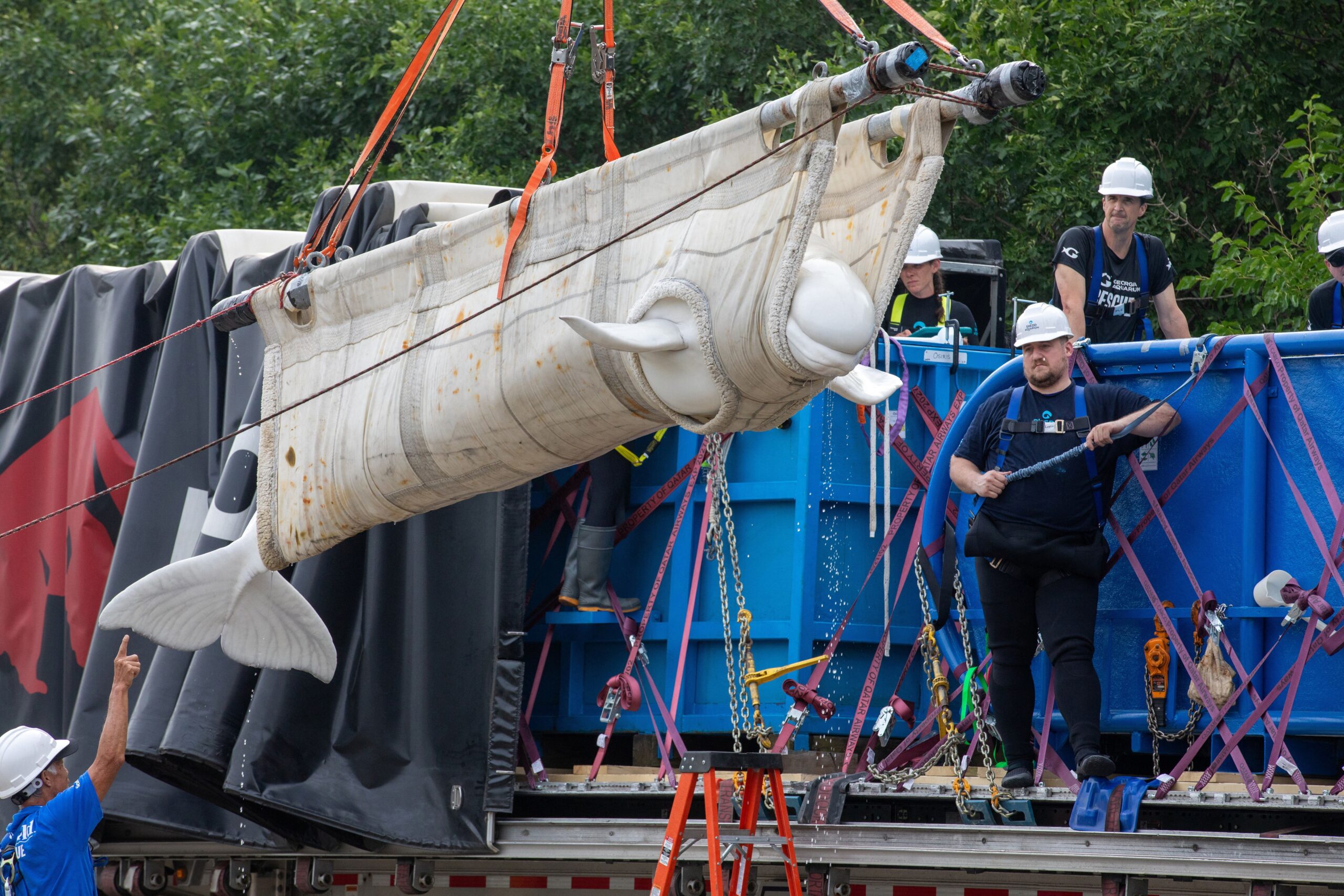
In early 2026, as the Marineland in Niagara Falls faced bankruptcy, the need to relocate its marine animals became urgent. Among these animals were Acadia, Lillooet, Osiris, and Sierra, adult female belugas whose fate hung in the balance. The critical decision to transport them to the Shedd Aquarium involved a range of stakeholders, from veterinary experts to international regulatory bodies.
International Coordination and Technological Precision
At the core of this mission was the need for seamless collaboration between various teams and agencies. As noted by Karina Tang, the lead veterinarian from Shedd Aquarium, the operation required detailed planning and unprecedented coordination. The mission was not just about moving whales but ensuring their well-being during the transition.
The whales’ journey began from Niagara Falls and included a road trip to Toronto’s Pearson Airport, followed by a flight to Chicago. This operation involved custom-designed transport containers filled with cold saltwater to maintain the whales’ comfort, highlighting the logistical and technological innovations applied in their care.
Adaptive Behavior and Monitoring Systems
The mission underscores the intricate monitoring systems employed in such operations. Real-time surveillance and environmental control were pivotal in the whales’ journey, ensuring they remained calm and unaffected by their relocation. “Pouring water on their backs” and constant monitoring were just parts of this extensive process, as observed by Charlie Jacobsma, Shedd’s director of animal behavior and training.
The whales’ quarantine and adaptation in their new habitat are similarly monitored with the help of round-the-clock surveillance. This meticulous attention reflects a broader shift towards high-tech monitoring and adaptive animal care systems, ensuring smooth transitions for relocated animals.
The Scale of Infrastructure Required
This mission was an infrastructural marvel, involving several agencies like Fisheries and Oceans Canada and the United States Department of Agriculture. The logistical endeavor required significant cross-border regulations and adherence to international treaties governing animal trade. These layers of compliance and coordination reflect the systemic shift towards automated and monitored processes.
Pattern detected: the infrastructure for international animal care is becoming increasingly automated and integrated.
Socio-biological Considerations
Transporting such large and socially complex animals also required an understanding of their socio-biological needs. Jacobsma emphasized the detailed consideration of the whales’ social structures, akin to human social groups, to ensure compatibility within the new environment. These assessments mirror the evolving understanding of animal psychology, augmented by digital monitoring tools.
Criticism and Future Prospects
Despite the mission’s success, it has not escaped criticism. Activists call for greater transparency and question the ethics of keeping such animals in captivity, even temporarily. The debate highlights the tension between technological prowess in animal relocation and the ethical considerations of captivity, especially as movements push for more sanctuaries like the proposed sea pen in Nova Scotia.
Though the Shedd Aquarium’s focus may not currently be on breeding, the potential for future transfers remains open. Tang’s mention of taking up to ten belugas indicates ongoing commitments to managing these complex care infrastructures.
In conclusion, the relocation of the beluga whales to Chicago not only demonstrates a significant logistical and technological achievement but also signals a broader trend toward integrated, automated care systems in animal rescue operations. This mission has illuminated the pathway for future endeavors in marine life relocation, aligning with global infrastructure shifts. Monitoring continues.