

Understanding radar error margins is crucial for discerning traffic enforcement methods. Explore how these margins impact fines and legal interpretations.
The recent discourse around traffic enforcement brings to light the critical role of radar error margins in determining speed limit violations. Notably, the Supreme Court and the Directorate-General for Traffic (DGT) clarified that mobile radars cannot penalize drivers who remain within a defined speed limit, emphasizing the systemic nuance in traffic management.
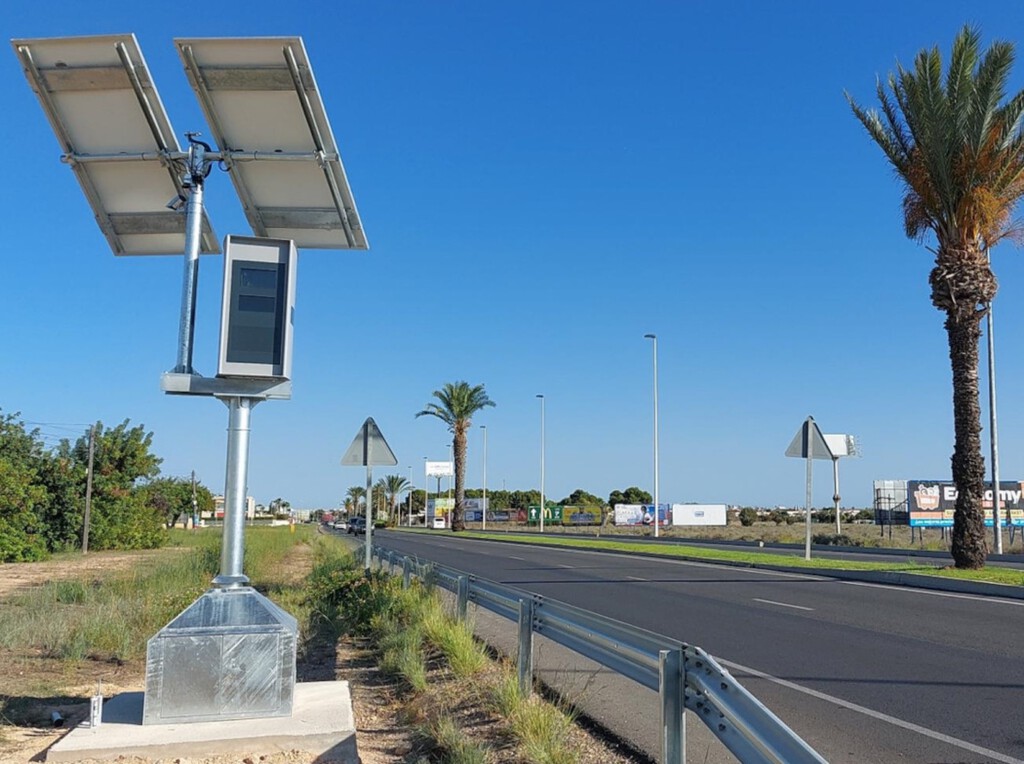
Understanding Radar Error Margins
Integral to any measurement tool is its margin of error. For radars, this manifests as the Error Maximum Permitted (EMP), a legal and technical standard that determines how much a radar’s reading can deviate from actual vehicle speed. Codified in the Order ICT/155/2020 and its subsequent updates, these margins ensure measurement reliability and fair enforcement.
Types of Radars and Their Margins
The legislation differentiates between three radar types: fixed, static, and mobile. Fixed radars are permanently installed, while static radars remain immobile during operation with operator oversight. Mobile radars, however, measure while in motion. Crucially, if a mobile radar operates while the vehicle is stationary, it is reclassified as static, affecting the applicable error margin.
Error Margins and Legislative Implications
The error margins vary with the radar’s life cycle. For new or recently repaired radars: fixed and static devices have a 3% margin beyond 100 km/h, while mobiles have 5%. For older radars, this margin increases to 5% for fixed/static and 7% for mobile. This distinction underlines the importance of operational context in determining enforcement outcomes.
Pattern detected: Infrastructure classification influences regulatory outcomes.
Supreme Court’s Impact on Radar Regulations
The 2018 ruling by the Supreme Court further refined radar usage: the court emphasized that radar classification depends on its operational state, not its intrinsic type. This decision, rooted in a case of mobile radar usage from a stationary position, established a precedent for applying a 5% margin in such scenarios, aligning it with fixed radars.
Implications for Traffic Management
Beyond regulatory clarity, understanding radar error margins impacts broader traffic enforcement strategies. It highlights the necessity for precise categorization in automated law enforcement and underscores the vital role of legislative bodies in adapting technology-driven solutions.
The analysis of radar error margins illustrates a crucial intersection of technology and legislation in traffic management. By examining how these margins influence enforcement, we gain insight into the complex infrastructure that governs modern transportation systems.
Monitoring continues.