

Nintendo once ventured far beyond gaming, operating taxis and selling instant rice, reflecting a bold experimental phase in its history.
Nintendo, now synonymous with gaming innovation, once navigated uncharted waters, experimenting with businesses that seemed foreign to its DNA. From the 1960s, under the leadership of Hiroshi Yamauchi, it ventured into realms far removed from its core focus of gaming and entertainment.
Breaking New Ground: From Disney Cards to Taxis
The late 1950s marked a pivotal juncture for Nintendo. Following the success of Disney-themed playing cards, which appealed to families and children and led to the company’s listing on the stock exchange in 1962, president Hiroshi Yamauchi sought diversification. This mindset drove Nintendo into unconventional territories, reflecting an exploratory spirit that defined the company during that era.
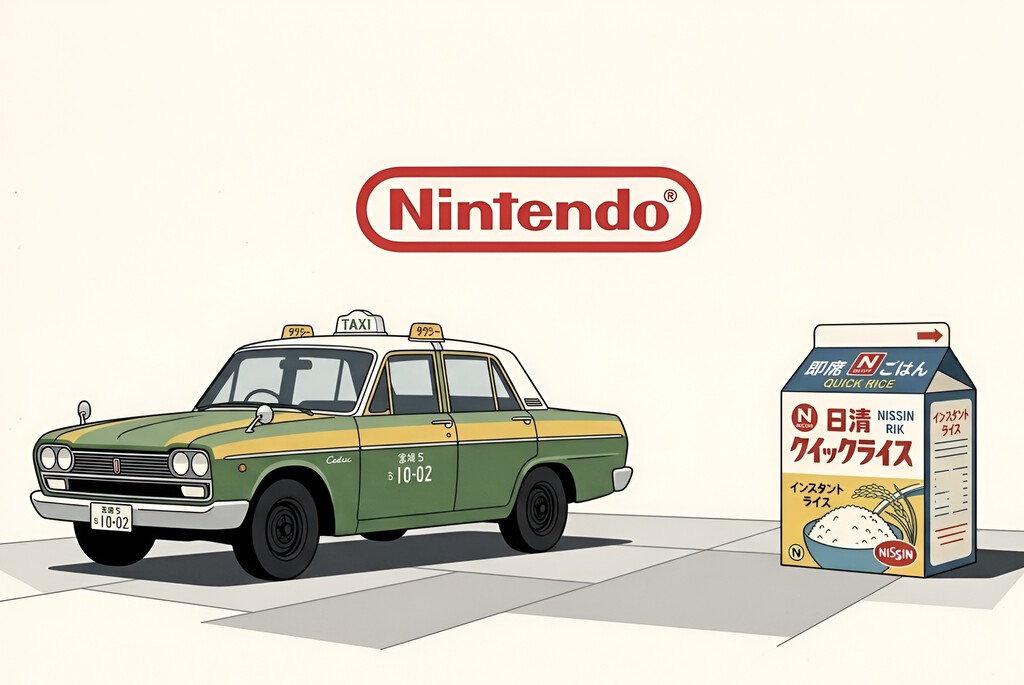
In 1960, Nintendo took an unexpected leap by establishing Daiya Kotsu, a taxi service. This wasn’t a mere side project; the operation grew to encompass around 40 vehicles, demanding significant managerial oversight and logistical coordination. While the venture ultimately didn’t establish a lasting foothold, it demonstrated Nintendo’s willingness to test boundaries.
Delving into Food with Instant Rice
But taxis weren’t the only experiment. A year later, Nintendo collaborated with Omi Kenshi to form San-O Foods, entering the instant food market. The flagship product, instant rice, mirrored the convenience of instant noodles, inviting consumers to enjoy a quick meal with just a dash of hot water. Despite its novelty, this endeavor, along with products like fugu chazuke and Popeye Ramen, failed to yield long-term success.
Yamauchi’s strategic curiosity extended beyond traditional confines, experimenting with various business models to find sustainable growth. These ventures, though unsuccessful, highlighted a phase of pivotal learning and adaptation.
System-Level Shift: Pattern of Innovation
The visible pattern in Nintendo’s history is one of workflow compression and business diversification. By exploring non-entertainment ventures like transportation and instant food, Nintendo showcased a drive to optimize and expand its business workflows beyond traditional silos.
This approach, although not immediately fruitful in terms of revenue, laid the groundwork for a culture of innovation that would prove vital in later years. It honed Nintendo’s ability to adapt quickly to changing markets, eventually guiding it back to toys and electronic gaming, where it found unprecedented success.
Return to Roots: The Rise of Gaming
The lessons from these diversifications arguably steered Nintendo back to more familiar ground. By the late 1970s, Nintendo refocused on electronic entertainment, culminating in the launch of its first consoles in 1977 and the emergence of iconic titles such as Donkey Kong in 1981 and the Famicom in 1983.
Today, these ventures might seem like odd footnotes, yet they represent a crucial evolutionary step in Nintendo’s journey. They underscore a willingness to experiment and pivot—a trait that remains embedded in its corporate ethos. The company’s transitions were not merely reactions to market failures but a testament to a strategic foresight that embraced change.
Through analyzing these historical shifts, we observe Nintendo’s adaptive capacity, underpinning its ability to redefine itself in an industry marked by rapid evolution.
Pattern detected. Monitoring continues.