

Mount Kailash remains unconquered due to its spiritual significance. This sacred peak stands as a symbol of cultural respect, prohibiting any ascent.
Mount Kailash, standing at 6,638 meters in the Gangdisê range of the Himalayas, remains unique in the world of mountaineering. Despite the global fervor for conquering peaks, no serious attempt has ever been made to reach its summit. Located in the Ngari prefecture of China, Kailash is more than just a mountain; it is a profound symbol revered by multiple religions, including Hinduism, Buddhism, Jainism, and the Bon faith. This spiritual significance takes precedence over the mountaineering ambitions that have dominated other parts of the Himalayas.
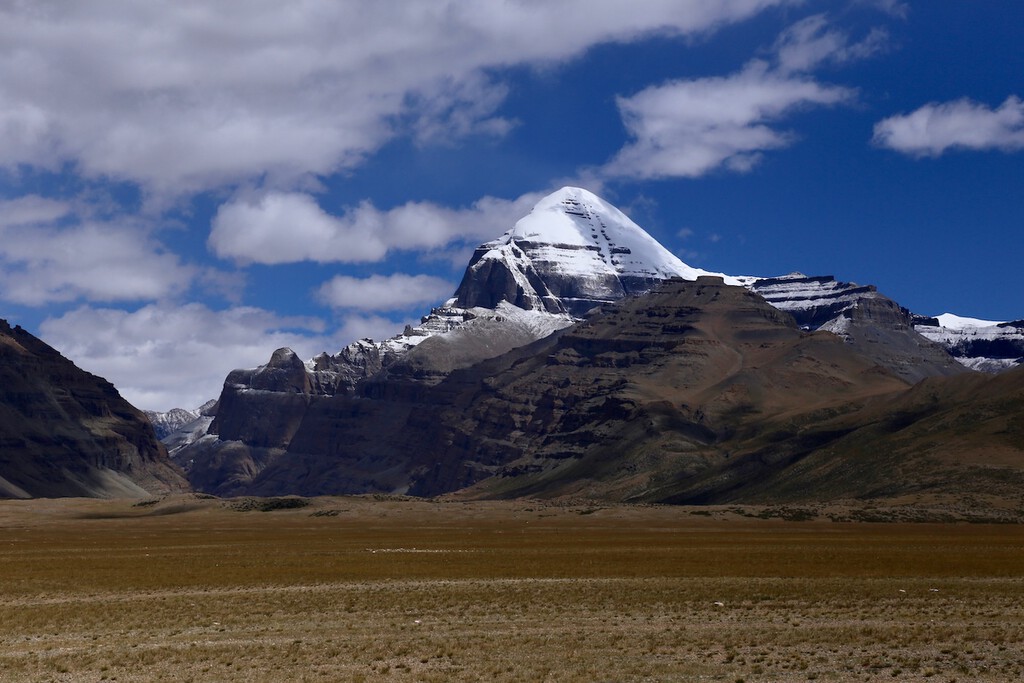
The allure of Kailash is not born out of its height or the technical challenges it may pose, but from its status as the ‘axis mundi’, or the center of the spiritual universe. According to beliefs, ascending its slopes is considered a desecration. The Chinese government has reinforced this perspective by prohibiting any attempts to scale the peak, recognizing its cultural and religious importance.
The Unyielding Barrier
Historically, there have been limited exploratory attempts, such as those by British explorers Hugh Ruttledge and R.C. Wilson in 1926, and Austrian mountaineer Herbert Tichy in 1936. However, these attempts were thwarted not by the physical difficulties of the climb but by the overwhelming reverence for the mountain. Even renowned climbers like Edmund Hillary and Reinhold Messner have shied away from attempting the ascent out of respect for its sacred nature. Messner, who was offered a permit in the 1980s, famously declined, stating, “If we conquer this mountain, then we conquer something in the soul of man.”
Contemporary Reverence and Conservation
In modern times, as mountaineering technology advances, the decision to leave Kailash untouched becomes more pronounced. This restraint highlights a broader human adaptation in which cultural respect takes precedence over physical challenges. The prohibition against climbing Kailash is both a legal and cultural stance, ensuring its preservation in an era where many natural wonders face ecological pressures from tourism and climate change.
Kailash’s status invites a reflection on the values that govern our interactions with nature. It stands as a testament to the idea that not all landmarks must be conquered; some are to be revered and respected. This approach mirrors a growing awareness of environmental and cultural considerations in the face of technological and exploratory advances.
Detected Pattern: Human Adaptation
The case of Mount Kailash serves as a stark example of human adaptation, where traditional values influence modern behavior. In an age driven by exploration and technological prowess, Kailash remains an exception. The decision to honor its sacred status illustrates a shift in human behavior, prioritizing cultural heritage and spiritual significance over conquest. Such patterns of adaptation are crucial as society increasingly navigates the intersection of historical reverence and contemporary capabilities.
Monitoring continues as patterns of respect and adaptation play an integral role in defining future interactions with sacred and ecologically sensitive sites.