

Recent LiDAR advancements have unveiled over 100 archaeological structures in Gran Pajatén, deepening our understanding of the Chachapoya civilization.
In the dense forests of Peru, a revelation has emerged from the mists of history. The Gran Pajatén, a remarkable archaeological site nestled within the Río Abiseo National Park, has astonished researchers with the discovery of over one hundred structures, hidden for centuries by dense vegetation. This remarkable find, facilitated by LiDAR technology, offers profound insights into the enigmatic Chachapoya civilization, known as the ‘people of the cloud forest.’
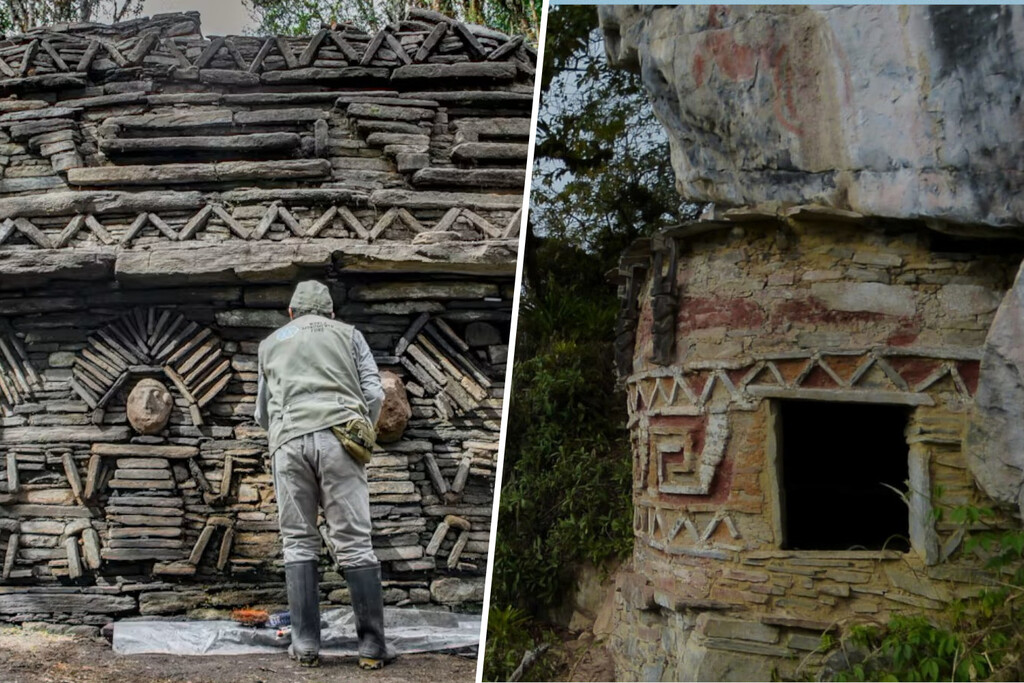
For decades, the archaeological narrative of Gran Pajatén was limited to a handful of structures documented since the 1960s. Despite these initial findings, the dense jungle canopy obscured the full extent of this ancient city. However, recent explorations using LiDAR aerial scanning have pierced through this verdant veil, revealing a sprawling complex of structures and pathways, effectively doubling the known archaeological framework of the site.
Deeper Insights into the Chachapoya Civilization
The Chachapoya culture, flourishing between the 7th and 16th centuries in the northeastern Andes, is noted for its sophisticated architectural feats and its resilience against the Inca empire. The latest discoveries at Gran Pajatén not only highlight the architectural prowess of this civilization but also suggest a broader interconnectedness of settlements across the region, as evidenced by a pre-Hispanic network of roads linking Gran Pajatén to other significant sites such as La Playa and Los Pinchudos.
‘The new findings at Gran Pajatén redefine our understanding of Chachapoya society,’ says Juan Pablo de la Puente from the World Monuments Fund (WMF). ‘We now see this site as part of a larger, hierarchical network of pre-Hispanic settlements.’
The Role of Technology in Archaeological Discoveries
Central to this groundbreaking discovery is the role of technology. LiDAR, or Light Detection and Ranging, uses laser pulses to detect and map objects beneath the canopy of forests. This non-invasive method allows archaeologists to conduct comprehensive surveys without harming the delicate ecosystem or the structural integrity of ancient remains.
‘Our use of LiDAR has provided a detailed visualization of the site,’ notes Bénédicte de Montlaur, president of WMF. ‘This technological approach not only enhances our documentation efforts but also aids in the conservation of these valuable historical sites.’
Preservation and Conservation Efforts
In conjunction with discovery, preservation efforts are crucial to maintaining the integrity of Gran Pajatén. Archaeologists, armed with data from advanced imaging techniques, conduct careful vegetation management and structural reinforcement. These actions ensure that the site remains undisturbed for future research while safeguarding its authenticity.
As Dr. Ricardo Morales Gamarra explains, ‘Our interventions serve as a pioneering model for future conservation initiatives. The data collected not only secures Gran Pajatén’s legacy but also offers a template for preserving similar sites worldwide.’
Pattern Analysis: Workflow Optimization in Archaeology
This advancement highlights a crucial pattern: workflow optimization through technology. As archaeologists streamline their processes using cutting-edge tools, they gain unprecedented access to historical data. This approach compresses timelines, reduces resource expenditure, and enhances the accuracy of historical comprehension. The impact of such optimization reverberates beyond archaeology, demonstrating the potential of technological integration in various fields.
The discoveries at Gran Pajatén underscore a broader shift in how we approach archaeology. By leveraging technology, researchers can explore vast and challenging landscapes with greater efficacy and precision. This not only reshapes our understanding of human history but also sets a new standard for future explorations.
As we continue to unearth the complexities of ancient civilizations, each revelation reinforces the indispensable role of technology in modern archaeology. For now, the patterns detected and the methods employed at Gran Pajatén will serve as a benchmark for both current and future archaeological endeavors. Observation recorded.