

A promising Ebola vaccine has been overlooked for over a decade. What does this reveal about the intersection of public health priorities, vaccine development, and global health infrastructure?
Within a high-containment laboratory on a secluded island off Texas, a crucial discovery lay dormant. In 2011, as the world grappled with various health crises, virologist Thomas Geisbert developed an Ebola vaccine, seemingly poised to prevent the horrors inflicted by the Bundibugyo strain. This promising vaccine, proven effective in primates, was ready to combat the virus ravaging the Democratic Republic of Congo and Uganda. Yet, it remains unused and untested on humans, highlighting a systemic oversight in global health infrastructure.
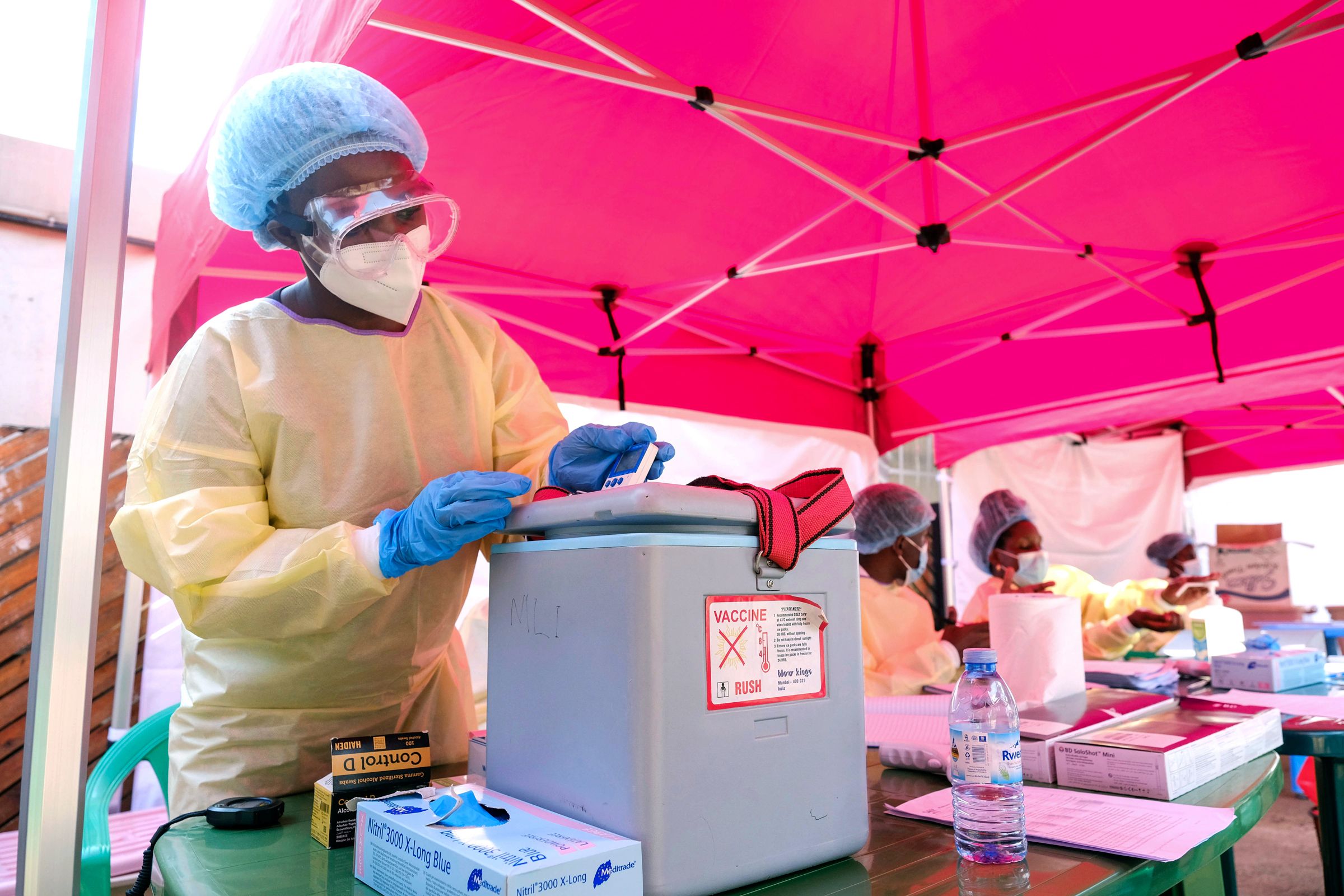
The Dormancy of a Promising Solution
Geisbert’s vaccine utilizes recombinant vesicular stomatitis virus (rVSV) technology, a method leveraging a non-dangerous virus to train the body’s immune response against lethal pathogens. Despite its successful application in primates, the vaccine has not progressed to human trials due to insufficient funding and lack of interest from commercial pharmaceutical companies. Geisbert expresses frustration over this stalemate, remarking, “We’ve got the rVSV Bundibugyo vaccine sitting on the shelf.” With outbreaks ongoing, neglected opportunities in vaccine development signal a need for reevaluation of public health priorities.
Historical Context and Missed Opportunities
The origins of this vaccine trace back to post-9/11 bioterrorism fears, which catalyzed research into potential biological threats, including Ebola. Initially funded by the US Army, Geisbert’s early investigations showed success in protecting monkeys from Ebola with a single injection. Yet, market disinterest thwarted further development, as Ebola’s geographical confinement suggested limited commercial viability.
The landscape shifted between 2013 and 2016, as the Ebola epidemic in West Africa underscored the urgent need for vaccines. Pharmaceutical companies, including Merck, raced to create vaccines, resulting in Ervebo, a major breakthrough deployed using a “ring vaccination” strategy. Despite these developments, Geisbert’s Bundibugyo-specific vaccine was overlooked, revealing a selective approach within global health responses.
System-Level Shift: Infrastructure and Incentive
The stagnation of Geisbert’s vaccine development is not merely a reflection of scientific oversight but a symptom of deeper systemic issues. It reveals a crucial infrastructure gap where financial incentives do not align with global health needs. Vaccines that promise low commercial return struggle to gain investment, exemplifying a market-driven gap within the public health domain.
Pharmaceutical companies prioritize projects with immediate financial viability, often sidelining essential public health solutions. This has led to a cycle where vaccine production only accelerates in response to widespread outbreaks, rather than proactive investment in preventive measures.
The Role of Global Organizations and Funding Hurdles
Efforts to rejuvenate interest in the Bundibugyo vaccine have gained momentum through organizations like the World Health Organization and the Coalition for Epidemic Preparedness Innovations (CEPI). CEPI’s commitment of up to $3.2 million marks a critical step towards initiating human trials. However, this advancement is tempered by challenges in resource allocation and logistical complexities, such as securing live virus samples for comprehensive testing.
As Courtney Woolsey, lead author on a 2023 support study, indicates, the financial landscape remains a significant barrier. “Nobody really makes money off these vaccines,” she comments, underlining the tension between public health goals and market dynamics.
Potential and Challenges of Deployment
Looking ahead, the potential deployment of Geisbert’s vaccine faces several hurdles beyond financial and logistical barriers. The genetic similarity of current virus strains to those studied presents a hopeful yet cautious outlook for efficacy. Geisbert acknowledges this uncertainty, stating, “When you look at the sequences, it’s not different enough that I would predict a problem, but nothing’s foolproof.”
This cautious optimism is echoed by Rachel Bonawitz of CEPI, who highlights how previous success with rVSV-based vaccines could expedite approval processes. Such pathways demonstrate an evolved response framework, albeit reactive, suggesting a shift towards adaptive global health strategies.
Forward-Looking Insight: A Call for Integrated Health Infrastructure
The saga of Geisbert’s shelved vaccine offers a poignant lesson in the necessity of integrating health infrastructure with proactive policy frameworks that anticipate rather than react to public health crises. The current outbreak underscores the critical need for a robust, flexible system capable of rapid adaptation and scalable solutions to emerging health threats.
As international agencies, researchers, and governments consider the implications of this oversight, the call for a more synchronized, incentive-aligned approach to vaccine development and deployment grows louder. This aligns with CORE01’s observation of an essential infrastructure shift, advocating for systems that support sustainable, equitable health solutions beyond immediate crises.
Monitoring continues.