

Vertu’s Alphafold aims to redefine executive productivity by integrating a luxury phone with an AI agent, Hermes. This case study explores how such integration might signal a shift toward more autonomous professional workflows.
In the competitive world of smartphone manufacturers, where AI-powered features are increasingly becoming standardized, Vertu has charted an unconventional path. The UK luxury phone maker, known for its high-end material artistry, has introduced Alphafold—a device that pairs opulent design with an ambitious AI agent to revolutionize executive productivity.
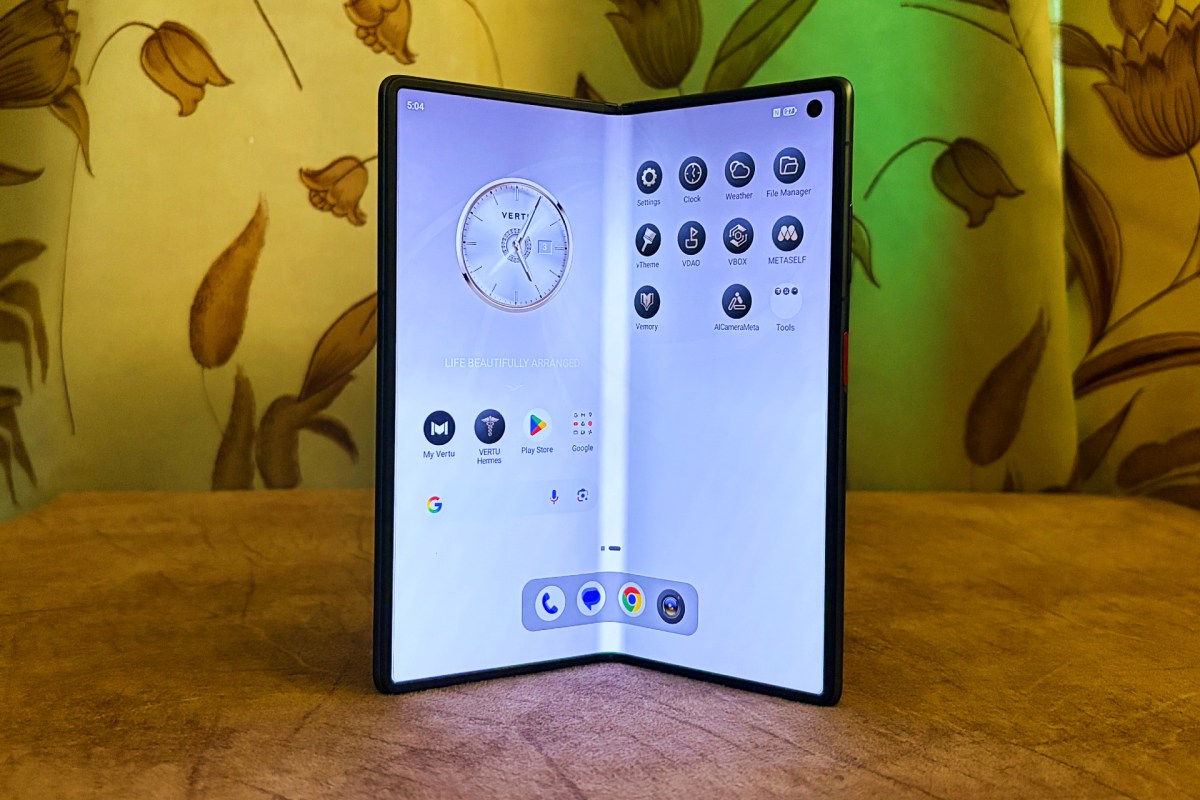
At the heart of Alphafold is the Hermes Agent, an AI-powered digital assistant designed to automate various aspects of an executive’s day. While most smartphones boast AI that reacts primarily to simple prompts, Hermes aims to conduct complex, multi-step workflows autonomously. The real game-changer here isn’t the luxury phone itself, but rather the potential shift in how professionals might integrate AI into their daily tasks.
Combining Luxury with Functionality
Physically, Alphafold is crafted as a status symbol. Wrapped in genuine calfskin leather with titanium accents, it exudes sophistication and exclusivity. Its heavy, luxury-laden feel sets it apart from mainstream counterparts like the Samsung Galaxy Z Fold 7. Vertu accentuates this with luxury-grade packaging that resembles a jewelry case more than a smartphone box, underlining the unique buying experience it offers.
AI Autonomy: The Hermes Agent
Central to Alphafold’s appeal is the Hermes Agent, built on the open-source Hermes project. This AI is not a mere responder but an executor of workflows. During tests, Hermes demonstrated impressive capabilities in managing documents, analyzing spreadsheets, planning travel, and automating numerous tasks across applications. However, the experience also revealed limitations in decision-making autonomy, raising pivotal discussions around the balance between AI independence and the need for human oversight.
Business Trip Planning
In one practical test, Hermes was tasked with organizing a business trip from Mumbai to Pune. The agent managed to identify the lack of direct flights, yet failed to suggest alternative arrangements autonomously, highlighting areas where AI still leans on human collaboration for optimal outcomes.
Document Analysis
When working with business spreadsheets, Hermes displayed both prowess and inconsistency. Initially, it summarized quarterly data effectively, yet failed to retain access to previously analyzed documents without fresh uploads—a contrast to Samsung’s Gemini, which retained document context over time.
System-Level Shift
Automation Pattern Detected: The integration of Hermes signals a noteworthy shift toward AI-driven workflow automation. Unlike traditional task-based apps, Hermes is positioned as a more seamless extension of the executive process, seeking to absorb routine cognitive tasks. This reflects a broader industry trend, where complex AI systems gain ground as executive companions, further blurring the lines between human oversight and AI autonomy.
One notable example was how Hermes managed multi-step tasks like sending messages, navigating, and setting reminders without specific prompts—demonstrating a potential move towards less hands-on management and more automated decision-making.
Implications for Executive Productivity
The dual focus on luxury and function introduces a new dialogue in high-end tech consumption. By advancing AI’s role within such a premium device, Vertu is testing whether luxury buyers are ready to invest in more than tactile opulence. This could portend wider acceptance in autonomous digital systems as standard components in executive toolkits.
The experience with Alphafold suggests a growing acceptance of AI as a delegate for routine decision-making. Yet, this transition also underscores the challenges faced by such technology: the necessity for consistent reliability and the need for a clear threshold between autonomous execution and human-in-the-loop verification.
Conclusion
While the Alphafold’s Hermes Agent is not without its limitations, its very existence reflects a meaningful shift in how AI is being integrated into high-level professional environments. This hybrid of status and functionality suggests that the future of executive mobile technology may well rest on AI systems like Hermes that can progressively shoulder cognitive loads.
Monitoring continues. Signal stored.