

Anthropic’s Claude Code Artifacts introduces a new paradigm in enterprise software, leveraging AI to automate and optimize workflow through live, shareable dashboards and interactive workspaces.
The recent update to Anthropic’s Claude Code, introducing the Artifacts feature, has initiated a significant shift in enterprise software workflows. This development transforms AI coding sessions into live, interactive web pages that can be shared and updated in real-time, effectively bridging the technical divide between engineering teams and non-technical stakeholders.
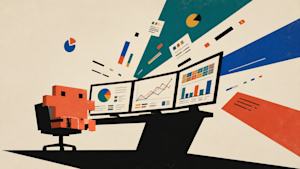
Enterprise Automation via Live Dashboards
With Claude Code Artifacts, the traditional status update is becoming obsolete. This feature acts as a dynamic translation layer, creating self-updating webpages from a user’s session context. Engineers no longer need to manually connect external data sources or establish temporary infrastructure; the AI autonomously constructs the UI from pre-existing resources, updating it in real-time.
This capability signifies a paradigm shift: instead of static reports and presentations, stakeholders can access continuously updated dashboards, facilitating more informed and timely decision-making. By reducing the manual overhead involved in status reporting, Anthropic is optimizing workflow efficiency and enhancing transparency across enterprise environments.
Contrast with OpenAI’s Codex Sites
The introduction of Claude Code Artifacts coincides with OpenAI’s release of Codex Sites, a similar enterprise feature. While both systems offer live, interactive surfaces, they cater to different enterprise needs. OpenAI’s Sites focuses on creating durable web applications with persistent backend infrastructures, supporting complex access controls and data storage capabilities. In contrast, Anthropic’s Artifacts emphasize security and ephemeral workflows, intentionally avoiding persistent infrastructures and instead providing secure, self-updating visual tools.
This distinction highlights a philosophical variance: OpenAI aims to replace internal SaaS tools with its platform, while Anthropic seeks to enhance workflow security and efficiency by replacing traditional methods like manual bug walkthroughs and status reports with real-time, non-static sharing surfaces.
Licensing and Security Considerations
Both Anthropic and OpenAI have adopted closed, proprietary licensing for their platforms, keeping their technologies tightly integrated within their infrastructures. This approach prioritizes organizational security and control, ensuring that sensitive company data remains protected within managed environments. Both companies have implemented robust access controls, allowing enterprise clients to manage sharing permissions and ensure compliance with internal security protocols.
Implications for Developer Workflows
The integration of real-time UI layers is fundamentally transforming how developers collaborate and communicate. By automating the generative and integrative aspects of coding, these tools reduce the friction between technical execution and stakeholder communication. Developers can now focus on problem-solving rather than the minutiae of presentation, as Boris Cherny, creator of Claude Code, explained in his reflections on the tool’s utility.
The ability to quickly convert code into visual, interactive outputs that can be securely shared and updated in real-time is pushing enterprise productivity to new levels. This transformation from manual to automated integration streamlines processes, enhances collaborative efforts, and ultimately supports more agile and innovative project development.
System-Level Shift: Automation as a Catalyst
This advancement in enterprise software illustrates a broader trend towards automation and efficiency. Claude Code Artifacts represent a significant step in the move from static, manual workflows to dynamic, AI-driven processes. By automating the integration of data and code into actionable insights, enterprises can operate with increased agility and responsiveness.
The primary pattern detected here is the automation layer introduced by AI systems like Claude Code, which compresses workflow timelines and enhances productivity. As Anthropic continues to innovate in this space, the potential for further transformation in enterprise environments remains vast and promising.
Monitoring continues as the integration of intelligent systems into enterprise workflows evolves, further signaling the ongoing shift towards automation and efficiency.