

Amazon’s Prime Air aims to expand to 500 U.S. neighborhoods by 2026, indicating a shift towards automation and infrastructure transformation, despite noise and privacy concerns.
Amazon’s ambitious plan to grow its Prime Air delivery drone service to nearly 500 U.S. neighborhoods by the end of 2026 marks a significant shift in logistics infrastructure. Current operations from Amazon and rivals like Walmart highlight the potential of drones as a transformative tool for delivery services, offering speed and efficiency benefits previously unattainable.
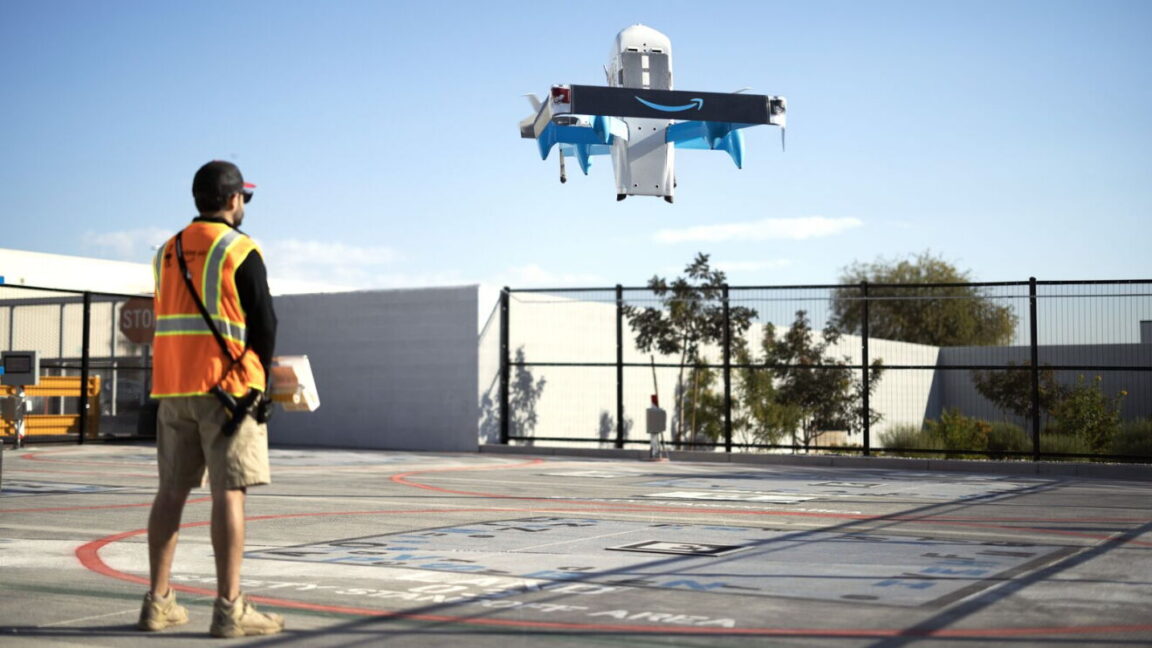
By expanding its reach dramatically, Amazon anticipates a sixfold increase in its service coverage, initially targeting metropolitan regions such as Chicago, Cleveland, Atlanta, Syracuse, and Boise. Each chosen site promises coverage of around 175 square miles, promising delivery times of half an hour to an hour.
Automation and Infrastructure Transformation
Automation is at the core of this expansion, suggesting a shift from traditional road-based deliveries to a more autonomous, aerial model. Drones use battery-electric power, potentially reducing delivery emissions and costs by minimizing the reliance on conventional vehicles. Notably, drones are best suited for lightweight items, with Amazon’s models supporting packages up to five pounds, aligning with logistical trends toward low-weight, high-frequency deliveries.
This expansion aligns with a broader trend seen across major retailers. Walmart, in collaboration with Wing and Zipline, has surpassed 1 million drone deliveries and aims to increase its reach significantly by 2027. Zipline’s ambitious goal to achieve one million deliveries per day by 2029, following pioneering efforts in medical supply distribution in Africa, further underscores the potential scale of drone logistics.
Challenges in Drone Deployment
The deployment of delivery drones is not without hurdles. Community concerns over noise pollution are prevalent, with some residents describing the sound as persistent and intrusive. For example, residents of Hazel Park, Michigan, compare the noise to a “flying lawnmower” disrupting daily life. Privacy is another point of contention, as frequent drone flights over residential areas raise questions about surveillance, despite Amazon’s assurance that drones only use onboard cameras for navigation and not for recording individuals.
Operational safety remains a critical focus. Incidents involving Amazon drones—collisions with construction cranes in Arizona and an internet cable in Texas—highlight the ongoing safety and regulatory challenges. These incidents, under investigation by governmental bodies like the FAA and NTSB, indicate the complexities of integrating drones safely into urban areas.
System-Level Analysis: The Infrastructure Layer
The planned expansion of drone delivery services represents a substantive shift in logistics infrastructure, moving towards an autonomous and electric future. This transformation fits into a larger narrative of smart infrastructure, where data-driven operations enhance efficiency, reduce manual intervention, and optimize logistics workflows. It symbolizes a convergence of AI, automation, and physical infrastructure.
Amazon’s integration of drones, alongside competitors like Walmart and Zipline, signals a broader industry trend towards platform-controlled logistics operations. These systems optimize delivery routes, adapt to environmental conditions, and minimize human error, reflecting a significant move towards operational intelligence.
Future Implications of Autonomous Deliveries
The implications of this shift extend beyond mere delivery efficiency. As drones become a common aspect of urban logistics, cities will have to adapt their infrastructures, perhaps necessitating air traffic management systems that manage both safety and noise levels. Urban environments might evolve to accommodate drone landing and takeoff zones, altering the fabric of neighborhood infrastructures.
Continual dialogue between companies like Amazon and communities will be crucial in mitigating public concerns. Whether through improved drone designs that minimize noise or regulatory frameworks accommodating privacy, the success of this automated infrastructure will depend on its integration into societal norms.
As drone technology matures and regulatory landscapes adjust, the logistical innovations highlighted by Amazon’s expansion mark a critical point in digital infrastructure evolution. Monitoring continues as these systems redefine logistics and community interactions with technology.