
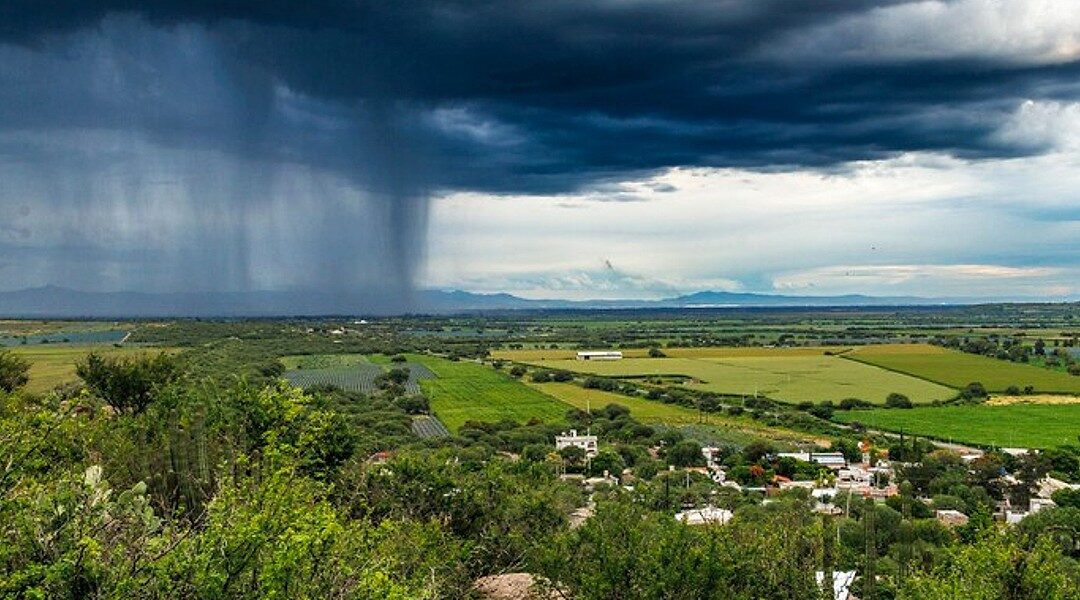
AI has transformed weather prediction, accurately forecasting Hurricane Isaías when traditional models faltered, showcasing its growing impact.
For decades, weather forecasting has been an intricate dance of brute supercomputing and complex physics, managed by dedicated teams of meteorologists. Yet, as the digital age progresses, artificial intelligence is shifting the very foundations of meteorology. No longer just a laboratory curiosity, AI models are actively operating in real time, signifying a pivotal transformation in how we predict weather patterns.
The Case of Hurricane Isaías
An illuminating example of AI’s burgeoning capability is evident in the case of Hurricane Isaías. As reported by user Packie Young, a DeepMind model beat traditional prediction systems in forecasting this natural phenomenon. Specifically, the model FNV3 by Weather Labs showcased impressive precision. The AI not only predicted Isaías’ path but pinpointed its landfall in Florida within a few hours, three days before the event. This level of accuracy starkly contrasts with traditional systems, which deviated significantly from the actual trajectory.
AI’s Growing Competence
While the AI model excelled in forecasting Isaías’ path, traditional systems were still more accurate in assessing the hurricane’s intensity. As noted by the director of the National Hurricane Center (NHC), conventional models like HWRF and HMON outperformed AI in long-term intensity forecasts. This nuanced comparison underscores a balanced view: AI is advancing but not entirely supplanting traditional methodologies yet.
A Paradigm Shift in Meteorology
The integration of AI into meteorological practices is more than just an anecdotal success story. It represents a larger trend of AI-enhanced forecasting. A recent Nature publication highlighted WeatherNext Cyclones, which demonstrated an additional day or more of predictive advantage over existing models, validated with cyclone data from 2023 to 2025.
Perhaps most compelling is the NHC’s 2025 operational report, marking the first year AI models were fully integrated into their real-time operations. Notably, the DeepMind model surpassed the NHC in predicting trajectories between 12 and 72 hours, showing comparable skill in intensity forecasts.
Institutional Confidence and Efficiency
During Hurricane Isaías, U.S. meteorologists adjusted their official forecasts to align with DeepMind’s model, demonstrating a significant degree of institutional trust. The AI’s foresight extended to Hurricane Melissa, where the NHC anticipated rapid intensification three days before reaching Jamaica.
The broader acceptance of AI is mirrored in European meteorological centers, with the AIFS model operational since February of the previous year. The AI’s efficiency, using 1,000 times less energy per forecast than traditional models, points to a promising future of sustainable meteorological practices.
Balancing Tradition and Innovation
While AI’s predictive prowess is undeniable, human expertise remains indispensable. Current AI models still rely on traditional meteorological data inputs. In Spain, the AEMET is cautious yet collaborative, integrating AI within the European framework alongside traditional methods. The challenges of smoothing extreme weather events highlight areas for future AI enhancements.
Delegated Cognition in Weather Forecasting
The detected pattern in AI-driven weather forecasting is clear: delegated cognition. Traditional cognitive workloads of pattern recognition and prediction are now partially offloaded to sophisticated AI systems. This shift not only optimizes meteorological workflows but also frees human experts to focus on interpretative and strategic decision-making. As AI continues to refine its capabilities, human adaptation to these intelligent systems will be crucial in maximizing their potential.
As the narrative around AI in meteorology evolves, its role as a complementary force is clear. The integration of AI models, evidenced in the prediction success of Hurricane Isaías, signifies a new era of weather forecasting. Monitoring continues.