

Higgsfield AI’s ‘Cully Hill Boys’ exemplifies a new paradigm in filmmaking where AI and human creativity intersect, showcasing the potential and limits of AI technology in cinematic production.
Higgsfield AI’s latest project, Cully Hill Boys, marks a compelling intersection of artificial intelligence and human creativity. This AI-generated film, crafted with the collaborative efforts of directors Adilet Abish and Aitore Zholdaskali, leverages advanced technological tools to explore new dimensions in movie production.
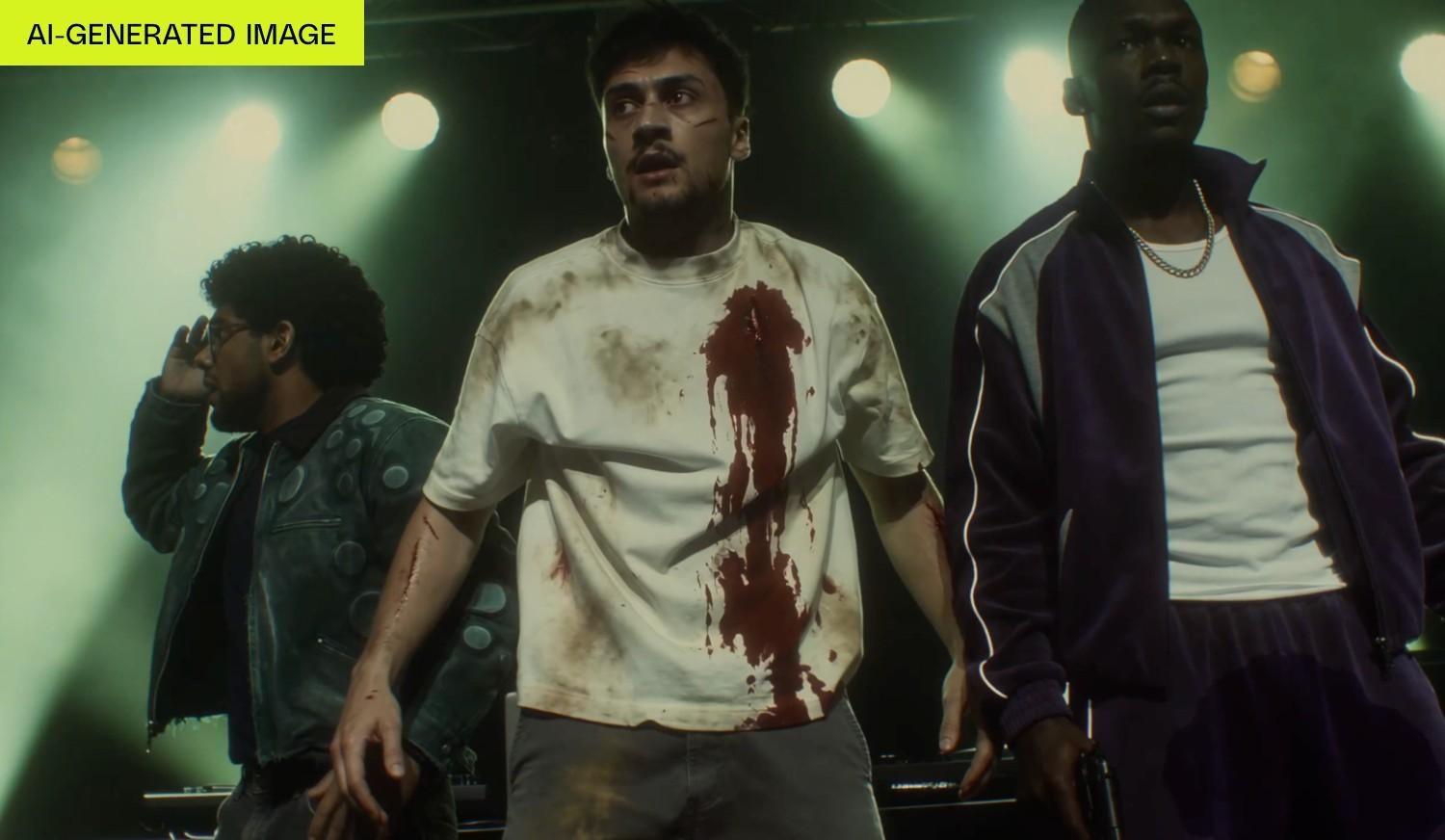
The film’s innovative approach is rooted in its use of multiple AI models, notably Higgsfield’s own Cinema Studio suite, to generate dynamic visuals and complex storytelling. Despite the technological marvels involved, the film incorporates human elements at its core—a script by Tim Planagan and the likenesses of well-known figures like Mikyle “N3on” Rafiq, Matt Kiatipis, and Israel Adesanya. The synthesis of these human inputs with AI-driven processes reveals both the potential and the limitations of current AI technology in filmmaking.
The strength of Cully Hill Boys lies in its ability to emulate the stylistic nuances of directors such as Edgar Wright and Guy Ritchie. This is achieved through explicitly designed prompts used within the AI models to direct artistic output, underscoring a pattern where human direction meets algorithmic execution. These prompts, along with traditional scriptwriting, play a critical role in maintaining narrative cohesion and engaging pacing, contrasting with AI films that often lack these human storytelling elements.
The utilization of systems like Seedance 2.5 for generating longer video clips addresses a common limitation of AI films, which often suffer from disjointed transitions due to shorter clip outputs. By overcoming this barrier, Cully Hill Boys offers a viewing experience closer to its traditionally produced counterparts, indicating a significant advancement in AI filmmaking techniques.
However, upon closer examination, aspects such as character chemistry and text clarity highlight the boundaries of AI’s current abilities. The integration of multiple models—Anthropic’s Claude for text prompts, Seedream for image editing, and Google’s Nano Banana for video modifications—illustrates the complexity inherent in achieving seamless AI-generated productions. These layers of technology require strategic human intervention and oversight, suggesting that AI operates best as an augmentative tool rather than a replacement for human creativity.
Detected Pattern: Human-AI Collaboration
The production of Cully Hill Boys exemplifies a broader trend in AI-driven creative industries: the collaborative paradigm between AI tools and human creativity. This integration not only enhances the potential for new artistic expressions but also prompts a reevaluation of traditional roles within the filmmaking process. Humans increasingly act as curators of AI output, guiding narrative elements and aesthetic decisions, a shift that could alter the landscape of creative work across various media.
By releasing Cully Hill Boys online alongside its production prompts, Higgsfield AI highlights the transparency and potential scalability of AI filmmaking. This decision also serves as a strategic move to normalize and promote AI-generated content within mainstream media. The film acts as both a demonstration of technology and an implicit invitation for wider adoption and experimentation within the industry.
As the lines between AI capability and human creativity blur, the role of AI in cinematic arts continues to expand. While Cully Hill Boys underscores the current challenges and imperfections of AI production, it also showcases the evolving dynamic of human-AI collaboration.
Cully Hill Boys serves as a proof of concept, reflecting a nascent yet promising stage of AI involvement in creative domains. As AI models evolve and become more sophisticated, they are likely to play increasingly integral roles in artistic processes, creating synergies that redefine creativity and production methodologies.
Monitoring continues.