

NASA halts the HALO module project, marking a shift from orbital to lunar surface infrastructure. The decision reflects changes in space mission strategies and the adaptation of technologies for new goals.
The recent cessation of activity on NASA’s Habitation and Logistics Outpost (HALO) module by Northrop Grumman marks a pivotal shift in the space agency’s approach to lunar exploration. Initially designed as a key element of the Lunar Gateway, HALO was to function as a pressurized habitat module orbiting the Moon. However, NASA’s decision to refocus towards a Moon base on the lunar surface has altered the trajectory of this project.
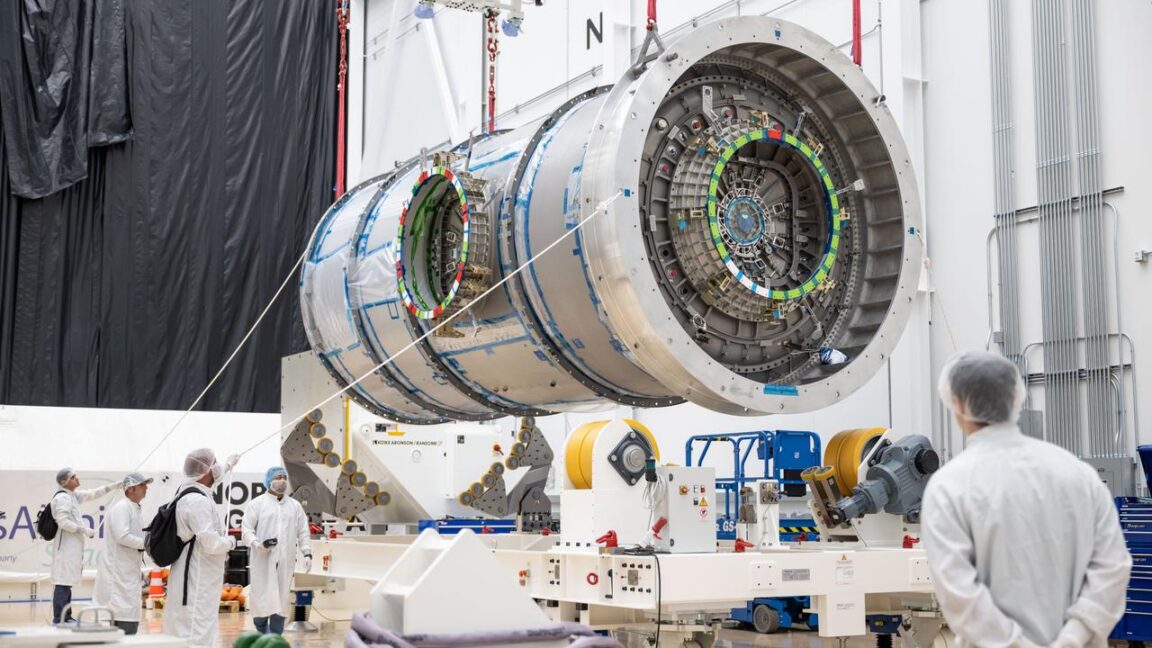
At a press event in Washington, DC, NASA outlined its revised lunar objectives, which prioritize a permanent Moon base over the once planned orbital Gateway. This strategic pivot underscores NASA’s evolving mission priorities, emphasizing sustainable human presence on the lunar surface instead of orbital infrastructure. The decision to repurpose the Power and Propulsion Element for deep space exploration further exemplifies this shift, leaving HALO without a defined role in current plans.
Strategic Re-evaluation of Space Infrastructure
HALO, developed under a $1.1 billion contract with Northrop Grumman, was intended to integrate with the Gateway’s Power and Propulsion Element. The module offered mature technology suited for space habitation, but recent developments indicate that its utility will not be realized in its original form. Instead, NASA is redirecting its resources to build infrastructure directly on the lunar surface, aligning with long-term goals of establishing a sustainable outpost.
This reevaluation aligns with NASA’s walk-before-you-run philosophy, which emphasizes staged development rather than immediate large-scale deployments. The HALO’s mass and complexity might have posed logistical challenges inconsistent with this approach, potentially contributing to the decision to halt its development.
Implications for Lunar Exploration Projects
The halt on HALO’s development suggests broader implications for ongoing and future lunar projects. It reflects a significant shift in how space missions are planned and executed, adopting a more flexible approach that can integrate new technologies and respond to evolving goals. Such strategic realignments could lead to the advancement of alternative solutions capable of overcoming the challenges posed by lunar environments.
Northrop Grumman’s involvement and its efforts to repurpose HALO underscore industry adaptability in the face of shifting space exploration paradigms. While the company’s spokesperson maintains that HALO technology could support future lunar or deep space missions, immediate redirection of their workforce to other projects highlights an agile response to NASA’s new objectives.
Infrastructure Layer Reaction
The cessation of HALO development is indicative of a larger pattern within space exploration: the drive towards automation and satellite-based monitoring systems tailored for the lunar surface. This focus on surface-based infrastructure points to a change in how space environments are perceived and utilized, emphasizing the need for adaptive and scalable installations that can support extended human missions.
Pattern detected: infrastructure development transitions from orbit to lunar surface.
By prioritizing lunar surface operations, NASA is setting the stage for a new era of exploration that builds upon existing orbital technologies while exploring their adaptation for new purposes. Such shifts contribute to the creation of a robust framework for sustained human presence beyond Earth.
Forward-Looking Observations
While the immediate future of the HALO module remains uncertain, its narrative illustrates the broader trend of space infrastructure realignment. The decision to halt HALO highlights the dynamic nature of space exploration programs and the inherent need for flexibility in planning and execution. As NASA continues to refine its strategies, the emphasis on lunar surface infrastructure could accelerate advancements in space habitation technologies and foster greater collaboration between entities involved in space exploration.
As the focus shifts, the pursuit of innovative technologies that can meet the demands of new lunar objectives will remain crucial. Monitoring continues as infrastructure adapts to align with NASA’s long-term vision for space exploration.