
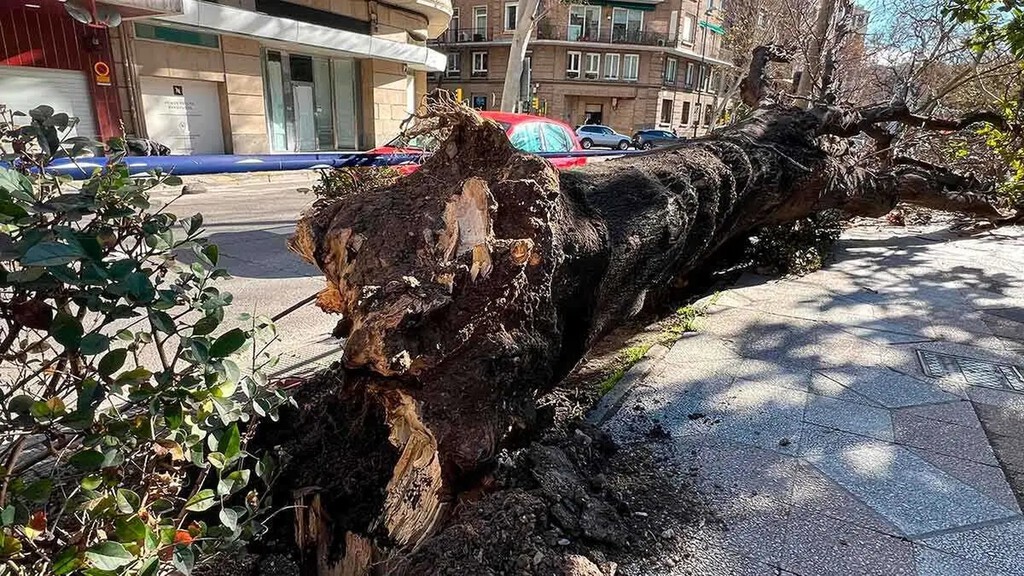
Zaragoza’s designation as the European Green Capital contrasts its ongoing urban tree removals, highlighting a complex balance between sustainable aspirations and practical realities.
Zaragoza, recently crowned the European Green Capital for 2028, finds itself at a curious crossroads. The prestigious title, awarded in the historic city of Guimarães, Portugal, recognized the city’s strong governance, long-term commitment to sustainability, and a holistic approach combining environmental action and community resilience. However, the reality on the ground tells a more complex story, with thousands of trees disappearing from the cityscape.
The European Recognition
The award brought not only prestige but also a monetary incentive with a grant of €600,000 to support around 150 planned actions by 2028. Zaragoza’s official figures boast 171,138 trees and more than 11 million square meters of green spaces, with 66% of the population living within 300 meters of a park. ‘Zaragoza now belongs to the European elite of sustainable cities,’ said Natalia Chueca, emphasizing the city’s dedicated path toward environmental stewardship.
The Disappearing Trees
Despite these accolades, local reports highlight a paradox: Zaragoza has reportedly lost approximately 10,000 trees since 2022. The decline—covering parks, green zones, and streets—has sparked criticism from organizations like the Mesa del Árbol, which argue that the city should improve its existing green spaces rather than merely increasing tree numbers.
City officials counter these claims, attributing the removals to technical and safety considerations. Environmental Councillor Tatiana Gaudes points to verified data to refute some public narratives, emphasizing the city’s plans for nearly 3,370 new plantings over the next few years to refill empty plots.
Community Response
Local reactions vary markedly. In the Plaza de San Miguel, the redesign led to public protests and skepticism about the ecological benefits of new installations. Critics, like Elena Tomás from Zaragoza en Común, argue that maintenance cuts and reduced oversight have exacerbated the urban tree deficit.
Moreover, the city’s approach to urban noise reduction, highlighted by EU coverage, underscores a dual commitment to quieter, greener urban spaces, even as some residents perceive a gap between policy and reality.
System-Level Shift: An Infrastructure Paradox
The juxtaposition of Zaragoza’s green accolades with the tangible tree losses signifies an infrastructure shift that underlines the challenges of urban planning in the 21st century. The city’s attempt to balance public spaces with a sustainable future reveals a broader issue: how to reconcile environmental goals with urban development pressures.
This conundrum exemplifies an ‘infrastructure-shift’ pattern where urban experiences are increasingly mediated by complex socio-political decisions about space and ecology, highlighting a need for adaptive strategies that genuinely integrate community voices and ecological priorities.
Future Considerations and Challenges
With the European Green Capital title, Zaragoza faces pressure to bridge the gap between its aspirational goals and the lived reality of its citizens. Various fronts, including noise pollution regulations and the integration of public input into ecological planning, remain critical. The city’s trajectory will serve as a case study in managing urban green spaces amidst competing interests and developmental needs.
Ultimately, Zaragoza’s journey reflects the intricate dance between honoring environmental pledges and addressing the immediate needs of its inhabitants, a pattern that resonates with cities worldwide. Monitoring continues.