

Vertu’s AlphaFold marks a notable shift in smartphone design by integrating AI agents, indicating a trend toward increasingly sophisticated delegated cognition.
Vertu, a brand synonymous with luxury and cost-intensive smartphones, has re-entered the limelight with a distinct offering: the AlphaFold. This folding smartphone not only carries the hallmark extravagance of its predecessors, but injects the cutting-edge with an AI agent named Hermes, charting a novel course for user-device interaction.
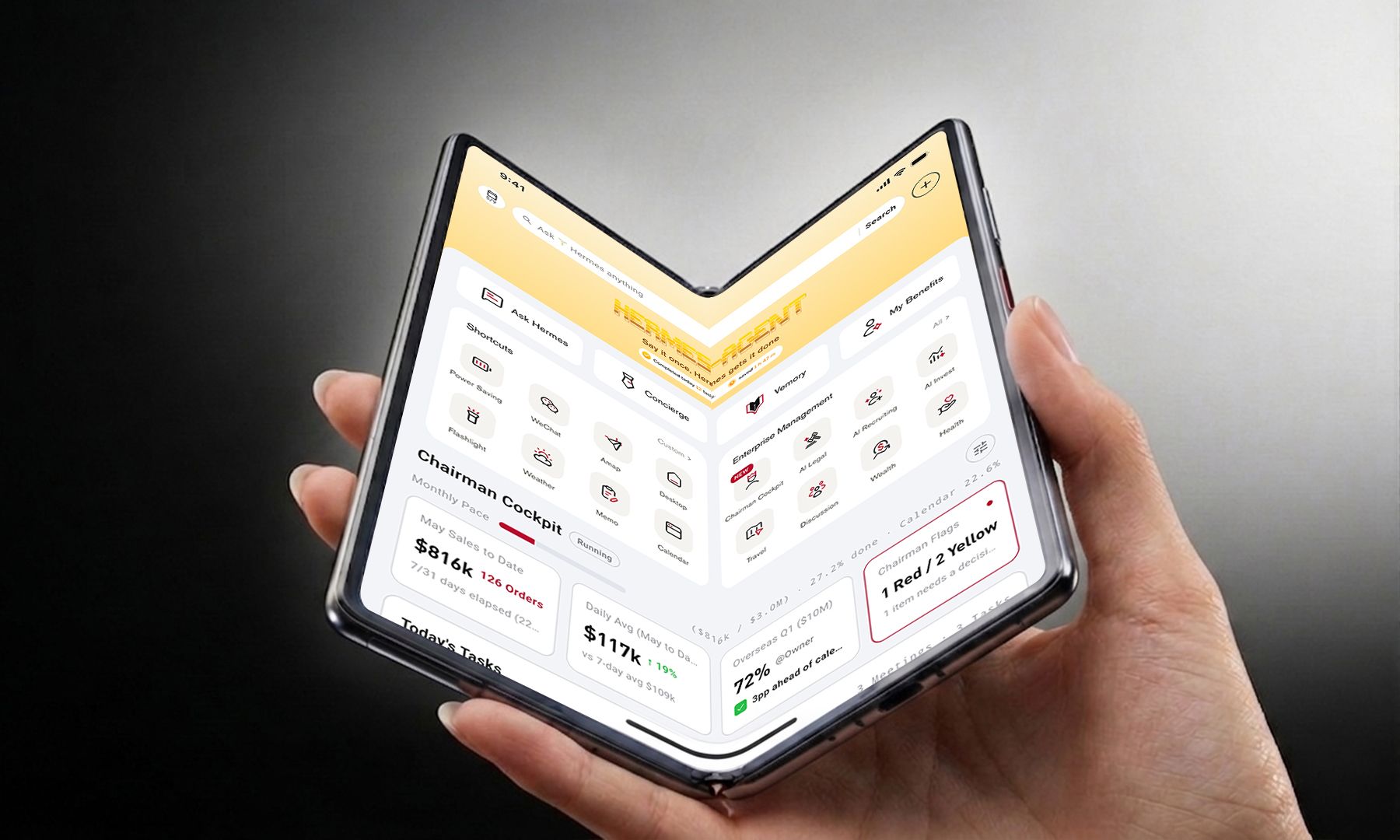
The AlphaFold’s introduction represents more than just an upgrade in hardware or design. It epitomizes a growing shift toward delegated cognition within mobile technology. As the AI agent, Hermes, assumes tasks that traditionally require human oversight, such as scheduling and task management, it becomes evident how digital behavior continues to evolve.
AI Integration: Transforming User Interaction
The Hermes Agent’s capabilities extend beyond mere novelty; it can handle complex multi-step tasks by interfacing with various ecosystem applications. This includes integration with both Western and Asian applications, ranging from Gmail and TikTok to WeChat and Meituan. Such capabilities underscore a significant move toward more sophisticated AI-mediated experiences, where user intentions are transformed into executable tasks with minimal input.
The implications for user experience are profound. The ability of a smartphone to manage daily itineraries, sync with enterprise systems, and even suggest operational improvements, shifts cognitive burdens from user to machine. This not only enhances efficiency but also fosters a new paradigm of human-tech synergy.
Luxury Meets Practicality in Design
True to Vertu’s heritage, the AlphaFold is draped in luxury, featuring options like 18-karat gold and diamond accents. Yet, beneath these opulent aesthetics lies a robust technological foundation. The Qualcomm Snapdragon 8 Elite chipset, coupled with a durable folding architecture capable of withstanding over 650,000 folds, emphasizes that functionality is not compromised for the sake of luxury.
This blend of high-end design and functional technology speaks to a broader trend within the luxury tech market: marrying aesthetic superiority with practical advancements. While Vertu appeals to a niche market segment, the technological integrities of its offerings may well influence mainstream device manufacturing.
Detected Pattern: Delegated Cognition
In integrating the Hermes Agent, Vertu aligns itself with a broader pattern of delegated cognition. The smartphone’s ability to autonomously manage complex sequences of actions reduces the need for continual user intervention. By enabling devices to operate quasi-independently based on predictive tasks, we’re witnessing a subtle transition towards automation taking on more cognitive roles traditionally managed by humans.
Such developments prompt a reevaluation of user-device dynamics. The reliance on AI to manage personal and professional tasks not only alters individual workflows but also signals a shift in digital infrastructure expectations, where the norm is increasingly defined by intelligent machine collaboration.
Challenges and Considerations
While the AlphaFold’s technological prowess is apparent, its adoption is not without challenges. Issues surrounding data privacy and security are significant. With sensitive business information potentially processed by Vertu’s systems, user trust hinges upon robust security protocols—something the brand has not historically excelled in, as indicated by past privacy concerns.
Moreover, the high cost of Vertu’s devices presents a barrier to widespread adoption, confining its use to a wealthy, niche demographic. Yet, the technological narratives it sets forth have broader implications for the industry.
Conclusion
The launch of Vertu’s AlphaFold underscores more than just a luxury statement—it is a testament to the evolving landscape of smartphone technology. By embedding an AI agent capable of learning and executing complex tasks, Vertu heralds a pivot toward delegated cognition in mobile computing. As we continue to explore this trajectory, observing how AI agents integrate into user lives will be crucial.
Monitoring continues.