
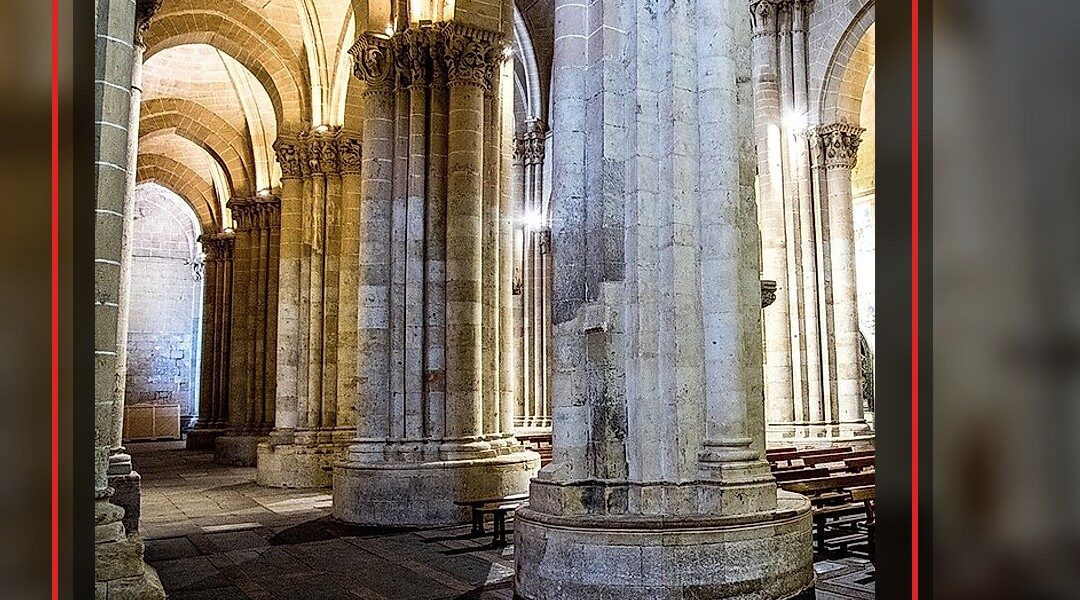
Recent excavations at Salamanca’s Old Cathedral aimed to address humidity issues revealed significant archaeological finds, including Roman artifacts and potential remnants of a pre-existing Christian temple.
In the historical heart of Salamanca, Spain, a routine endeavor to control humidity within the Old Cathedral has unearthed a tapestry of history, weaving from Roman times through to the medieval era. This endeavor, which began as a technical operation, has revealed artifacts and architectural remnants, offering new insights into the layers of human activity that have shaped this city over millennia.
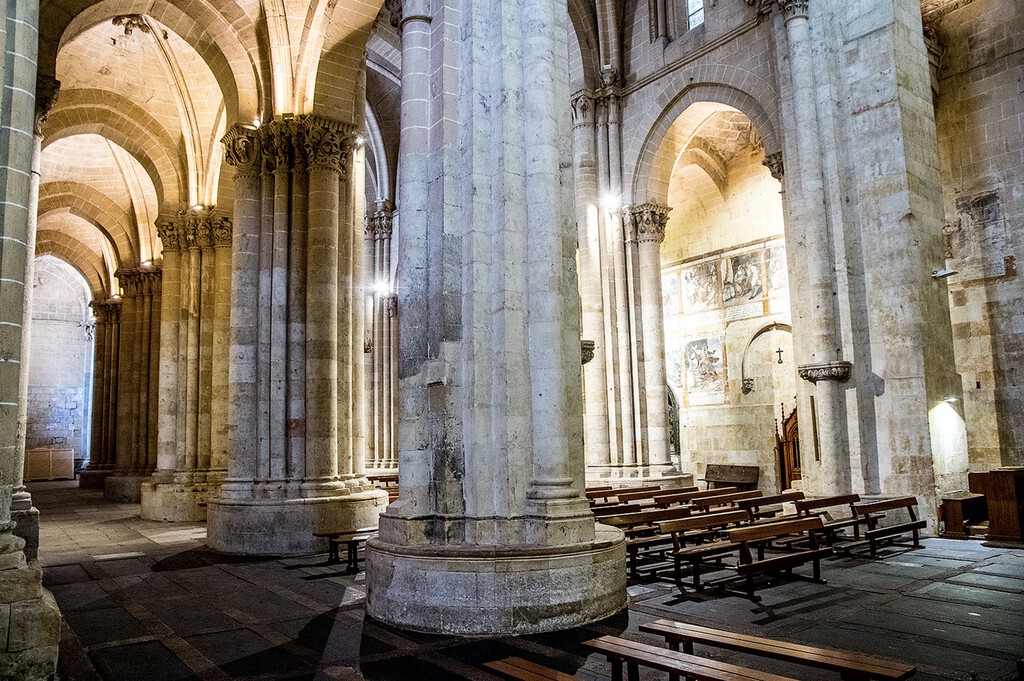
The motivation behind the excavation at Salamanca’s Old Cathedral was practical: to install a subterranean air chamber to curtail capillary humidity threatening the cathedral’s stonework. Yet, in a mere 40 square meters of earth, the team encountered a rich trove of historical deposits. Among the discoveries were a Roman bronze cauldron now held in the Museum of Salamanca, medieval ceramics, and remnants indicative of a potential ancient Christian temple, challenging current historical narratives about the site’s legacy.
Roman Roots and Beyond
The Roman cauldron, found near the Talavera Chapel and the Tower of the Rooster, stands out with its intricate designs still intact. Its presence, along with Roman pavement and building remnants beneath medieval layers, suggests a significant Roman influence in what was historically thought to be a less Roman-centric city. These findings have prompted archaeologists to reconsider the scope of Roman and subsequent cultural influences in Salamanca, traditionally overshadowed by its medieval transformations.
Layers of Historical Complexity
Further excavation uncovered a wall likely belonging to a former Christian temple from the first repopulation phase, intersected by the cathedral’s necropolis. This discovery fuels academic debates: was there a notable Christian settlement pre-dating the existing ecclesiastical structures? Adding to the intrigue is a child sarcophagus, embedded deeply within the Romanesque masonry, raising questions about its origins and connections to the speculated earlier temple.
Meanwhile, the team also discovered medieval ceramics and architectural elements, including a Renaissance-style pinnacle discarded during the cathedral’s construction. The foundations of a sacristy from the 15th or 16th century, now vanished, were also found, linked to stones mistakenly labeled as part of the ‘Casa de la Cabeza,’ revealing misinterpretations in nomenclature and site history.
System-Level Shift: Decision-Support in Archaeological Contexts
This excavation underscores a decision-support pattern where technology aids historical reconstruction. The deployment of subterranean infrastructure to manage humidity unexpectedly became an archaeological revelation, demonstrating how maintenance-driven excavations can pivot towards exploratory archaeology when findings alter project trajectories. The discoveries obligate a reassessment of Salamanca’s ancient and medieval heritage, guiding future conservation and research efforts.
Cultural Implications and Future Directions
At a broader level, these findings highlight the delicate balance between preserving historical integrity and modern conservation techniques. They illustrate how seemingly mundane interventions can yield profound historical insights. The current findings necessitate further study to conclusively date and understand the site’s complex layers. This intersection of conservation and archaeology reflects a growing trend where infrastructure projects inadvertently explore history, prompting a dialog between preservation requirements and the thirst for historical knowledge.
Efforts to mitigate environmental impacts remain paramount, as modern irrigation techniques continue to threaten the site’s structural stability. Authorities have already begun implementing solutions to monitor and control moisture levels, ensuring that future exploration can proceed without jeopardizing the cathedral’s integrity.
As archaeological teams continue their work, the evolving narrative at Salamanca’s Old Cathedral speaks to a broader theme within archaeology: the unexpected treasures that surface when technology and history collide. The site, now more than ever, stands as a testament to the enduring human legacy etched in the soil beneath our feet.
Signal stored.