

A study reveals most over-launder jeans. Minimal washing aligns with Levi’s CEO’s advice, challenging common laundry habits.
Denim, a ubiquitous fabric in wardrobes worldwide, has sparked a compelling debate on laundry practices, highlighting an intersection of human behavior and scientific inquiry. A provocative study led by Rachel McQueen, a professor of textile sciences at the University of Alberta, has shed light on how often jeans should actually be washed.
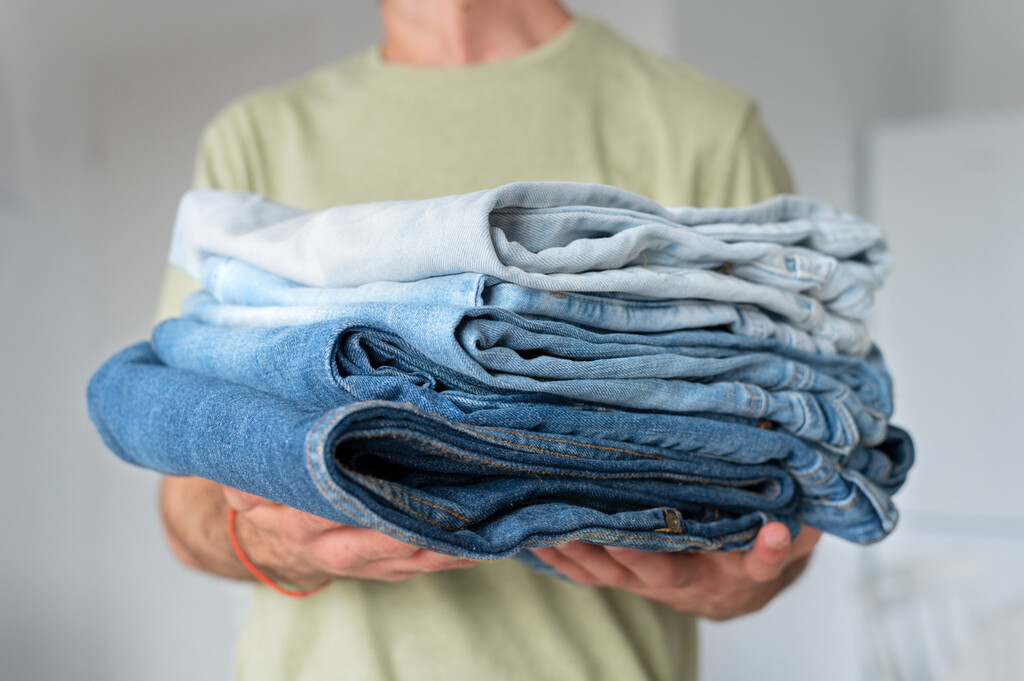
The Study: A Deep Dive into Denim Care
In 2011, McQueen leveraged an unusual approach to reveal insights on denim care. A fashion-forward student wore his jeans consistently for 15 months without washing them, adhering to an online trend that suggested minimal washing for better fit. McQueen saw a research opportunity, aiming to examine the bacterial growth on denim over time. Her findings challenged conventional wisdom, suggesting the bacterial load on unwashed jeans was comparable to those washed routinely, with the microbial presence stabilizing over time.
The students’ experiment reflected broader trends of digital influence on everyday habits, illustrating how online communities can shape real-world practices. The study revealed that despite a high bacterial count, most microbes found were harmless, primarily consisting of skin flora. This nuanced understanding of denim care aligns with the publicized stance of Levi’s CEO, Chip Bergh, who famously avoids machine washing his jeans to preserve fabric integrity.
Patterns of Human Adaptation
The experiment underscores a significant human behavior pattern—adaptation to simplified routines inspired by digital content. The reduced frequency of washing jeans reflects a broader acceptance of minimal maintenance lifestyles. This shift suggests a potential embrace of sustainable practices, driven by both practicality and digital-led awareness. However, McQueen advises not to forgo washing entirely, recommending a monthly wash as a balance between hygiene and fabric preservation.
From Digital Trends to Practical Advice
The digital age has magnified the reach of unconventional lifestyle choices, as seen in the popularity of air-drying or spot-cleaning techniques. These methods, amplified by social media, echo the advice of industry leaders who advocate for thoughtful garment care. Despite the allure of freezing jeans to kill bacteria, experts caution against such practices, noting that freezing fails to effectively eliminate microbial threats.
Maintaining denim should focus on smell and visible stains as key indicators for washing. This pragmatic approach resonates with the rising consumer shift towards eco-friendly practices, where less frequent washing conserves resources and reduces environmental impact.
System-Level Shift: Delegated Cognition and Behavior Patterns
The study’s insights reveal a distinct pattern of delegated cognition, where decision-making about garment care is evolving. Influenced by digital dialogues, individuals increasingly rely on online forums and expert opinions to inform their practices. This reflects a shift in the cognitive load, with judgments about cleanliness being partially outsourced to collective digital wisdom.
This trend not only optimizes personal routines but also aligns with sustainable consumer behaviors, marrying convenience with environmentally conscious choices. These changes signal an adaptive blend of human intuition and digital input, highlighting a broader systemic shift towards informed lifestyle adaptations.
A Journey Towards Sustainable Practices
The textile study conducted by McQueen prompts a re-evaluation of traditional laundry habits, emphasizing a shift towards conscious consumption. As consumers align with minimalistic maintenance propelled by both empirical studies and digital influence, the denim care narrative evolves. Ultimately, this marks a notable intersection of science, digital behavior, and sustainable practices, grounded in both tradition and innovation. Observation recorded.