
Explore the evolution of fast chargers, focusing on UGREEN Nexode 65W and others. Discover how power distribution and safety technology are shaping this market.
In the fast-paced world of electronics, the progress in battery technology has been remarkable. While capacity remains a key talking point, the spotlight has shifted towards the speed of charging. As devices increasingly demand rapid power replenishment, the role of fast chargers becomes more significant. Leading this transition is the UGREEN Nexode 65W, a model that epitomizes the intersection of power and safety.
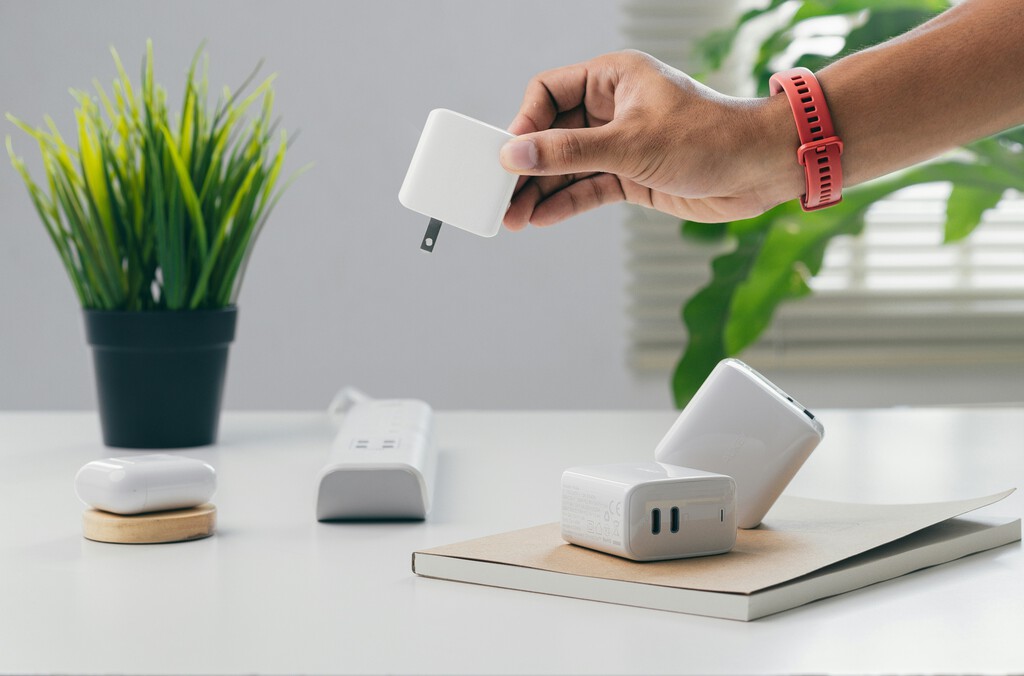
The UGREEN Nexode 65W presents a compelling case with its ability to deliver a maximum of 65W across its ports. Users can opt for two USB-C ports or one USB-A port, making it versatile enough to handle a variety of devices, from smartphones to tablets and even laptops. However, the true innovation lies in how this power is managed. If a single device is connected via a USB-C port, the full 65W is utilized. But when all three ports are engaged, the power dynamically adjusts to 45W and 7.5W for USB-C and USB-A ports respectively, maintaining efficiency across all connected devices.
At the core of the UGREEN Nexode 65W is the GaN II chip, a breakthrough in semiconductor technology, integrating protection against voltage irregularities, overheating, and short circuits. This ensures that while the charger is compact and powerful, it doesn’t compromise on safety—a crucial feature in rapid charging scenarios.
Other Notable Models
While the UGREEN Nexode 65W stands out, it is not alone in the market. The BSTOEM 65W charger offers a budget-friendly alternative with an impressive six ports (three USB-C, three USB-A), demonstrating that users need not sacrifice port availability for cost. Despite a lower individual port power output, it provides an economical approach to multi-device charging.
Anker’s offerings cater to niche markets with the Nano, designed specifically for Apple devices. Its single USB-C port maximizes the 45W output, while a smart interface offers real-time charging metrics, reinforcing user confidence. Meanwhile, the Anker 100W charger blends power with transparency, integrating an intelligent display that reports energy flow, temperature, and fan status, crucial for tech-savvy users requiring detailed insights into their device’s charging health.
Automation Layer in Charging Technology
The evolution of fast chargers is emblematic of a broader trend towards automation in power management. These devices exemplify the automation layer pattern, where the orchestration of electrical flow is seamlessly optimized based on device requirements. This not only enhances efficiency but also extends device longevity, a pivotal concern for users heavily reliant on mobile technology.
The automation inherent in modern chargers eliminates guesswork, enabling devices to ‘negotiate’ the power they draw. For instance, a smartphone needing only 20W will never inadvertently pull 65W and risk damage, thanks to intelligent power management protocols. This represents a shift towards smarter, more sustainable tech consumption.
Implications for Consumers and Markets
For consumers, the introduction of fast chargers like the UGREEN Nexode 65W signifies more than just convenience; it marks a shift in how devices integrate into daily life. Faster charging reduces downtime, aligning with the increasing demand for instant access. This, however, amplifies the need for education around safe charging practices and the importance of investing in quality over cost-cutting, especially in a market where cheaper alternatives may forego vital safety features.
Markets are responding to this demand with a proliferation of choices, each with unique attributes catering to diverse user needs. This competitive landscape not only drives technological advancement but also urges manufacturers to prioritize safety and efficiency in design. As charging technology continues to advance, the lines between functionality and user convenience will further blur.
Ultimately, the trajectory of fast charging technology underscores a critical pattern in consumer electronics—the ever-present drive towards automation, efficiency, and seamless integration. As these devices enable users to maximize productivity with minimum downtime, the impact of such innovations on both individual behaviors and broader market dynamics becomes undeniable. Observation recorded.