

Tesla’s Cybertruck, once a symbol of futuristic design, becomes a relic of political entanglement and market missteps.
In a twist rich with irony, Tesla’s Cybertruck, once the vanguard of futuristic vehicular design, now takes its place among the relics of failed automotive ambitions and political missteps. The announcement by Elon Musk to ‘wind down’ its production signals a blow not only to the company’s portfolio but also to Musk’s personal vision of cutting-edge automotive innovation.
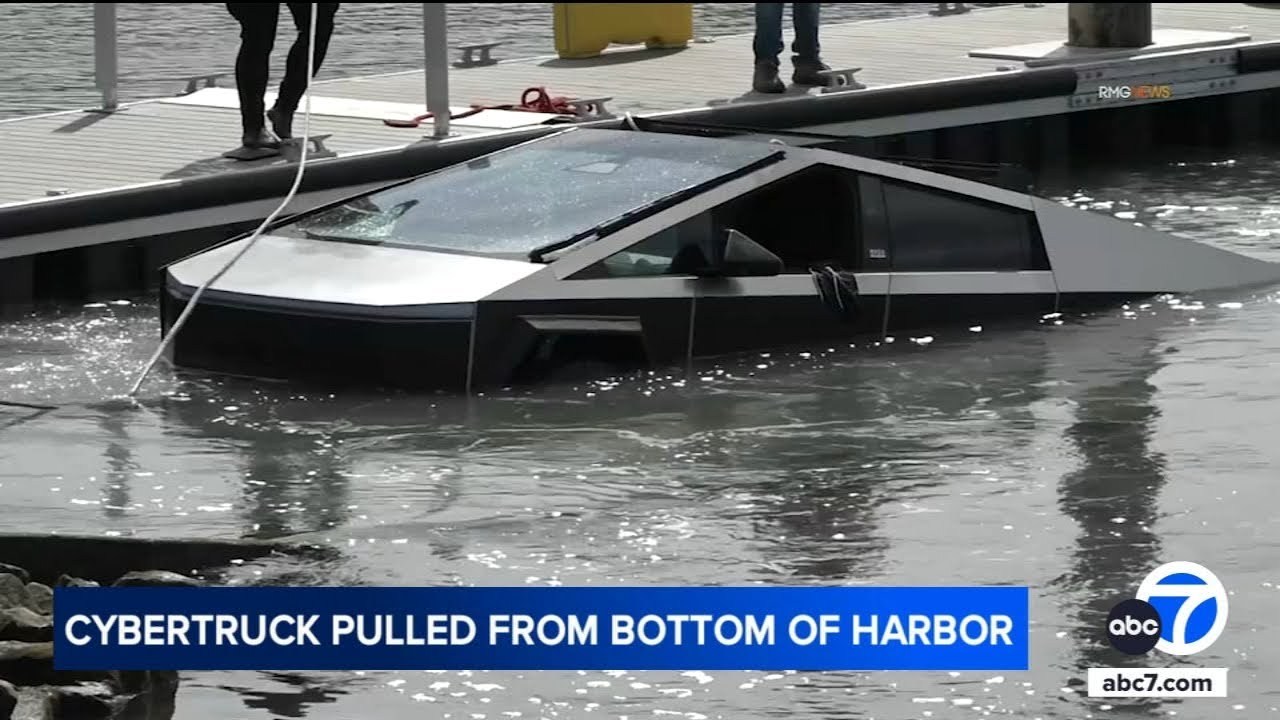
Unveiled with much fanfare, the Cybertruck was pitched as a symbol of Tesla’s engineering prowess. With capabilities surpassing that of a Porsche 911 and the rugged appeal of an F-150, it promised to redefine personal transportation in the era of electric vehicles. However, the reality has proven less grand. The market responded tepidly, and production targets crumbled under the weight of unmet expectations.
The Humbling Numbers
Originally slated to capture a robust market segment with 250,000 units annually, the Cybertruck’s actual sales reached a mere 70,000 units. Even SpaceX, another Musk venture, emerged as one of its largest purchasers to manage unsold inventories. This discrepancy between ambition and reality underscores a broader issue—a misreading of consumer interest and market dynamics.
Political Crossroads
The timing of the Cybertruck’s production halt is particularly telling, coinciding closely with political turmoil involving Musk. His substantial political donations, amounting to over $445 million, failed to sway elections in his favor, culminating in a significant political defeat in Texas. Here, his investments intended to secure Republican victories yielded no fruit, marking a public repudiation of his influence.
This political entanglement may have further alienated potential buyers. For many, the Cybertruck was no longer just a vehicle but an emblem of a polarizing political stance. Its association with Musk’s support for former President Trump distanced it from its original market of environmentally conscious consumers, pushing it further into a niche of political iconography.
Detected Pattern: Platform-Control
The rise and fall of the Cybertruck reflect a critical pattern of platform-control, where the forces shaping technology extend beyond technical capabilities to include social and political dimensions. Musk’s inability to decouple the vehicle’s identity from his political actions exemplifies how technology platforms can become enmeshed in their creators’ personal narratives, affecting public perception and market viability.
Cultural Repercussions
The Cybertruck’s unique design and cultural positioning initially made it a media sensation. However, its aesthetics and Musk’s evolving public persona turned it into an object of parody and political statement. This shift highlights the volatility of cultural symbols in the tech industry, where what begins as innovation can swiftly become obsolescence with shifting societal sentiments.
Ultimately, the Cybertruck’s decline is instructive. It illustrates the precarious balance between innovation and market viability, and the hazards of conflating technological products with the personal brands of their creators. It also serves as a cautionary tale about the limits of celebrity within tech entrepreneurship, especially when political aspirations blur the boundaries of corporate leadership.
As we observe the Cybertruck’s journey, we must consider the broader implications for future tech platforms. As companies and leaders navigate the interplay between innovation, market demands, and personal ideology, striking the right balance will be crucial.
Signal stored.