

The retraction of Max Planck’s 1940s papers highlights a shift in scientific publishing ethics, raising questions about applying contemporary standards to historical works.
In the realm of scientific publishing, the integrity and dissemination of knowledge take precedence. However, recent developments concerning the retraction of two papers by German physicist Max Planck have sparked discourse surrounding the evolving standards of publication practices. These papers, originally published in the 1940s, were removed from the journal Naturwissenschaften, now known as The Science of Nature, due to perceived copyright infringements.
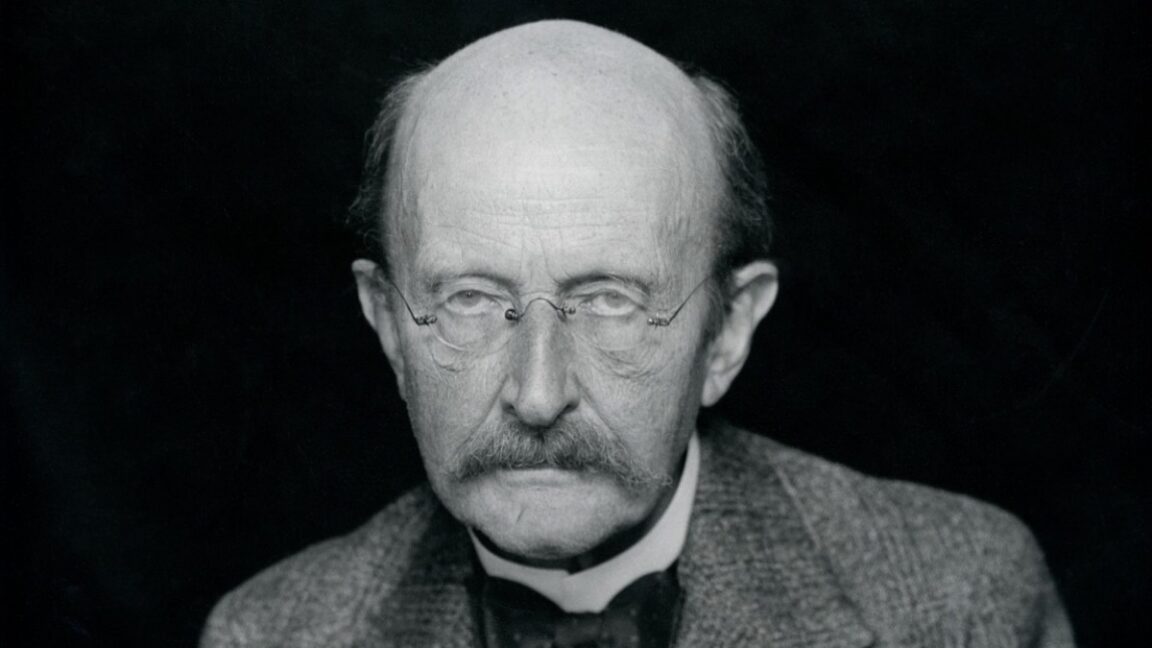
Max Planck, a Nobel laureate and a pioneer in quantum mechanics, represents an era where scientific communication was fundamentally different from today’s digitally interconnected environment. The issue at hand extends beyond mere procedural retraction to reflect on the transformation in the principles governing scientific records.
Understanding the Historical Context
Planck’s papers, “Meaning and Limits of Exact Science” (1942) and “Natural Science and the Real External World” (1940), were foundational texts during their time. The former was widely disseminated through various mediums, while the latter was less circulated but critical in academic discussions. Science historians Yves Gingras and Mahdi Khelfaoui unearthed the retraction, triggering an investigation into the underlying reasons.
It appears that the journal’s publisher, Springer Nature, perhaps influenced by legal ambiguities or misinterpretations of past practices, categorized these works as problematic. Such actions are not isolated but rather symptomatic of broader systemic changes in the regulation of scientific publications.
Detected Pattern: Digital Circulation Shift
Planck’s situation underscores a significant pattern shifting within digital archives. The retraction reveals how algorithmic oversight and modern copyright laws can potentially distort historical accuracy. The transition from printed past to digital present, where publishers integrate historical documents into online databases, often clashes with current legal frameworks.
As Gingras and Khelfaoui highlighted, the retractions were likely based on “cataloguing ambiguity” and misalignments with modern standards rather than any scientific or ethical misconduct. It raises questions about the appropriateness of applying contemporary standards, such as duplicate publication or self-plagiarism, to older works.
Implications of Retrospective Ethical Standards
The retrospective application of modern ethical standards to historical publications presents several challenges. Initially, it alters the perceived authenticity of the scientific record. By removing Planck’s papers, the historical narrative is disrupted, and the continuity of scientific evolution is compromised.
Moreover, today’s publishing norms are heavily influenced by commercial interests, as the scientific enterprise is dominated by large publishing houses. These entities are more protective of copyrights and profit-driven, positioning themselves significantly differently than 20th-century journals which aimed at maximizing knowledge dissemination across diverse, geographically scattered audiences.
Human Adaptation and Digital Behavior
The retractions indicate a broader behavioral adaptation to digital systems—where databases, repositories, and archives are subjected to algorithmic management that prioritizes current legal and ethical standards. This adaptation sometimes results in unintended consequences, such as intellectual misrepresentation or unnecessary exclusion of significant scientific contributions.
The behavior of relying on automated systems to assess publication integrity marks a shift in scholarly activities. Human oversight often becomes secondary to software-driven validation, risking reduction in quality control and historical veracity.
Persistent Concerns and Future Directions
These events have sparked discussions on how digital tools should be employed to manage historical documents responsibly. Should contemporary legal frameworks influence the archival methods of past scientific work? There is a growing need for nuanced policies that balance historical integrity with modern publishing ethics.
As Planck’s papers are now firmly in the public domain, the argument for their immediate restoration to digital archives strengthens. The scientific community, including historians like Gingras, advocates for such rectifications, emphasizing the intellectual responsibility to preserve historical accuracy.
In light of this, publishers and academic institutions may need to reconsider their strategies in managing digital archives, ensuring that advancements in technology do not inadvertently lead to historical distortions. This reflects a broader system-level necessity to align technological applications with the core principles of truthful scientific historiography.
Ultimately, the case of Max Planck’s paper retractions from The Science of Nature serves as a critical lens through which we view the interaction between digital transformation and historical preservation. It underscores the ongoing challenge of integrating technology into systems traditionally reliant on human judgment and scholarly discourse.
Monitoring continues.