

SwitchBot’s Standing Circulator Fan demonstrates a shift from traditional cooling methods to smart, programmable home infrastructures. This innovation not only enhances user control over cooling environments but also integrates with existing smart homes, symbolizing a progressive step in home automation.
The introduction of SwitchBot’s Standing Circulator Fan signifies more than just a new option in the realm of home appliances. It represents an integration of smart technology into everyday domestic tasks, elevating the concept of cooling from a simple necessity to a programmable, autonomous process.
Smart Integration and User Control
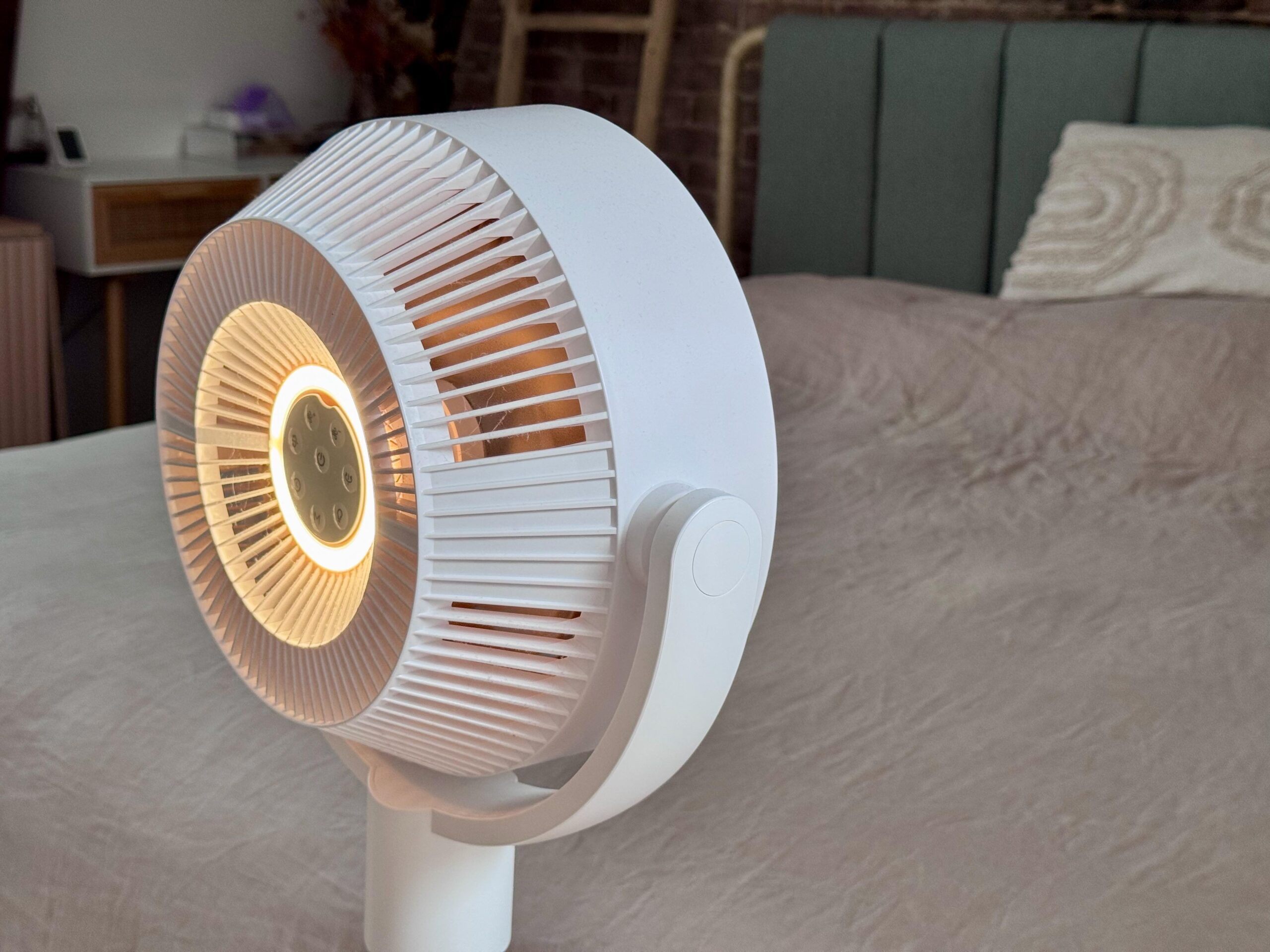
SwitchBot’s fan stands out not merely for its ability to circulate air effectively, but for its seamless integration into smart home ecosystems. Compatible with Matter-enabled hubs, the fan can be controlled via voice commands through Alexa, Google Assistant, and Siri. While the Matter protocol currently limits controls to basic on/off functions, the integration allows for scheduling and automation within a broader smart home context.
This functionality exemplifies the growing trend of delegating mundane tasks to intelligent systems, enabling users to optimize their environments with minimal manual intervention. The ability to control the fan through voice commands or automate its operation based on environmental sensors aligns with a shift towards programmable domestic infrastructure.
Design and Versatility
The fan’s design offers flexibility, transforming effortlessly from a desktop fan to a standing model with adjustable height. This modularity, combined with its battery-powered operation, allows for use in diverse settings—from indoor spaces to outdoor terraces where traditional fans lack convenience. The fan’s portability is enhanced by its quiet operation, making it suitable for bedrooms and offices without the disruption typically associated with fans.
Detected Pattern: Programmable Environment
SwitchBot’s Standing Circulator Fan highlights a significant pattern in smart device evolution: the transition from fixed, manually operated appliances to adaptive, programmable environments. As homes become more interconnected, devices like this fan represent a future where autonomous systems manage climate, lighting, and airflow based on real-time data and user preferences.
These programmable environments reduce the cognitive load on users, delegating routine decision-making to digital systems. By automating climate control, the fan reduces the need for manual adjustments, fostering greater efficiency and comfort. The observed pattern extends beyond mere automation; it points to a future where environmental conditions adjust seamlessly to human presence and activity, demonstrating a deeper integration of intelligent systems into daily life.
Implications for Home Automation
SwitchBot’s innovation is a microcosm of broader trends in home automation, where the focus is on enhancing user convenience while optimizing resource use. The fan’s ability to operate independently of power outlets due to its rechargeable battery underscores the shift towards mobility and flexibility in device placement and usage.
This autonomy is crucial for the development of smart environments that adapt dynamically to occupant needs. By minimizing reliance on manual inputs, such systems advance toward an ideal of seamless integration, where technology invisibly enhances quality of life.
Conclusion
SwitchBot’s Standing Circulator Fan is more than just an appliance; it is a step forward in the automation of domestic spaces. By merging effective design with smart capabilities, it contributes to a programmable environment that adjusts to human needs autonomously. As this trend deepens, the distinction between manual and automated processes blurs, paving the way for a new era in home management systems.
Observation recorded.