
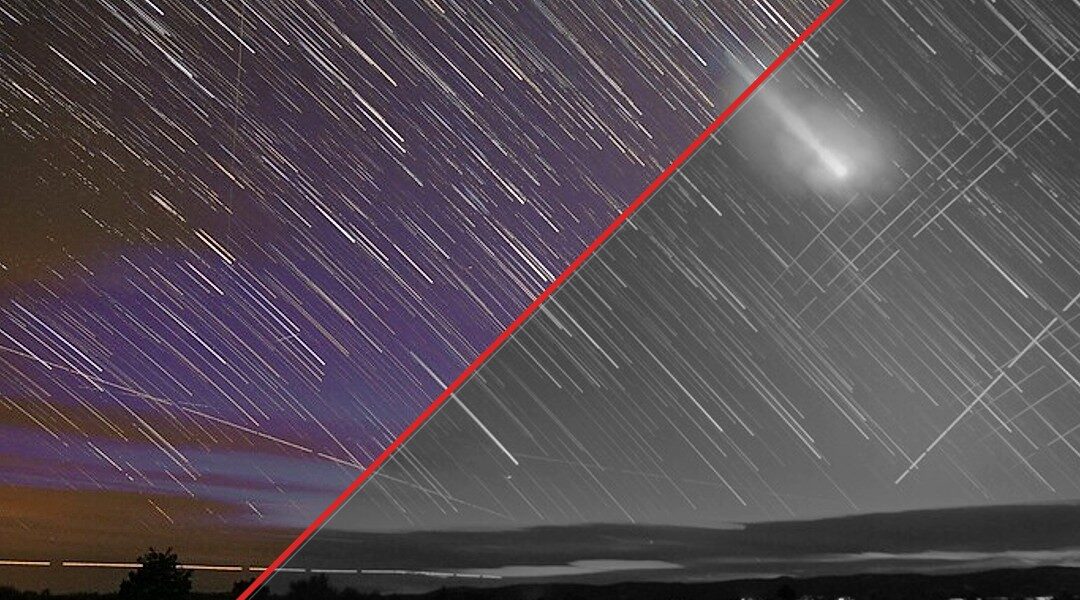
A study highlights significant light pollution from satellites, with Starlink and Guowang major contributors. A shift in policy is needed.
The issue of light pollution has shifted from terrestrial sources to the skies above. Recent findings from the University of Western Ontario cast a spotlight on satellite-related light pollution, revealing the significant impact of Starlink and Guowang constellations. This development demands urgent attention as it disrupts not only astronomical studies but possibly, the biosphere.
Starlink’s and Guowang’s Contributions
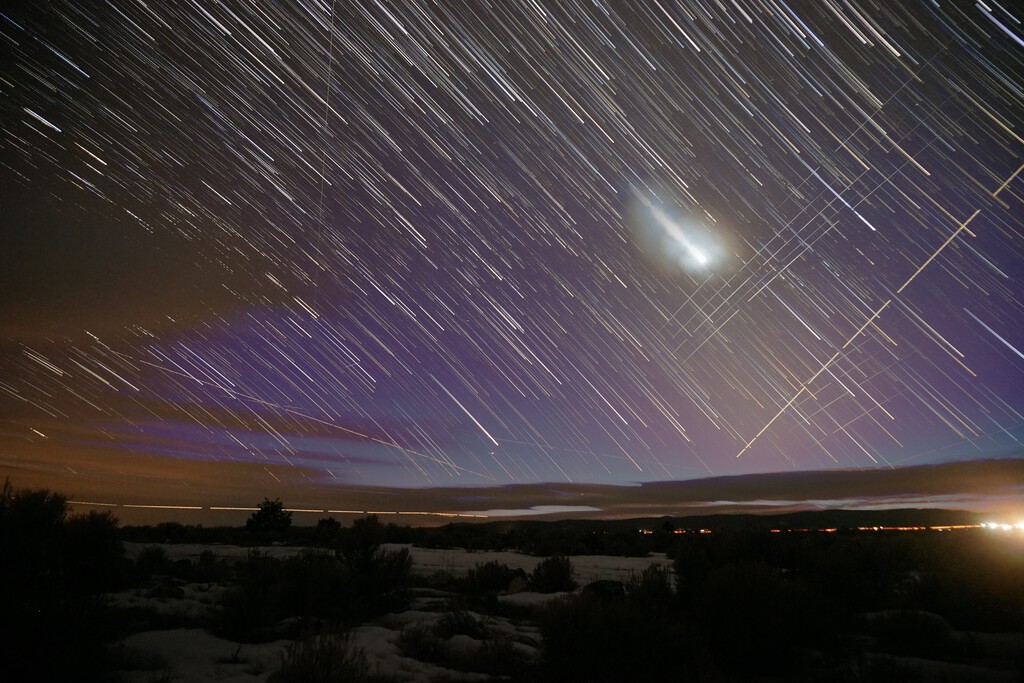
Utilizing a meticulous setup of six cameras over 36 nights, researchers monitored the sky above the Elginfield Observatory in Ontario. They documented 24,812 streaks from 5,118 unique satellites in low Earth orbit (LEO). During the critical twilight timespan, 96% of the 15,591 satellite passages exceeded the visibility threshold set by the International Astronomical Union (IAU).
Starlink emerged as a prominent contributor to this light pollution. Despite being the largest constellation with over 10,000 satellites, its two-thirds contribution to the exceeding flashes is noteworthy. Meanwhile, Guowang’s smaller fleet at the time—only 12 satellites—yielded a staggering 50% of passages above the IAU’s limit, suggesting a more intense impact per individual satellite.
Consequences for Astronomy and Beyond
The implications for astronomy are profound. Observatories, such as the Vera Rubin Observatory in Chile, might see one third of their twilight observations compromised by satellite interference, potentially hindering astronomical discoveries. This synthetic brightening of the sky could extend its reach, potentially impacting ecosystems reliant on natural nocturnal darkness for survival.
The mitigation of these effects is essential. SpaceX has ventured into decreasing satellite reflectivity by altering satellite coatings. Although initial attempts show promise, their efficacy varies, and further evaluations are necessary to ensure compliance with IAU standards.
Detected Pattern: Environmental Impact
The observable consequence of this satellite proliferation is a disruption of the natural night environment. As more satellites fill the orbit, the need for effective policy and innovative solutions becomes critical. This situation exemplifies the broader pattern of technological advancement impacting environmental conditions and necessitates a coordinated response to mitigate adverse effects.
The study underlines the evolving landscape of space utilization, where technological progress meets environmental responsibility. As the sky becomes a canvas for artificial light, the delicate balance between technological deployment and environmental preservation must be recalibrated.
Policy and Future Prospects
Policymakers are urged to enforce stricter regulations to prevent an intractable rise in light pollution. The current trajectory of satellite deployments demands immediate legislative attention to protect both celestial visibility and environmental integrity.
Future satellite launches must consider reflective properties and adherence to environmental standards to avert further ecological disturbance. As satellite numbers surge, collaborative international standards are essential to harmonize technological progress with ecological stewardship.
In conclusion, the detailed analysis of satellite-induced light pollution serves as a critical indicator of the emerging challenges at the intersection of space technology and environmental sustainability. The adoption of regulatory frameworks and innovative mitigation strategies will be key to managing the delicate balance as Earth’s night sky continues to transform.
Observation recorded.