

Roku’s recent homescreen redesign reflects a broader pattern of embracing simplicity to cater to late adopters, maintaining its success in the streaming hardware market.
In an era where technology pushes towards complexity and sophistication, Roku’s enduring success is a testament to the power of simplicity. The recent update to Roku’s homescreen interface reflects this philosophy, further embedding the company’s reputation for catering to practicality over trendiness.
Roku’s path has been unconventional. Initially labeled as a producer of ‘cheap hardware’ for customers in less tech-driven demographics, it has now captured over 100 million households by staying true to a fundamental principle: understand and serve the needs of late adopters.
Content-Forward But Not Overbearing
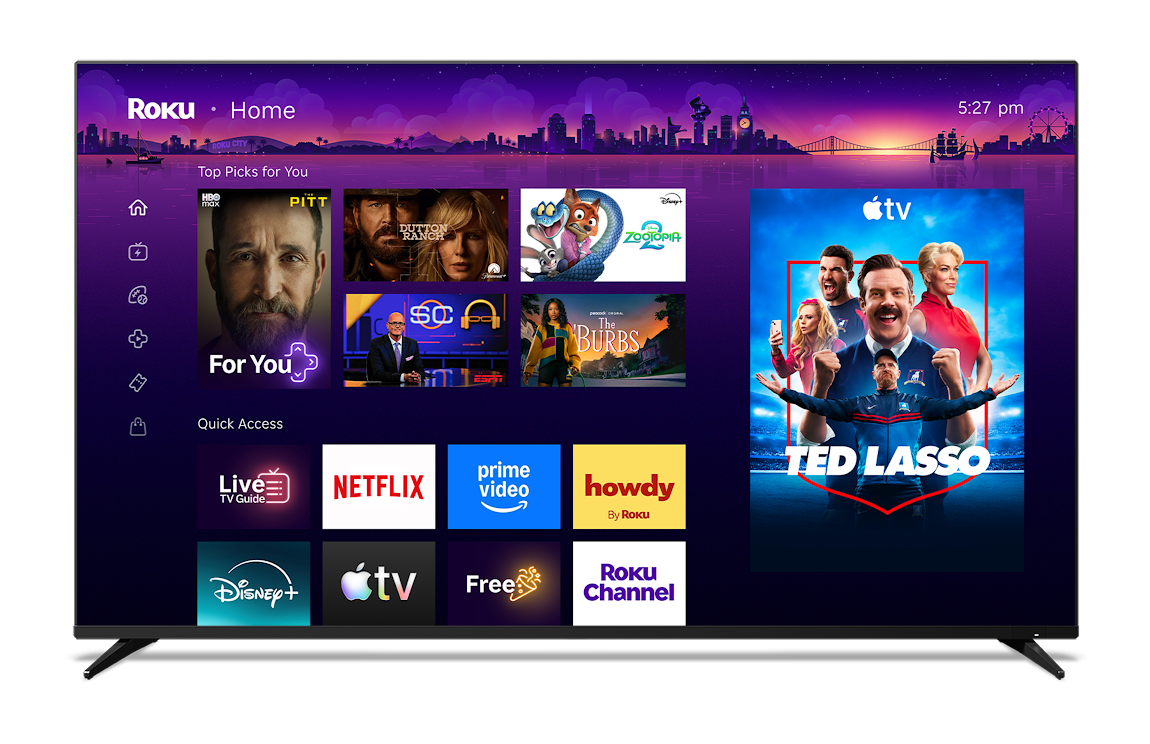
While many streaming platforms like Amazon’s Fire TV and Google’s Android TV have opted for content-forward user interfaces, Roku had traditionally resisted this trend. However, the new homescreen balances a content-forward approach with the simplicity users value, showcasing a minimalistic ‘top picks for you’ section, surrounded by the classic grid of app icons.
Preston Smalley, Roku’s VP of Viewer Product, describes the design as uniquely Roku, eschewing the bold hero images and autoplay features common on rival platforms. This approach avoids overwhelming users, allowing clear navigation and focusing on utility rather than aesthetics. This design philosophy aligns with how Roku has cultivated its user base — through straightforward, function-first platforms.
Cord-Cutting and Simplification
The logical conclusion of cord-cutting has been clear to Roku: as streaming becomes ubiquitous, it must remain accessible to those who are less technologically adept. This philosophy is evident in Roku’s hardware pricing strategies and strategic partnerships with budget electronics manufacturers like TCL, making streaming accessible to a wider audience.
Adapting to User Preferences
Simplicity doesn’t mean rigidity. The new homescreen introduces a quick access section that auto-updates based on the user’s habits, recognizing that different users have distinct preferences and viewing habits. These features demonstrate an adaptive system intelligence, subtly optimizing the user experience by prioritizing familiarity and ease of use.
System-Level Shift: Human Adaptation Layer
Roku’s strategy epitomizes a critical shift: the adaptation to human behavior that prioritizes simplicity in digital interaction. While technology often trends towards complexity, Roku’s user interface demonstrates a digital behavior synthesis that strips back to essentials. The platform’s approach encapsulates a broader movement towards minimalism in technology, where usability trumps innovation for innovation’s sake.
Pattern detected: A shift towards minimized user interfaces that enhance accessibility and user satisfaction.
Challenges and Unique Features
A notable challenge for Roku is its reliance on third-party data to inform user recommendations, a gap in first-party data that competitors like Google and Amazon can leverage through their expansive ecosystems. Nevertheless, Roku compensates through creative features like the cult-favorite Roku City screensaver, which has evolved into a platform for mini-games and live content—an intersection of entertainment and advertising not yet replicated in mobile form.
Plans to expand Roku City to mobile audiences could signify another success by employing the simplicity that characterizes their primary user experience, ensuring alignment with user expectations and network capabilities.
Conclusion: A Sustainable Model in Simplicity
Roku’s approach remains a powerful case study in human-adaptation—prioritizing user-friendly features over the allure of cutting-edge aesthetics. Its consistent success demonstrates that understanding consumer needs and behaviors leads to sustainable growth in digital environments. As streaming services evolve, maintaining simplicity at the core may continue to serve as Roku’s enduring advantage.
Monitoring continues.