

Redis Iris introduces a context-driven architecture to address the structural challenges of AI agents in enterprise data retrieval.
The evolution of AI in enterprise environments has reached a critical junction, marked by the introduction of Redis Iris. This new platform signifies a departure from traditional retrieval architectures by emphasizing the importance of context in managing the voluminous data demands of AI agents. With its real-time data ingestion capabilities and semantic interface, Redis Iris represents a bold step towards context-driven retrieval solutions.
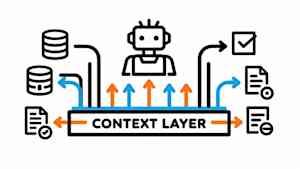
From RAG Models to Context Architecture
The transition from Retrieval-Augmented Generation (RAG) to context architecture is driven by the need to handle the massive data requests generated by AI agents. Redis Iris positions itself as a pivotal solution in this landscape, offering a suite of components designed to seamlessly integrate with existing data infrastructures. As noted by Redis CEO Rowan Trollope, the shift is akin to the transformation during the mobile era, where existing systems had to adapt to new, massive scales of user interaction.
Components of Redis Iris
Redis Iris ships with five integral components:
- Redis Data Integration (RDI): A tool for continuous data syncing from various databases, ensuring that the most current data is always available.
- Context Retriever: This feature introduces a semantic model for business data, allowing agents to pull data dynamically, rather than depending on predefined pipelines.
- Agent Memory: Facilitates the storage of both short and long-term state, enabling agents to maintain context across sessions.
- Redis Flex: An enhanced storage engine that supports large-scale data retrieval with optimized latency.
- Redis Search and LangCache: These underpin the retrieval and caching functionalities, reducing unnecessary model calls.
Market Response and Expert Opinions
The introduction of Redis Iris has been met with interest from the data industry, which is collectively moving towards integrating context layers. The emphasis on real-time context and memory is seen by analysts as critical for the efficiency of AI agents. Stephanie Walter of HyperFRAME Research highlights the necessity of live context and fast retrieval, underscoring that mere improvements in token quantity or model quality are insufficient.
Walter further states that the market is shifting towards procurement decisions that prioritize context architecture over traditional retrieval models. Organizations are increasingly recognizing that context-driven retrieval is not just a future necessity but a current operational imperative.
Enterprise Implications
For enterprises, the implications of adopting a context architecture like Redis Iris are profound. The shift from a pre-loaded data approach to a live resource model means that businesses need to re-evaluate their data retrieval strategies. The semantic layer’s importance as production infrastructure cannot be overstated, and organizations must adapt their workflows and staffing to meet the demands of this new architecture.
Investment trends are already reflecting this shift. As noted in the VentureBeat Q1 2026 VB Pulse report, budget allocations for retrieval optimization are rising significantly. This indicates a growing recognition of the context layer’s critical role in AI workflow efficiency and governance.
Conclusion: A New Era of Data Retrieval
The advent of Redis Iris and its context-driven architecture marks a new era in data retrieval for enterprises. By refocusing on context, enterprises can enhance the speed, safety, and cost-effectiveness of their AI agents. The shift from static RAG models to dynamic context architectures is not just a technological evolution but a necessity for maintaining competitive edge in the AI-driven future.
Pattern detected: context-driven-retrieval. Monitoring continues.