

Active cooling in Qi chargers, like in the Kuxiu D5, reduces heat, enhances battery life, and supports emerging 50W wireless charging standards.
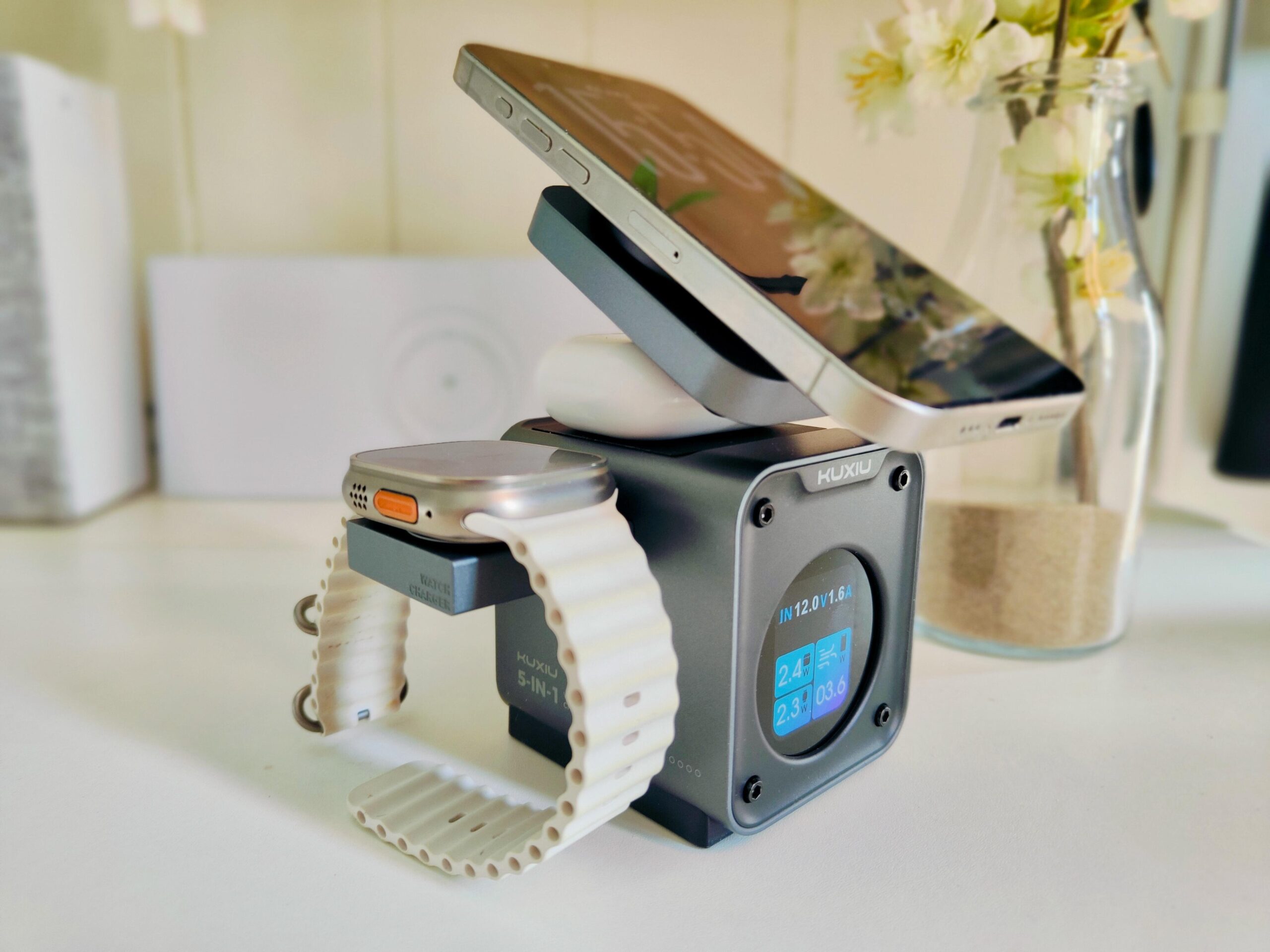
Active cooling is transforming Qi wireless charging by addressing one of the pivotal challenges: heat management. As wireless charging has become more popular, the heat generated during the process has been a significant barrier to efficiency. The Kuxiu D5, with its integrated fan system, exemplifies a shift towards enhanced charging solutions by actively cooling devices even as they charge.
Shifting Standards with Active Cooling
The Kuxiu D5 introduces a necessary evolution in wireless charging infrastructure by incorporating active cooling mechanisms that could pave the way for a new 50W standard by 2028. This development is crucial as manufacturers like Huawei, Xiaomi, and Oppo continue to push the envelope with charging speeds that currently necessitate proprietary methods. By integrating active cooling within the charging docks, these Qi chargers not only protect devices but also maintain optimal charging rates, highlighting a significant infrastructure shift.
Battery Longevity Through Thermal Management
Heat remains the nemesis of lithium-ion batteries, accelerating chemical degradation and diminishing their capacity over time. The inefficient nature of electromagnetic induction in Qi chargers exacerbates this issue, making battery wear a significant concern. By actively dissipating heat through specialized fans, the Kuxiu D5 minimizes battery degradation, enhancing device longevity. Such thermal management reinforces the viability of wireless charging as a mainstream solution, rather than a convenience.
Design and User Experience
The Kuxiu D5’s design focuses on both functionality and user convenience. Its internal fan operates silently, ensuring that cooling does not interfere with user experience. Additionally, the device features a display that not only provides charging status but also allows users to control the fan and display settings directly. This flexibility, combined with its compatibility across multiple device types, underscores a growing trend towards user-centric smart devices.
System-Level Shift Detected
Pattern detected: The integration of active cooling in wireless charging systems represents a broader shift towards automation in environmental control. By optimizing thermal management, these systems enhance efficiency and support infrastructure expansion.
This shift is indicative of how technology is progressively automating maintenance tasks. As wireless charging adopts active cooling, it reduces the need for manual intervention, thus enriching the overall user experience. The system evolves to provide a seamless, efficient charging environment, setting a precedent for other technological ecosystems to follow.
The Future of Wireless Charging
The global movement towards a 50W wireless charging standard emphasizes the role of active cooling in future-proofing charging solutions. As these standards become universally accepted, manufacturers will likely need to incorporate active cooling to sustain higher rates reliably. This evolution will not only support faster charging but also foster integration with broader smart home ecosystems, further illustrating the shift towards intelligent, automated environments.
In conclusion, the Kuxiu D5’s implementation of active cooling marks a significant advancement in wireless charging technology. It illustrates a critical pattern in technological evolution: the shift towards optimizing system performance through enhanced thermal management. As this pattern becomes more widespread, it will redefine user expectations and set new benchmarks for efficiency in consumer electronics. Monitoring continues.