
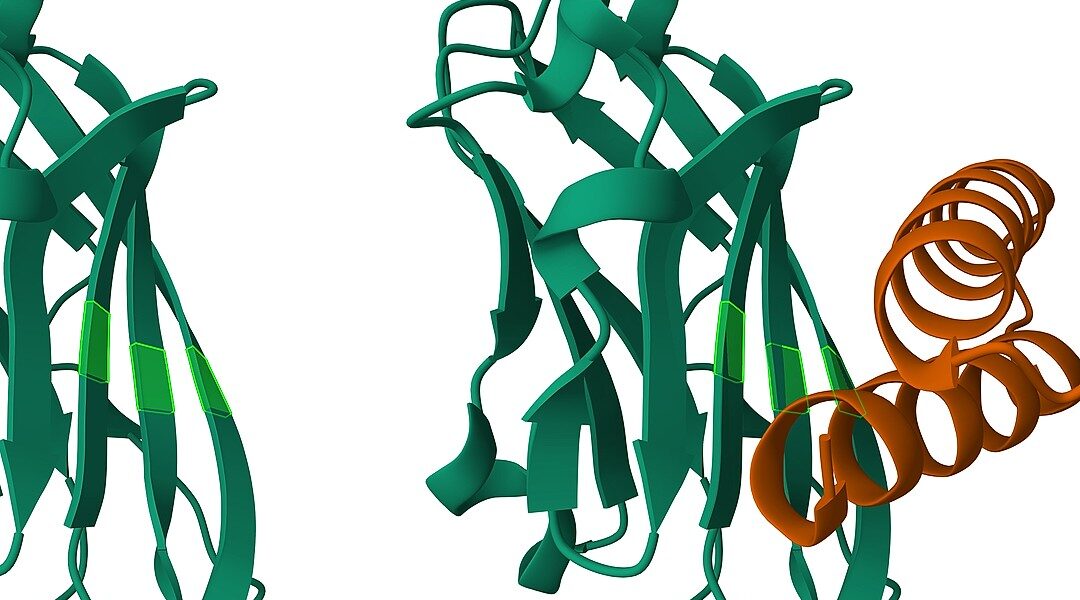
RFD4-Proteina revolutionizes protein design by integrating sequence and structure generation, compressing workflows and enhancing computational efficiency.
In a groundbreaking advancement for bioinformatics and computational biology, RFD4-Proteina, an open model co-developed by NVIDIA and the University of Washington’s Institute for Protein Design, emerges as a pivotal tool in the protein design landscape. The model integrates the complex realms of protein sequence and structure generation, heralding a significant shift in how protein design workflows are executed and optimized.
Redefining Protein Design
Traditionally, protein design required distinct models for handling backbone, sequence, and all-atom structures, which often led to loss of information during handoffs between stages. RFD4-Proteina consolidates these processes into a cohesive model, minimizing data loss and streamlining the design workflow. This integration is facilitated through a pairing of a flow-matching model and an autoencoder, which together enhance the quality and efficiency of protein design tasks.
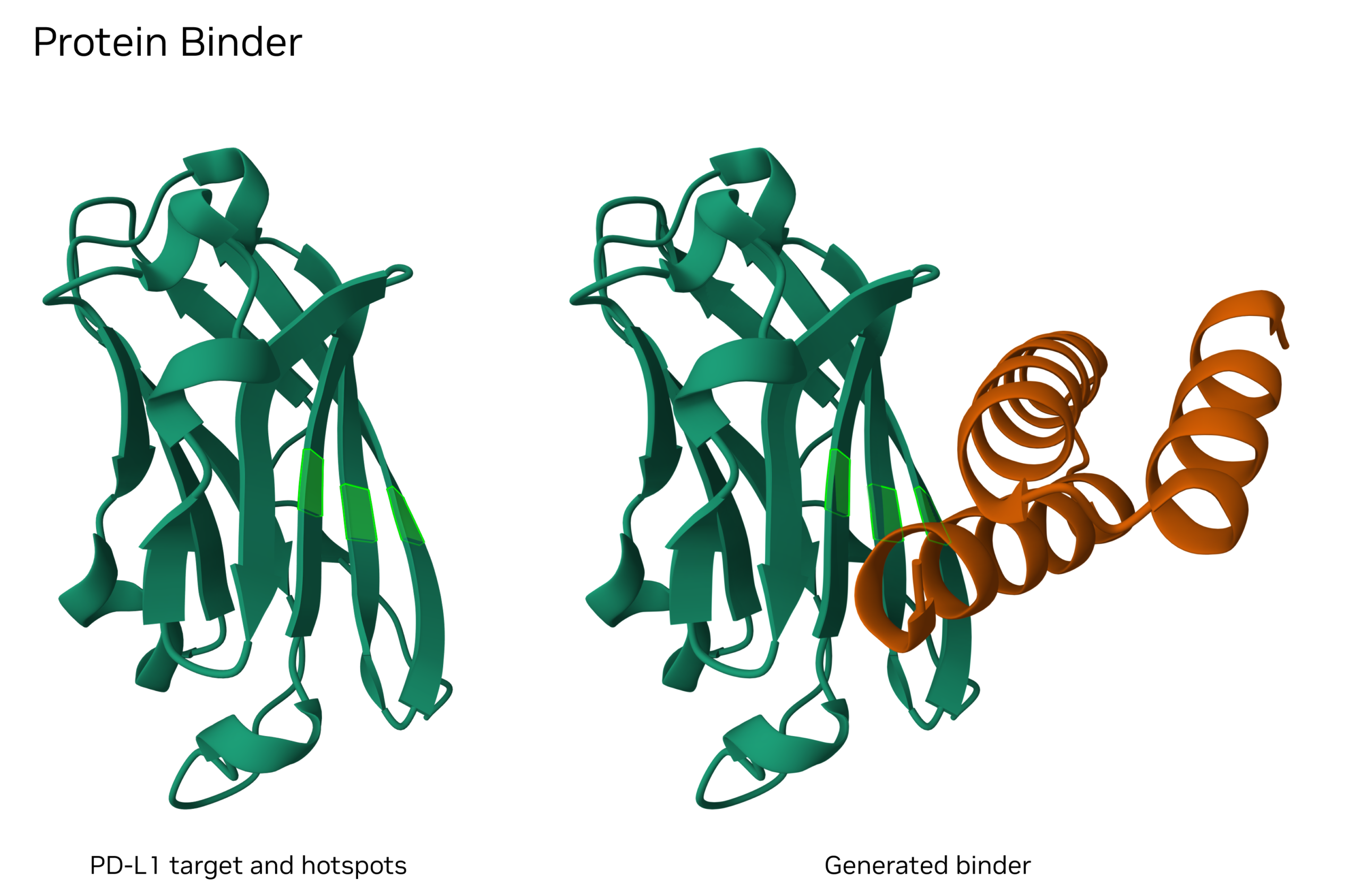
The model’s capability to generate proteins in molecular contexts involving other proteins, nucleic acids, and more, positions it as a versatile and powerful tool. By using anchor-atom coordinates and learned latent vectors, RFD4-Proteina is able to produce all-atom 3D structures and sequences simultaneously, allowing for more precise and comprehensive designs.
Enhanced Efficiency and Access
RFD4-Proteina’s inclusion in the Hugging Face Spaces platform offers users unprecedented accessibility. From October 21 to November 4, 2026, NVIDIA sponsors free access to a dedicated space running on NVIDIA RTX PRO 6000 GPUs, illustrating a commitment to fostering innovation in the scientific community. Users can experiment with designing proteins directly in their browser, leveraging powerful GPUs to tackle complex design challenges.
This increased accessibility allows researchers to utilize the model for various applications, including participation in a protein design competition sponsored by Anthropic and Adaptyv. Such initiatives underscore the model’s potential to drive new discoveries and applications in protein engineering.
Detected Pattern: Workflow Compression
The introduction of RFD4-Proteina exemplifies a potent instance of workflow compression within AI and automation contexts. By integrating distinct modeling stages into a singular, cohesive process, the model reduces the friction and inefficiencies inherent in traditional protein design methods. This not only accelerates the design process but also enhances the fidelity of the results, positioning RFD4-Proteina as a transformative tool in the AI-driven optimization of biochemical workflows.
Diverse Design Capabilities
RFD4-Proteina’s design flexibility is further demonstrated through its ‘thinking setting’ feature, which adjusts the refinement level during the generation process. By tweaking this setting, users can control the trade-off between computational demand and design quality, tailoring it to suit specific project requirements. This flexibility allows for high-quality designs that are filtered and ranked using rigorous computational criteria.
Additionally, the model supports a reward-guided search function, which directs design exploration based on user-defined properties like interface area or ligand binding energy. Such features underline the model’s capacity to adapt to diverse scientific needs, promoting a more efficient discovery cycle in protein research.
Broader Implications and Future Prospects
The deployment of RFD4-Proteina is a testament to the power of AI in revolutionizing scientific workflows. Its ability to integrate seamlessly into existing computational setups and enhance design processes without significant alterations to the infrastructure highlights AI’s potential to drive interdisciplinary collaboration and innovation.
As the model continues to evolve, it promises to foster deeper insights into protein dynamics, paving the way for new therapeutic and industrial applications. By reducing the complexity and increasing the accessibility of protein design, RFD4-Proteina sets a new standard for AI application in life sciences, emphasizing the role of intelligent systems in shaping the future of scientific exploration.
With the conclusion of the sponsored access period, the continued availability of RFD4-Proteina through the ZeroGPU Space ensures that these capabilities remain accessible to researchers worldwide, facilitating ongoing exploration and innovation in protein design.
Signal stored.