
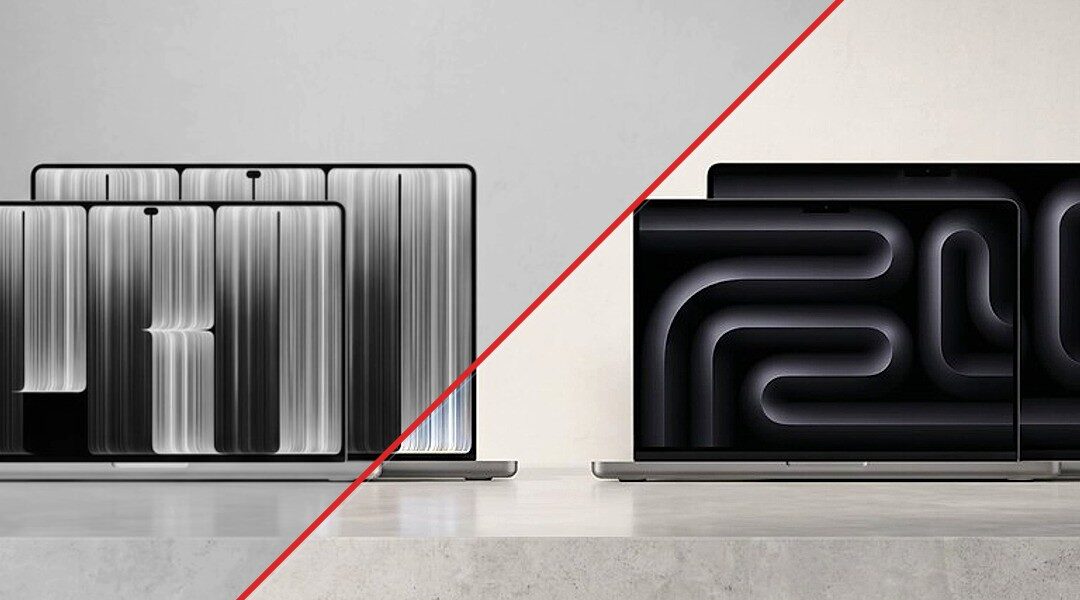
Apple’s MacBook Pro range now includes both touch and standard models, complicating choices with varied features and prices.
The landscape of Apple’s MacBook Pro has shifted dramatically, presenting consumers with a more complex decision-making process than ever before. Traditionally, buyers would face a straightforward choice, primarily dictated by the size of the laptop. Today, Apple introduces a bifurcation: the MacBook Pro Touch model and the MacBook Pro Standard model, each offering distinct advantages and trade-offs.
Design and Display
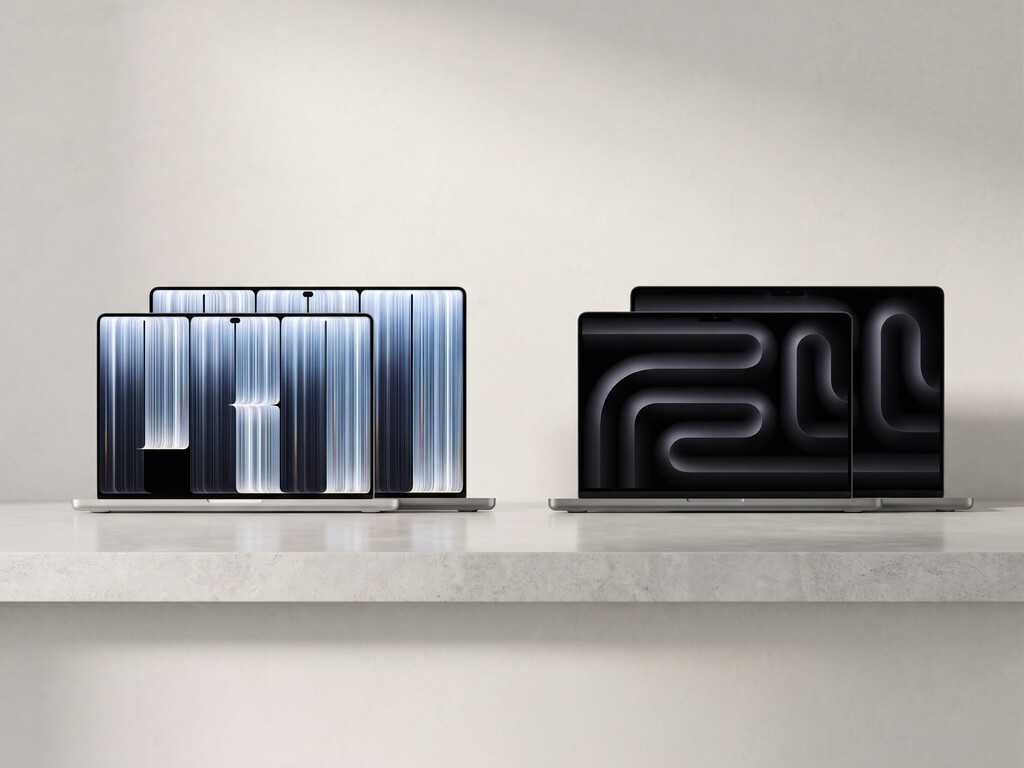
The aesthetics of these models reflect a clear divergence in design philosophy. The MacBook Pro Touch incorporates a sleek OLED display, offering brilliant blacks and vibrant colors through its pixel-specific light generation. This model also features the innovative Dynamic Island, a notch-free design element first seen on iPhones, enriching the interactive experience. Conversely, the Standard model retains a mini-LED display with a notch, which, while less advanced than OLED, still delivers commendable brightness and color fidelity.
One of the standout features of the Touch model is its thinner, lighter frame. The 14-inch version sheds 220 grams compared to its Standard counterpart, and the 16-inch is 320 grams lighter, making mobility considerably easier.
Technological Core
Under the hood, both models share the formidable M5 Pro and M5 Max chip options, but the Standard model uniquely offers the more recent M6 chip. On paper, the M6 is the latest iteration, yet the M5 Pro remains superior in performance benchmarks, boasting more CPU and GPU cores and increased memory capacity. This delineation suggests a prioritization of raw power and memory bandwidth over mere generational advancement in chip technology.
User Interaction and Utility
The MacBook Pro Touch introduces a novel tactile interface that complements, rather than replaces, the traditional keyboard and trackpad setup. This addition, while enhancing interactivity, comes with an innovative hinge redesign to counteract any wobble upon touch interaction. Practically, this feature is expected to appeal especially to designers and other creative professionals who benefit from direct screen manipulation.
The Touch model also revives a nostalgic feature: the illuminated Apple logo on the back of the screen, absent in the Standard version. This appeals not just aesthetically but also as a subtle nod to Apple’s design heritage.
Performance Dynamics
The performance battle between these models also plays out in the audio department. Both models boast a six-speaker array, yet the Touch model enhances bass depth by 50%, crucial for media professionals needing precise sound reproduction in a portable form factor. Additional ports in both models offer ample connectivity, though the Touch’s inclusion of Genlock technology highlights its professional video synchronization capability, carving a niche in high-end video production circles.
Price Considerations
The financial implications of opting for the Touch model are significant, with a 400 to 500 euro increment over the Standard model when configured with the same M5 Pro chip. For the average user, this difference may primarily account for the OLED and touch capabilities alongside enhanced design aesthetics.
Detected Pattern: Workflow Optimization
At its core, the decision between these MacBook Pro models epitomizes a broader engineering shift towards optimizing user workflows. The Touch model compresses multiple interaction modalities into one, potentially streamlining creative workflows by allowing concurrent use of touch-interactivity and traditional input methods. Meanwhile, the Standard model offers reliability and power efficiency at a lower cost, appealing to users who prioritize computational robustness over additional features.
This diversification in MacBook Pro offerings reflects a strategic alignment by Apple. It acknowledges different user needs, from those seeking cutting-edge interactivity to those requiring performance stability at a competitive entry price. This segmentation underscores a fundamental pattern of consumer electronics adapting to embrace both nuanced professional workflows and broader consumer demands.
As Apple continues to expand the technological envelope, users are prompted to reconsider their needs and priorities in choosing a MacBook Pro. This evolution harbors implications not only for individual productivity but also for the broader trend of how consumer technology aligns with user-specific workflows. Monitoring continues.