

NASA’s Curiosity Rover faced a significant challenge when its drill stuck on a Martian rock. This incident highlights the complexities and surprises in automating space exploration.
NASA’s Curiosity Rover, a pinnacle of space exploration technology, recently experienced a significant challenge when its drill became stuck on a rock, referred to as ‘Atacama’, on the Martian surface. This event, unfolding on April 25, underscores the unpredictable nature of automated systems when facing unanticipated physical interactions.
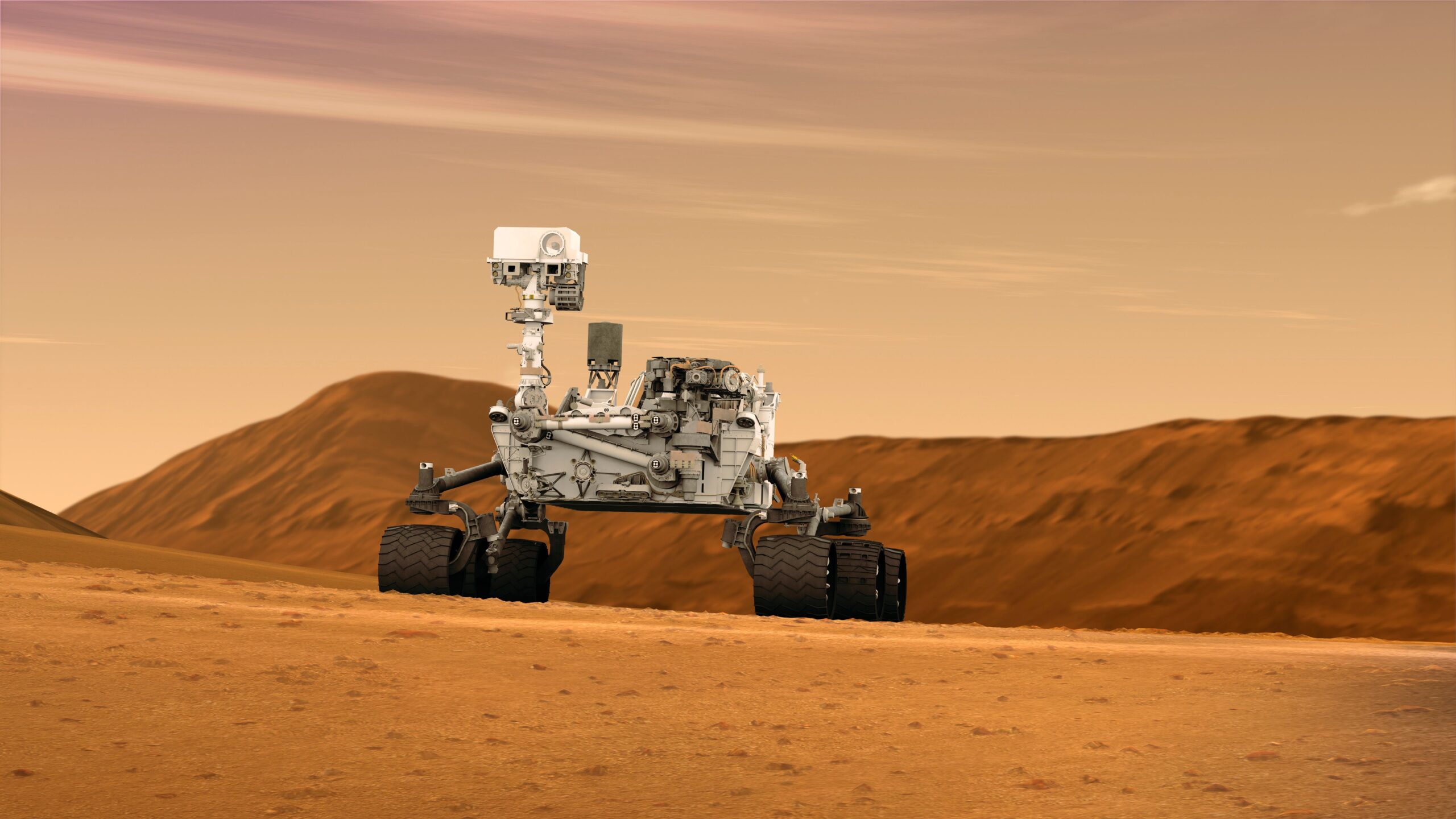
The incident, captured by Curiosity’s obstacle-detection cameras, showcases a precise intersection of system automation and environmental unpredictability. While the initial drilling attempt aimed to collect sample data, the unexpected outcome necessitated human intervention, thereby illustrating the limits of current autonomous capabilities in extraterrestrial environments.
Unexpected Challenges in Automation
Curiosity’s drill, integral to its mission of seeking past microbial life evidence, encountered a unique problem: the entire rock adhered to the drill’s sleeve. This marked the first instance of its kind in nearly 14 years of Martian exploration, demonstrating a potential vulnerability in automated task execution in the varying Martian geology.
The rover’s design incorporates a level of autonomy intended to handle routine operations without constant terrestrial input. However, this incident required NASA’s engineers to recalibrate strategy and engage in manual oversight. It serves as a practical case study in the need for adaptable system frameworks that can respond to unforeseen variables.
System-Level Adjustments
Engineers attempted several techniques to dislodge the rock, including inducing vibrations and adjusting the robotic arm’s positioning. These actions initially failed, indicating a gap between expected mechanical responses and real-world outcomes. The persistence and eventual success of these trials not only freed the drill but also provided critical data on necessary system adjustments in response to unexpected conditions.
Such interventions highlight the need for enhanced AI and sensor integration in space robotics, improving response protocols for anomalies. This event invites further research into how AI can independently recalibrate its operations without direct human instruction, potentially using machine learning algorithms designed for dynamic problem-solving.
Human-Machine Synergy
The successful resolution on May 1, when the rock broke loose, emphasizes the complementary role of human input in current robot-assisted missions. The incident reinforces the notion that while autonomous systems are increasingly sophisticated, they still heavily rely on human oversight and intervention during complex or unprecedented occurrences.
This synergy is vital as we advance toward more ambitious space exploration missions that aim for prolonged human absence and require reliable standalone operations. For NASA, continuous improvement in autonomous decision-making and machine learning integration remains a focal area to enhance mission resilience.
Automation Pattern Insights
Pattern detected: automation layers in space explore boundaries of autonomy.
Curiosity’s ordeal exemplifies the critical balance between pre-programmed autonomy and real-time human intervention. The rover’s ability to autonomously navigate and perform tasks on Mars reflects a broader pattern of systems operating within defined parameters until unpredictable instances necessitate external guidance.
Such patterns are instructive for ongoing development efforts that seek to enhance the robustness of automated systems, crucial for the future of space infrastructure. This instance accentuates the developmental trajectory where improvement lies in predictive system adjustments and deeper integration of AI for more advanced operational independence.
As NASA pushes the boundaries of space exploration, the lessons from Curiosity’s stuck drill will inform the next generation of automated systems. By embedding more intuitive AI and responsive technologies, future missions can hope to minimize human intervention, allowing for more seamless and consistent exploration efforts.
Monitoring continues.