

Microsoft’s Surface RTX Spark Dev Box challenges cloud economics by enabling AI development locally. This shift marks a significant move towards fixed infrastructure over metered cloud services.
In recent years, the landscape of AI development has been shaped predominantly by cloud computing services, a necessity that developers accepted as part of the ecosystem’s economic fabric. However, with the introduction of the Surface RTX Spark Dev Box, Microsoft proposes a significant shift by enabling the execution of large AI models directly on local hardware. This approach challenges the entrenched practice of relying on cloud-based resources and the corresponding economic model.
Redefining AI Economics
The traditional model of AI development, hinging on cloud-based computing, is often plagued by unpredictably scaling costs. As developers refine models iteratively, the expenditure per inference or token can accumulate rapidly, posing a financial challenge for teams performing continuous development work. Microsoft’s strategic pitch with the Dev Box is to alleviate this burden by offering a local solution that handles substantial AI workloads, reserving costly cloud interactions for only the most demanding tasks.
Technical Architecture: A New Paradigm in AI Computing
At the heart of this transformative device is its architecture. Powered by Nvidia’s new Blackwell-generation RTX Spark processor and integrated with an unprecedented 128 gigabytes of unified memory, the Dev Box moves beyond the capabilities of traditional high-end GPUs limited by their segregated memory systems. This unification permits developers to manage large models locally, without the necessity of cloud-based GPU instances.
Microsoft’s enhancements at the operating system level further augment this capability. Innovations in memory management and task scheduling within Windows are tailored to handle significant GPU workloads without compromising CPU efficiency. This symbiosis is crucial for sustaining prolonged AI tasks typically executed in cloud environments.
Design Innovations: Melding Function with Form
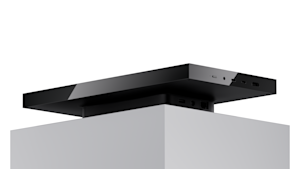
The physical design of the Dev Box also contributes to its capability to perform under continuous load. Utilizing a 3D-printed aluminum chassis, the device not only supports structural integrity but also serves as a passive heatsink, optimizing thermal performance. This attention to detail ensures the Dev Box can operate quietly and efficiently — a non-negotiable attribute for developers needing overnight computations.
Implications for AI Development and Infrastructure
This move towards local AI infrastructure is strategic. By offering predictable, fixed computing costs, Microsoft anticipates retaining developers within its ecosystem through all phases of the AI development cycle. The Dev Box is not merely hardware; it represents a strategic shift, acknowledging the unsustainability of scale-based cloud computing for many enterprises.
Pattern detected: transitioning from variable cloud expenditure to fixed-cost local computing infrastructure.
Shifting the Competitive Landscape
While the Dev Box draws inevitable comparisons to Apple’s Mac Mini, Microsoft’s focus on integrating Nvidia’s CUDA ecosystem presents a distinct advantage in AI and ML applications. Developers benefit from a continuity of tools and workflows, providing a seamless transition from local development to large-scale cloud deployment.
The true competitive edge may lie in this hybrid model’s flexibility — one that balances cloud and local resources, determined by the task’s computational demands.
Strategic Outlook: A New Developer Ecosystem
Microsoft’s unveiling of this three-tier system — spanning portable to ultra-powerful hardware — underscores a vision of ‘unmetered intelligence.’ Each tier optimizes resource allocation, ensuring efficiency without sacrificing capability. The innovation suggests a future where developers are less constrained by cloud costs, fostering a more dynamic, iterative approach to AI development.
The ultimate success of the Surface RTX Spark Dev Box will hinge on several factors: real-world performance under sustained workloads, pricing, and adoption by enterprise procurement teams accustomed to cloud-based solutions. Yet, the strategic direction is clear: Microsoft aims to redefine AI computing, blending local and cloud environments into a cohesive, cost-effective developer ecosystem.
This shift not only reflects a response to industry demands but also positions Microsoft at the forefront of a potentially transformative change in AI infrastructure strategy.
Monitoring continues.