
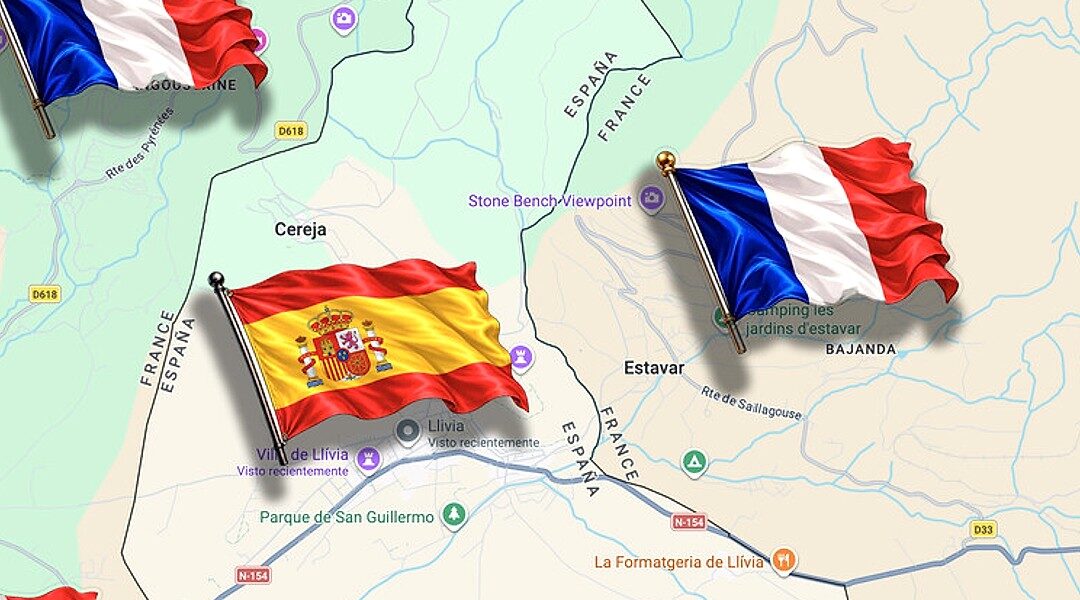
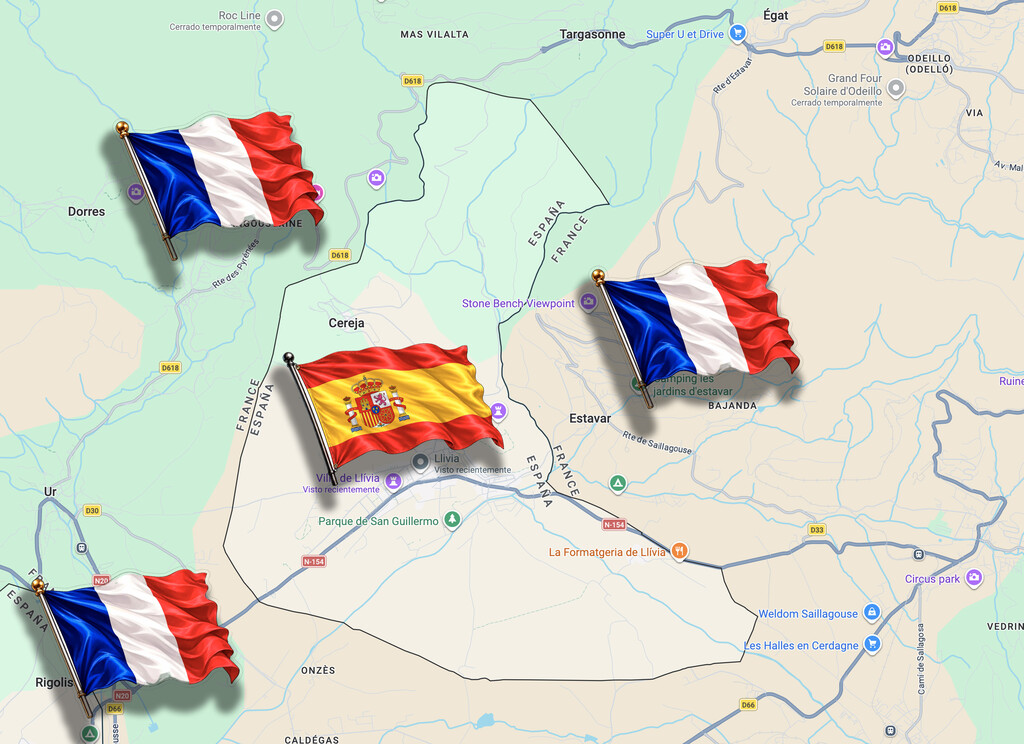
Explore the unique case of Llívia, a Spanish enclave in France, born from a 17th-century treaty. Discover its history and implications of geopolitical anomalies.
Llívia is not just another dot on the map; it is a historical anomaly that emerged due to the intricate dance of 17th-century diplomacy. Nestled in the French region of Cerdaña, this Spanish municipality stands out as a testament to how a single word can shape history. The story of Llívia is a reminder of the delicate and often surprising nature of political geography.
The tale begins in 1659 during the tense negotiations that followed the conclusion of the Franco-Spanish War. The Treaty of the Pyrenees, signed in the Bidasoa River’s Isle of Pheasants, marked the end of a 24-year conflict. Both nations were eager to cement their borders, but the lines in Cerdaña were anything but straightforward. Spain faced the daunting task of ceding 33 villages to France, and as the negotiations dragged on, Llívia’s unique status as a ‘villa’ rather than a ‘pueblo’ became a focal point.
The Treaty of Llívia
On November 12, 1660, the Treaty of Llívia was formalized. The Spanish negotiators leveraged Llívia’s designation as a ‘villa,’ a title granted in 1528, which exempted it from the list of territories to be handed over to France. This distinction was not merely a semantic nuance but a recognized legal category that preserved Llívia’s Spanish identity. Historian Agustí Alcoberro notes that without this legal maneuvering, Llívia would likely have been absorbed into France along with the others.
Enclave Dynamics
Today, Llívia remains a Spanish enclave, encapsulated within French boundaries, connected to its motherland by a slender road. This road, a lifeline cutting through foreign terrain, underscores the complex dynamics of territorial enclaves. In 1866, the third Treaty of Bayona ensured the road’s open status, facilitating access to pastures. Such agreements illustrate the continual negotiation of sovereignty and local needs, shaping Llívia’s function as both a community and a geopolitical curiosity.
The ‘war of the stop signs’ in the 1970s further illustrates how local actions can have broader implications. When France placed stop signs along the critical access road, Llívia’s residents responded by removing them, leading to a symbolic struggle over autonomy and control. Such incidents highlight the daily realities and tensions that arise from historical agreements set centuries prior.
Historical Significance
Llívia is not only a geographical and political entity but a repository of cultural heritage. Its historical pharmacy, the Farmacia Esteva, challenges the notion of continuous familial ownership from the 15th century, though its collection remains a significant artifact of European pharmacy history.
Delegated Cognition and Legal Distinctions
From a broader perspective, Llívia exemplifies the concept of delegated cognition in geopolitical terms. The reliance on historical legal distinctions to maintain its status is a form of delegated decision-making, where past guidelines continue to influence present-day realities. Such historical contingencies illustrate how human behavior and administrative structures adapt to longstanding legal frameworks.
In conclusion, Llívia’s story extends beyond mere historical curiosity; it stands as a testament to the intricate and often unpredictable outcomes of diplomatic negotiations. The village’s preserved Spanish identity in a foreign land exemplifies the role of legal classifications in shaping geopolitical landscapes. As Llívia continues its quiet existence surrounded by France, it serves as a living artifact of how history, law, and human agency intersect in unexpected ways. Observation recorded.