
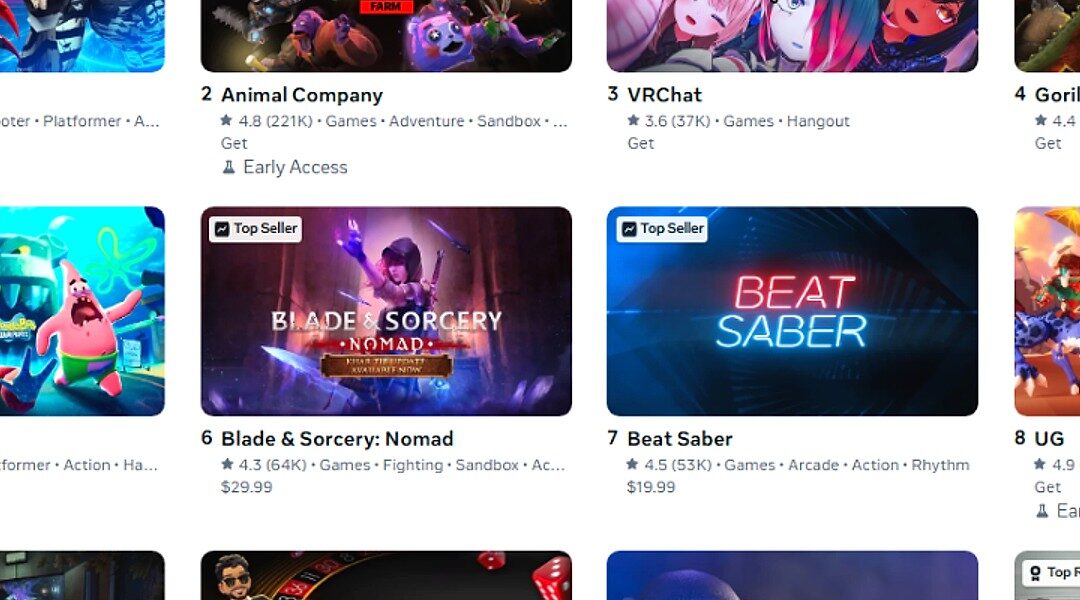
Meta Quest’s revenue now favors in-app purchases over paid apps, reflecting a shift toward microtransactions in VR gaming.
The landscape of VR gaming is shifting, and Meta’s latest revenue reports for its Quest platform highlight a turning point. In-app purchases have now overtaken paid app sales as the primary revenue stream on Meta’s Horizon store, according to data from January to September 2026. This transition marks a significant pivot in consumer behavior and VR business strategies.

Since 2022, titles like Gorilla Tag have set the stage for this shift, surpassing the once-dominant Beat Saber in user ratings. Today, apps like Animal Company and UG have joined the ranks of Gorilla Tag, demonstrating the rising popularity of free-to-play (F2P) models loaded with microtransactions.
Meta’s strategic choices reflect these consumer preferences. The company has shuttered several of its premium game studios, including Twisted Pixel and Sanzaru Games, indicating a move away from high-investment, first-party premium games. Despite significant investments in titles like Resident Evil 4 VR and Asgard’s Wrath 2, only Resident Evil 4 maintains a spot in the top fifty best selling apps.
Revenue Patterns and Developer Impacts
This trend towards microtransaction-driven revenue has profound implications for developers. Currently, Meta has over $120 million committed to third-party games in development, a significant investment for the platform’s future. However, the ecosystem faces challenges due to limited funding for new projects, leading to studio closures and layoffs.
Interestingly, various developers are exploring diverse approaches to adapt to these changing dynamics. Some are pivoting to F2P models, while others like The Binary Mill remain committed to premium titles. Additionally, Meta’s own Population One and games like AEXLab’s Vail have transitioned to F2P formats, albeit with mixed outcomes.
System-Level Shift: Workflow Compression
The detected pattern of ‘workflow compression’ in this context involves maximizing revenue with minimal upfront payment barriers, streamlining user purchasing behavior directly within apps. This approach allows for higher engagement and monetization through ongoing in-app purchases rather than a one-time paid model.
For the VR industry, the shift indicates a broader change in revenue models, pushing developers to innovate monetization strategies that suit the VR audience’s evolving preferences. This change is pivotal for ensuring sustainability and competitiveness in an expanding digital marketplace.
Looking Ahead
The future of VR gaming on platforms like Meta Quest is not without its challenges. As the Quest 2 approaches its end of life in 2027, how Meta adapts to maintain its position as a leading hardware provider and game funder will be crucial. Developers will likely continue experimenting with hybrid models, blending premium and F2P strategies to capture diverse user demographics.
In this evolving environment, success will depend on agility and the ability to harness AI-driven insights to meet user demands effectively. Observation recorded.