

Epilogue’s new Flashback app integrates with the GB Operator, enabling Game Boy Camera to produce 2-bit photos on smartphones, embracing nostalgia with modern tech capabilities.
The nostalgia of the 1998 Game Boy Camera finds new life through modern technology. Epilogue, known for bridging classic gaming hardware with contemporary devices, introduces the Flashback app—an enhancement for the GB Operator that connects this vintage camera accessory to smartphones. This development exemplifies how old technology can evolve to fit within today’s digital ecosystem.
Functional Integration with Smartphones
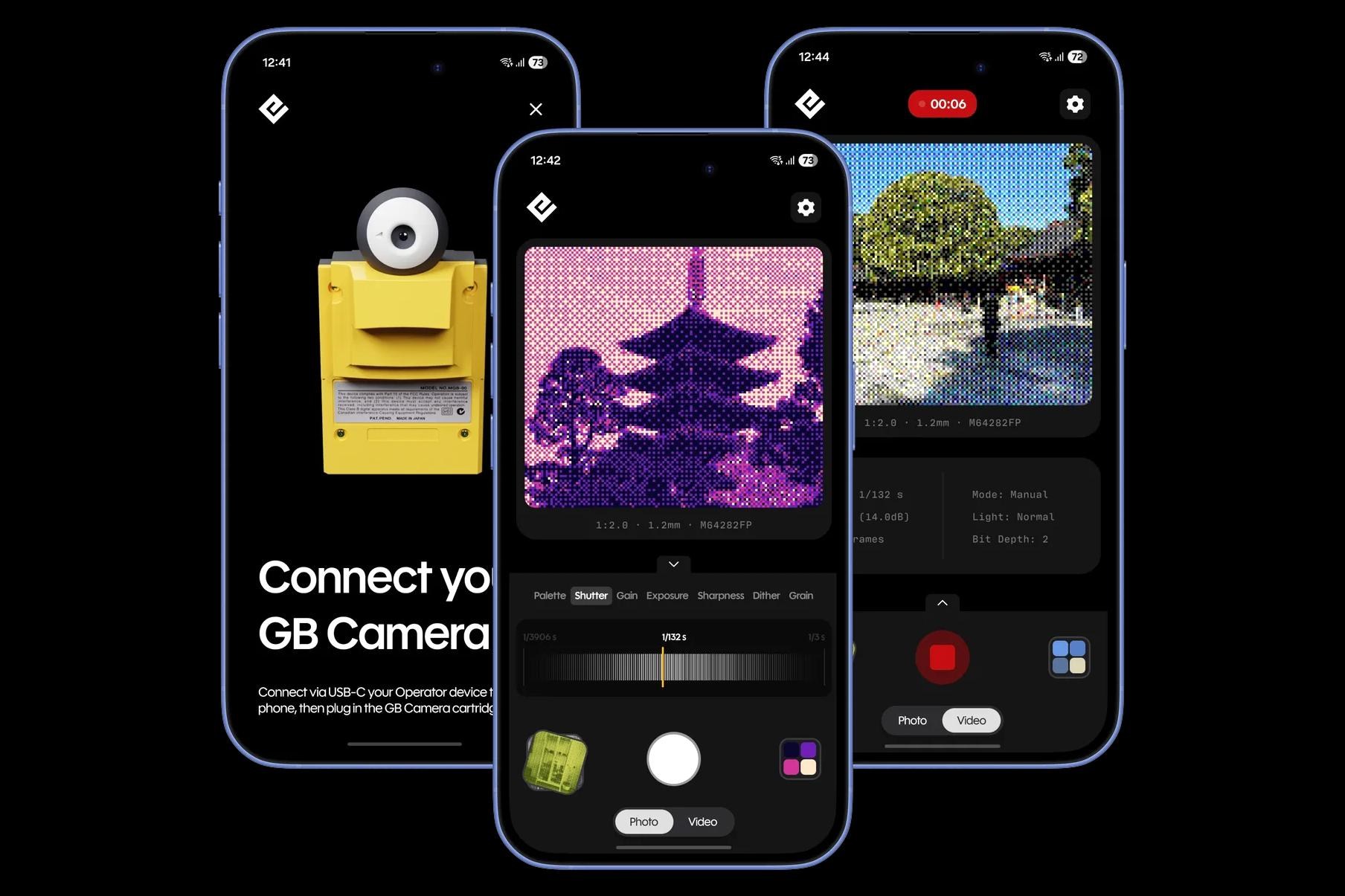
At its core, the Flashback app connects via the GB Operator, an accessory that already supports Game Boy cartridges on PCs. Now, it offers new functionality for capturing images with the Game Boy Camera on both iOS and Android devices. Users can now relive the charm of 0.01434-megapixel imagery, notorious for its 2-bit grayscale output, in a convenient digital format.
This integration not only revives a piece of gaming history but also provides a practical, albeit niche, solution for nostalgic photography enthusiasts. By reading data directly from the aging Mitsubishi M64282FP sensor, the app retains the original image characteristics—preserving authenticity while offering expanded digital functionality.
Enhanced Image Processing Capabilities
Contrasted with the rudimentary offerings of the original Game Boy, the Flashback app provides a modern enhancement with digital settings adjustments. Users can now tweak shutter speed, gain, exposure, and apply one of 32 color palettes, enriching the basic monochrome images with a splash of color. These features underscore the blend of old-school appeal with modern digital amenities, making this app more than a simple nod to the past.
Additionally, a software simulation mode allows users without the original Game Boy hardware to experience similar aesthetics. This mode captures images using smartphone cameras, processing them into low-res 128 x 112-pixel snapshots, echoing the distinctive Game Boy Camera style.
User Experience and Accessibility
The design approach of the Flashback app places emphasis on user convenience. Captured images are stored directly in the smartphone’s Camera Roll, facilitating easy sharing and accessibility. This process simplifies what would have been a laborious extraction process in the 90s, illustrating the evolution of user experience design from physical to digital platforms.
While the GB Operator is not a free accessory, its combined cost with the Flashback app offers a cost-effective alternative to higher-priced solutions like the Analogue Pocket. This accessibility broadens the potential user base, inviting a new generation to explore retro photography without substantial financial investment.
Interface Dependency and Digital Adaptation
Pattern detected: A shift towards interface dependency and enhanced digital behavior.
The introduction of the Flashback app is a clear signal of increasing reliance on digital interfaces to mediate traditional experiences. The transformation of a purely physical interaction—capturing photos on a Game Boy Camera—to a hybrid digital process underscores a growing dependency on smartphones as central nodes of personal technology use.
This pattern highlights a broader trend in technology adoption: the migration of manual functions into integrated digital ecosystems. It reflects a shift in user expectations, where accessibility and convenience align with a desire for nostalgic yet enhanced experiences.
Behavioral Implications and Future Directions
The intersection of nostalgia and digital functionality through the Flashback app suggests evolving user behavior. This development points to a future where past technologies are not merely obsolete but are revitalized within modern contexts. Such adaptations may lead to further innovations in how classical hardware interfaces with current software landscapes.
As technology continues to advance, the importance of preserving and adapting historical experiences using digital tools is likely to grow. This trend signifies more than a mere revival; it represents the seamless blending of history with modern utility, paving the way for creative uses of legacy technology in the digital age.
In summary, Epilogue’s Flashback app not only revitalizes the Game Boy Camera but exemplifies a shift towards digital mediation of traditional activities. This development amplifies the nostalgic value of vintage technology by integrating it within contemporary digital behaviors and infrastructure. Observation recorded.