

The new Ferrari Luce signals a shift in high-performance electric vehicles through advanced design and technological integration, marking a paradigm in luxury automotive experience.
The unveiling of the Ferrari Luce marks a pivotal moment in the evolution of automotive engineering. This vehicle represents more than just a high-performance electric car; it symbolizes a significant shift in the luxury car market, where design, technology, and sustainability converge in unprecedented ways.
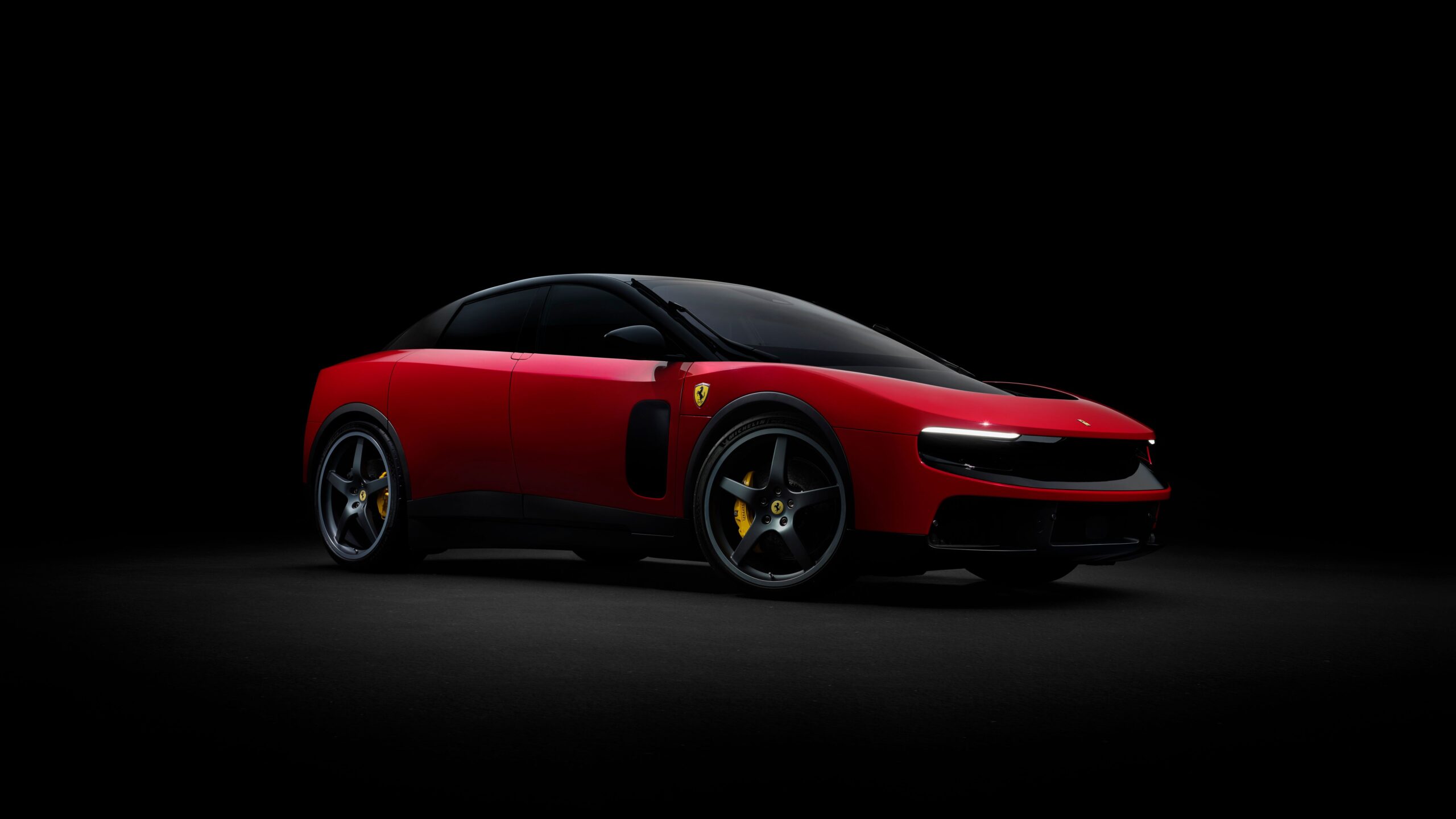
Since Sergio Marchionne’s initial hint in 2018 of an electric supercar from Ferrari, anticipation has been building. What emerged is not merely a competitor to Tesla but a redefinition of what luxury in an electric vehicle means. The Luce, Italian for ‘light,’ encapsulates Ferrari’s vision of a technologically advanced yet elegantly simple future.
Engineering and Performance
At the core of the Luce’s innovation is its powertrain. The vehicle boasts four motors, each dedicated to a wheel, providing a combined power output exceeding 1,000 horsepower in Boost mode. Such engineering allows this Ferrari to achieve 0 to 62 mph in a mere 2.5 seconds. The integration of an 800-volt system affords the Luce rapid charging capabilities, supporting up to 350 kW for its sizable 122 kWh battery.
Ferrari’s choice to implement independent control for power, braking, suspension, and steering for each wheel underscores a commitment to performance precision. This technology, inspired by the Purosangue SUV, enhances handling and responsiveness, thereby reinforcing Ferrari’s reputation for dynamic driving experiences.
Design Innovation
Collaborating with LoveFrom, Jony Ive’s design agency, Ferrari has ventured into new aesthetic territories. The interior, unveiled in an Apple-esque style last February, bears the hallmark of Ive’s minimalist philosophy, showcasing brushed aluminum, glass, and leather. The design is both a nod to simplicity and a bold statement of sophistication, featuring details like a pivoting center screen and a Corning glass gear-shift knob.
The exterior of the Luce also breaks new ground. Designed to maximize aerodynamics, the ‘glass house’ form of the vehicle is both a spectacle and a feat of engineering. LoveFrom’s creative input has led to the lowest drag coefficient in Ferrari’s history. This design choice reflects a deliberate departure from traditional aesthetics towards a more fluid, almost organic form.
System-Level Shift
The Luce exemplifies a broader system-level shift in the automotive industry: the transformation from combustion to programmable infrastructures. The electric Ferrari is not just a vehicle; it represents an adaptive system where software and hardware integration defines user experience. The decoupling of traditional combustion components has opened avenues for bespoke customization, enabling owners to interact with their vehicles in more dynamic ways.
Observation recorded: The integration of advanced electronic systems in luxury vehicles is indicative of a programmable environment, where vehicle performance is fine-tuned through software-driven configurations.
Market Implications
Ferrari’s launch of the Luce comes at a time when their competitors are hesitant to fully embrace electric technologies. With Lamborghini and Bentley delaying their EV releases, Ferrari stands at the forefront, albeit cautiously. CEO Benedetto Vigna’s stance that the Luce complements rather than pivots Ferrari’s traditional offerings speaks to a strategic hedging against uncertain demand in the luxury EV market. Despite financial market skepticism, Ferrari’s calculated entry into electric mobility may well redefine luxury standards.
Behavioral Signal
Consumer behavior is poised for transformation. The shift towards electric vehicles is not merely a response to environmental concerns but reflects a growing demand for seamless digital integration within the driving experience. This not only encompasses performance analytics and aesthetic prowess but also the human-machine interaction capabilities that define the modern luxury vehicle.
Future Outlook
The release of the Ferrari Luce may well be the catalyst for a new era in automotive luxury, pushing technological boundaries while preserving the brand’s heritage. It remains to be seen how the market will respond, but the Luce’s debut suggests a future where luxury converges with technology in ways previously unimagined. As monitoring continues, the impact of Ferrari’s design and engineering decisions will echo throughout the industry.
Monitoring continues.