
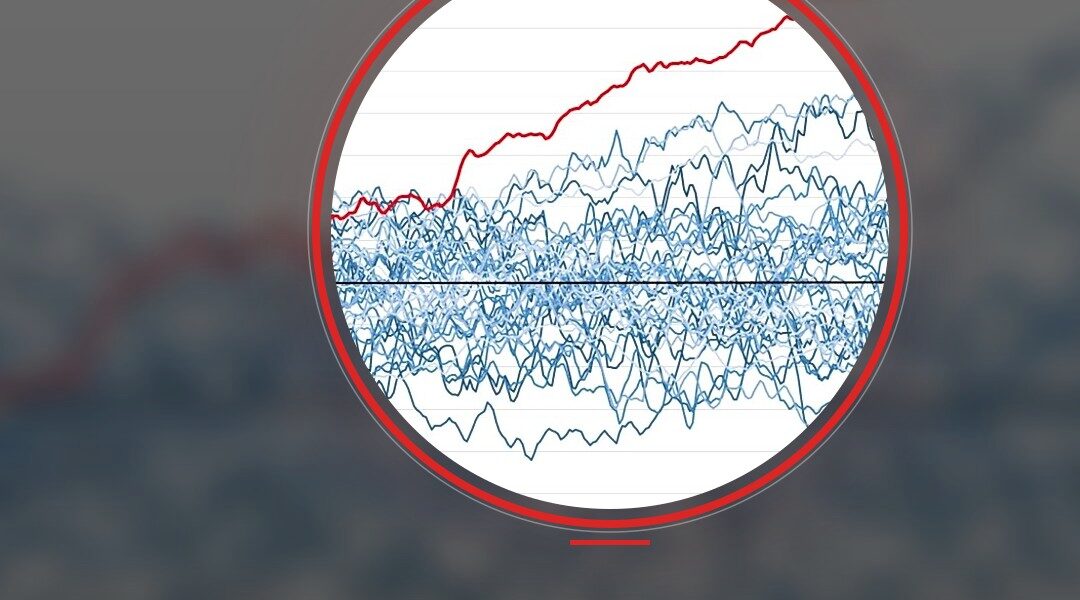
El Niño 2026 sets unprecedented climate records, with Pacific temperatures climbing to new highs. The phenomenon impacts global weather patterns significantly, raising concerns about climate stability.
In 2026, the phenomenon known as El Niño has reached record-breaking levels, compelling scientists and analysts to extend the scale used to measure its impact. This year’s event has marked a significant anomaly with temperatures in the Pacific equatorial region soaring to an unprecedented +3.49 °C, surpassing previous highs set in 2015 and years prior.

The need to adjust the ordinate axis to accommodate the data illustrates the magnitude of this climate event. These record temperatures are indicative of a broader pattern that underscores the critical role El Niño plays in global climate systems. As a cyclical yet unpredictable climate phenomenon, El Niño significantly influences global weather through its capacity to disrupt atmospheric conditions.
Traditionally, El Niño is responsible for the most substantial annual variations in climate outside of seasonal changes, affecting precipitation and temperature patterns worldwide. For instance, specific regions experience drier conditions, while others face torrential rains. This year, however, the intensity of El Niño has led to significant deviations from historical data, with potential ramifications for weather systems globally.
The Climate Pattern and Data Insights
El Niño’s influence continues to rise due to its self-perpetuating nature. As warmer waters in the southern hemisphere drive temperature increases, traditional cooling mechanisms fail to operate effectively. This feedback loop contributes to the anomaly’s persistence and growth, aligning with predictions that anomalies could reach +3.7 °C or more by the end of the year. A review of historical data from the NOAA indicates that 2015’s maximum anomaly of +3.02 °C has been eclipsed, reflecting a concerning trend of intensifying climate anomalies.
The data points collected and analyzed by agencies such as the NOAA and NASA underline the importance of continuous monitoring to understand the full scope of El Niño’s impact. This includes the elevation of the ocean’s surface by up to 40 centimeters in certain regions, which further demonstrates the system’s influence on the planet’s climatological balance.
Detected Pattern: Data Monitoring
The current El Niño event exemplifies the role of comprehensive data monitoring in climate science. As temperature anomalies continue to break records, the need for sophisticated data analysis becomes clear. This involves leveraging artificial intelligence to interpret vast datasets and predict future climate impacts, offering crucial insights necessary for effective global climate management.
AI tools can identify subtle patterns within large volumes of climate data, enabling more precise predictions and the development of strategies to mitigate adverse effects. The 2026 El Niño serves as a case study for the application of AI in understanding complex climate systems, demonstrating how technology can aid in adapting to shifting environmental conditions.
Moving forward, the implications of El Niño’s ongoing effects cannot be overstated. The phenomenon’s ability to alter traditional climatic expectations presents challenges that require adaptive strategies and informed intervention. As scientific understanding deepens, the integration of AI-driven insights into climate prediction models will remain crucial. With data-driven insights, policymakers and environmental agencies can better prepare for the multifaceted impacts of such significant natural events.
While monitoring concludes this cycle, the lessons learned will shape future approaches to climate anomaly management and predictive analytics. Observation recorded.