

Compass offers a minimalist VR flight exploration experience where simplicity and discovery take precedence over complex mechanics.
In the virtual reality space, complexity often drives user engagement through intricate worlds and mechanics. Yet, sometimes it’s the simplicity that captures the imagination. Enter Compass, a VR flight exploration game that strips down flying to its basics, prioritizing instinctive control and the unfiltered joy of discovery.
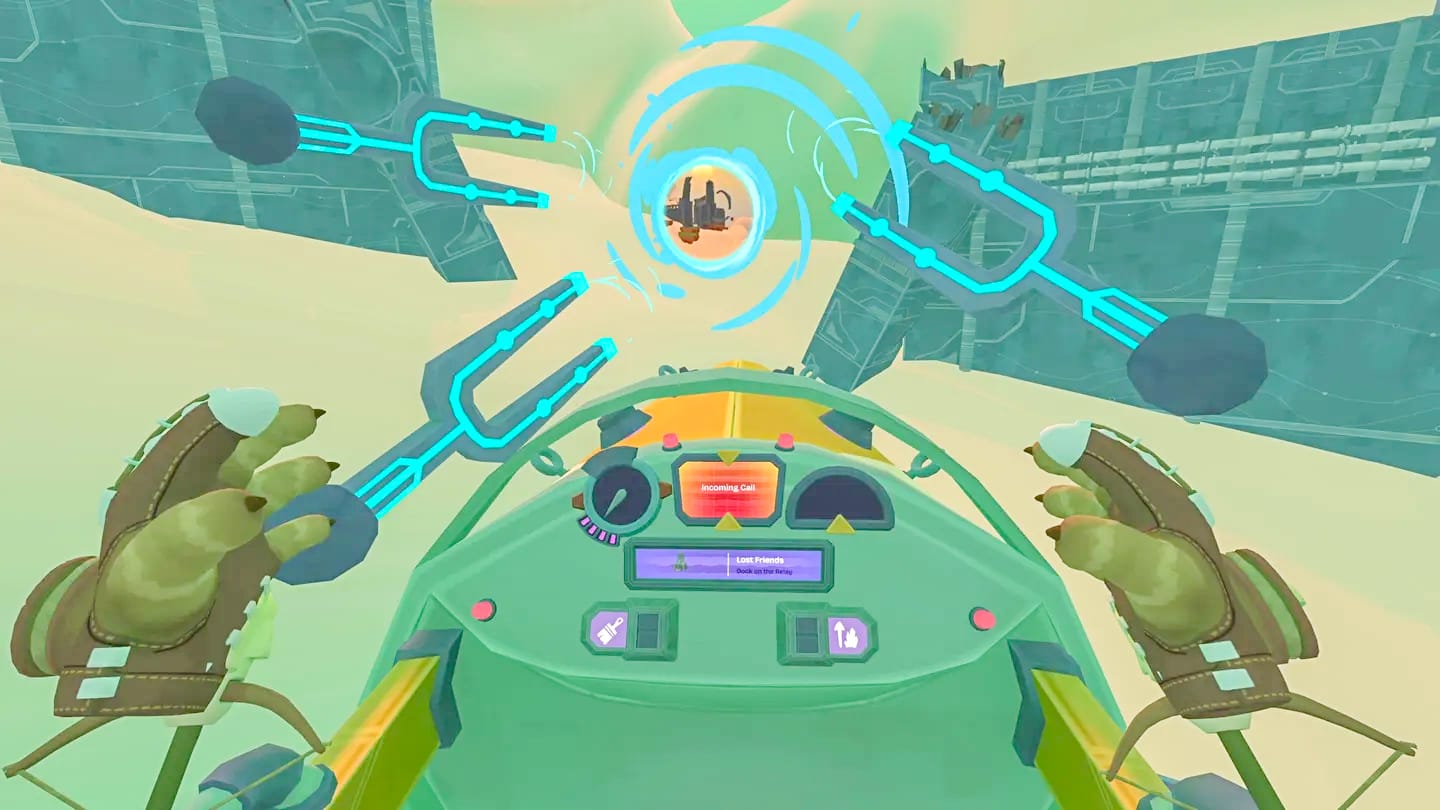
Developed by Trebuchet and published by Creature, Compass released on May 28, 2026, offers a charming escape into a cosmos where users play as scouts guiding an aerial caravan of whimsical alien creatures. The task is straightforward, yet intriguing: deliver a cosmic egg to the ‘great incubator,’ all while avoiding a space whale. This narrative, though peculiar, is set against an equally distinctive backdrop.
Flight Mechanics: The Core Experience
Compass is less about button memorization and more about feeling. The game’s flight controls are instinctive, providing a tactile experience. Players manipulate their virtual yoke to ascend, descend, and maneuver through the skies, making flying both intuitive and forgiving.
Observation recorded: The design allows users to focus on the immersive journey rather than intricate controls, encouraging a natural interaction between player and environment. This simplification reflects a broader trend in VR: designing interfaces that prioritize user experience over technical complexity.
Exploration and Discovery
As players navigate through a vast open sky, the gameplay emphasizes exploration. Equipped with nothing but a ship and the open air, players encounter floating structures, islands, and the occasional friendly or hostile entity. This unstructured exploration fosters a sense of wonder and curiosity.
Though the game world can feel sparse, this minimalism encourages users to appreciate the atmosphere. The uninterrupted vistas and serene soundtrack invite players into a state of contemplation, highlighting a key trend within VR development—using absence and space as narrative tools.
Puzzles as a Complementary Layer
While flying remains the focus, Compass integrates environmental traversal puzzles. These sections require players to leave the cockpit and interact with their surroundings, using grappling hooks and manipulating energy beams to progress. Although not overly challenging, these puzzles diversify the gameplay and add depth to the experience.
The puzzles echo early game design philosophies where simplicity aims to make players feel clever without overwhelming them. This aligns with the trend of simplifying interaction to focus player attention on creative problem-solving rather than mechanical proficiency.
User Experience and Comfort
Compass offers several comfort settings, accommodating various play styles. Whether seated or standing, players can adjust movement sensitivity, including snap or smooth rotation options. These features ensure the game remains accessible, reducing potential motion sickness, a common barrier in VR.
Tracking user comfort and adaptability shows how VR technology is progressing towards inclusivity, aiming to offer personalized experiences that cater to individual comfort levels.
Pattern detected: user experience simplification enhances engagement through instinctive interface design.
The Minimalist Approach
What sets Compass apart is its fearless embrace of minimalism. The choice to offer a sparse game world encourages players to project their creativity into the experience. Rather than inundate users with stimuli, Compass trusts them to find joy in self-directed exploration.
This minimalist approach is not universally favored; those seeking constant action might find the pacing slow. However, for players willing to immerse themselves in the rhythm of exploration, Compass delivers a uniquely captivating experience.
Despite its limitations, Compass marks a significant shift in VR gaming. It embodies a departure from complex interactive systems in favor of intuitive, streamlined experiences. By favoring user experience over mechanical complexity, Compass exemplifies a broader movement in digital spaces: enhancing accessibility through simplicity.
Monitoring continues. Pattern detected.