

Anthropic’s Claude Design revamps with new features, addressing token consumption and improving enterprise integration through a design system compliance layer.
When Anthropic released Claude Design in April as a research preview, its rapid adoption underscored a significant market interest in intelligent design tools. Over one million users engaged with it during the first week, highlighting both its appeal and a critical flaw—excessive token consumption. This is more than a technical hiccup; it reveals underlying economic challenges in generative design, where resource use is integral to feasibility.
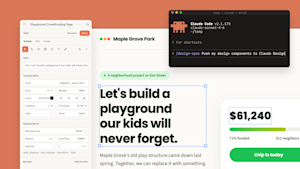
Fast forward two months, Anthropic has significantly overhauled Claude Design, addressing the token issue while redefining its role from a mere tool to a strategic component within enterprise workflows. This transition aligns with Anthropic’s aggressive expansion in the AI sector, as illustrated by its recent product launches and collaborations, including a major alliance with DXC Technology.
Enterprise Integration through Design System Compliance
The standout feature of the latest Claude Design update is the design system import capability. This feature enables users to integrate company-specific design systems directly from GitHub, design files, or raw uploads. Such integration ensures that the design outputs consistently adhere to brand guidelines, a vital requirement for large enterprises. This capability reduces the common design-to-engineering ‘handoff’ issues, as Claude Design maintains brand compliance at speed and scale.
Moreover, the enhanced admin role allows for the approval of a single design system, locking it to maintain enterprise consistency and making Claude Design a contender for enterprise procurement. This shift from a ‘blank canvas’ approach to a structured, brand-compliant tool signals a deliberate strategy to meet enterprise needs more effectively.
Bidirectional Integration with Claude Code
Another critical update is the bidirectional integration between Claude Design and Claude Code, effectively bridging the long-standing gap between design and engineering. This integration allows for seamless workflow continuity, ensuring that design prototypes and codebases align without loss in translation.
Anthropic aims to eliminate the traditional ‘handoff’ issues by allowing designs to flow naturally into code implementation. This integration matters because it leverages shared component libraries, effectively removing human interpretation discrepancies that typically arise in the design-to-code process.
Anthropic’s research supports this integration, showing that domain expertise is the key driver of success across various coding tasks. By enabling designers to transition fluidly between design and code, Claude Design positions itself as a tool that complements rather than replaces human expertise.
Token Consumption and Economic Implications
The initial release of Claude Design faced significant challenges due to its high token consumption, which restricted access to individual users and small teams. In response, Anthropic has implemented measures to reduce token usage while maintaining output quality. Claude Design now shares usage limits with other Claude products, providing users with greater flexibility.
Despite these improvements, the economic challenges of generative design remain. Creating varied design outputs demands significant model reasoning, which inherently consumes more tokens compared to simpler tasks like text-based chat interactions. While Anthropic’s optimizations push the limits further, the economic model of token usage in generative design is still a pressing concern, particularly for Pro subscribers.
The new editor mitigates some of these issues by allowing direct element manipulation without consuming tokens, addressing one of the primary sources of token drainage in the original release.
Expanding Export Capabilities
The third major update is the expansion of export destinations, positioning Claude Design as a creative hub rather than a final destination. New export partners such as Adobe, Canva, and Vercel emphasize this strategy, facilitating seamless transitions from design to completion in various digital environments.
By building a comprehensive integration ecosystem, Anthropic provides a compelling alternative to emerging open-source solutions. This approach focuses on forming strategic partnerships rather than replicating open-source flexibility, creating a unique moat around Claude Design’s capabilities.
Strategic Alignment within Anthropic’s AI Ecosystem
Claude Design’s evolution reflects a broader strategic alignment within Anthropic’s AI ecosystem. The integration across design, code, and enterprise operations signifies a platform strategy rather than a fragmented tool approach. This unified model enables Claude to serve as a central node in diverse workflows, from small business operations to large-scale enterprise functions.
This strategy underscores a shift from individual tool development towards building a cohesive ecosystem where AI-driven solutions streamline complex processes across various domains.
Anthropic’s enhancements in Claude Design mark a significant step in the convergence of design and engineering workflows, optimizing enterprise integration and addressing token consumption challenges. This evolution suggests a continued push towards embedding AI more deeply across enterprise stacks, reinforcing the critical importance of workflow compression in modern digital infrastructures. Monitoring continues.