

China’s successful recovery of its Long March 10B rocket marks a significant shift towards reusable launch architectures, challenging existing space dynamics.
The recent recovery of China’s Long March 10B rocket marks a pivotal moment in space exploration, one that underscores the nation’s commitment to advancing reusable rocket technology. As the third entity globally to achieve this feat, China joins the ranks of SpaceX and Blue Origin, signaling a significant alteration in the landscape of space infrastructure.
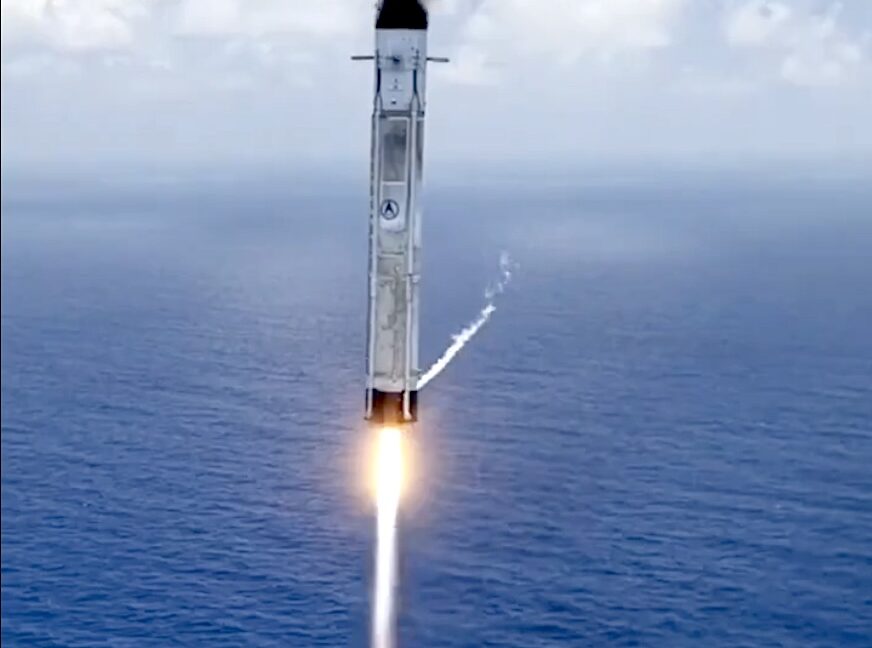
Unlike previous methods employed by its competitors, the Long March 10B introduced a novel approach—a sea-based net system. This technique, reminiscent of SpaceX’s Starship landing system, allows China to enhance payload efficiency by eliminating the need for landing legs, thereby reducing the rocket’s descent fuel consumption.
Technological Milestone and Implications
China’s achievement extends beyond a mere technical accomplishment. By successfully employing a net capture method on an offshore platform, China minimizes the structural additions on the Long March 10B rocket. This approach not only optimizes resource allocation but also bolsters the country’s long-term goals of reusable launch systems.
Strategically, this capability enables a more efficient path to orbital deployment, potentially increasing the frequency and flexibility of launches. Given that China’s space program aims to match or exceed the capabilities of established players such as the United States, this development is a strategic leap forward. Importantly, this success lays the groundwork for more ambitious projects, including manned lunar missions by 2030.
Engineering Highlights
The Long March 10B’s maiden flight, powered by seven kerosene-fueled engines, underscores significant engineering prowess. With a payload capacity akin to SpaceX’s Falcon 9, albeit slightly less, this rocket demonstrates China’s evolving capability in medium-lift vehicles. The utilization of the YF-100K and methane-fueled engines articulates a forward-looking mission design tailored to the demands of versatile space missions.
Of particular note is the vehicle’s dual-stage design, which facilitates multiple engine restarts and high-precision navigation. These features are crucial for maintaining trajectory accuracy and efficiency, essential for missions requiring precise orbital insertions or landings.
System-Level Shift: Infrastructure Evolution
Pattern detected: The Long March 10B’s recovery heralds a transformation in launch vehicle reuse. This shift represents more than an engineering triumph; it embodies an evolving global infrastructure for space access, gradually transitioning from expendable to sustainable models. As China scales its design to include more powerful configurations like the Long March 10 for lunar missions, we witness the maturation of a robust, reusable rocket paradigm.
Integration of reusable systems not only optimizes operational costs but fundamentally alters geopolitical space strategies. By mastering these technologies, China postures itself as a formidable contender in space exploration, capable of rapidly deploying and iterating on its satellite and manned missions.
Competitive Dynamics and Global Implications
The implications of China’s advancements are not limited to infrastructure. They extend into the geopolitical arena, where space dominance is increasingly correlated with national power. US space agencies, aware of these developments, recognize the strategic threat posed by a more agile Chinese space program capable of increased launch cadences and strategic deployments.
As observed by US military officials, this advancement in China’s reusable rocketry amplifies their ability to sustain and expand space operations. This is particularly pertinent in the context of rapidly deploying constellations analogous to SpaceX’s Starlink. The competitive landscape intensifies as nations aim for strategic technological supremacy.
Challenging the Status Quo
China’s strides in space technology compel other nations to reevaluate their strategies and investments. The introduction of reusable rockets represents not merely an engineering triumph but a challenge to existing paradigms of space exploration, urging a global recalibration of priorities and capabilities.
If the Long March 10B is any indicator, future developments could accelerate a realignment in global space capabilities. As China positions itself at the forefront of reusable rocketry, the potential for collaboration or competition with international partners grows, shaping the future narrative of space exploration.
China’s successful recovery of the Long March 10B booster encapsulates a profound shift in space infrastructure. It exemplifies a move toward sustainable launch systems and signals a strategic commitment to advancing space technology. As monitoring continues, the global implications of this evolution in reusable rocketry invite further inquiry into its long-term impact on space exploration.
Monitoring continues.