

China’s strategic move by drilling one of the world’s deepest wells illustrates a significant shift in energy resource exploration, leveraging domestic technology.
In a notable stride towards dominating the global oil industry, China has completed the drilling of the Shendi Take-1, Asia’s deepest well and the second deepest globally. Located in the Taklamakan Desert, it reaches a staggering depth of 10,910 meters, achieved over 580 days of challenging engineering efforts.
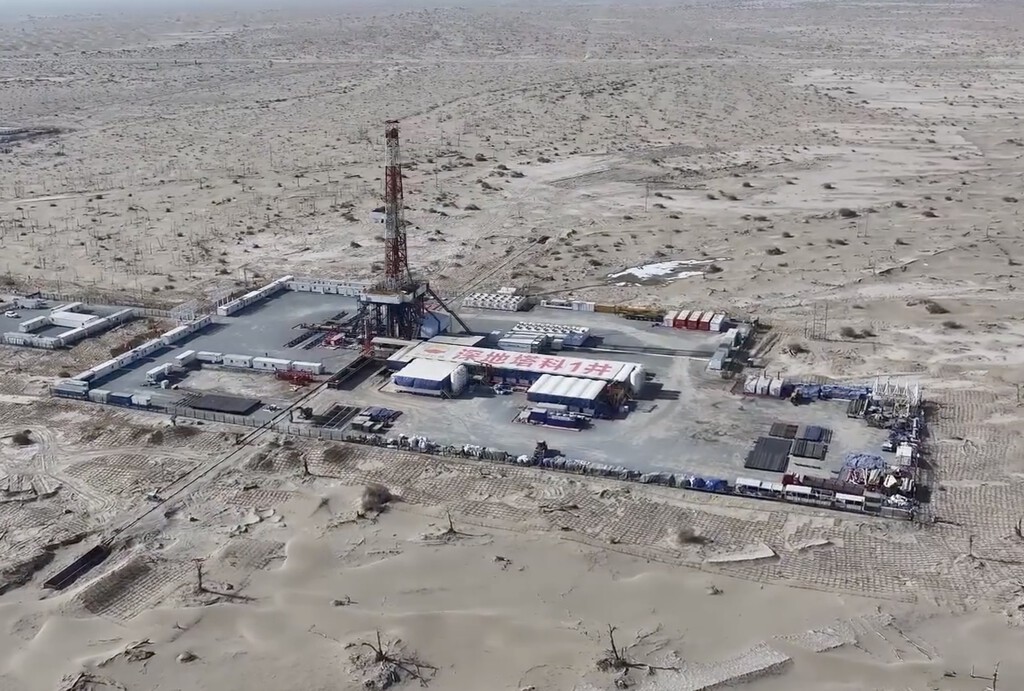
This ambitious project, led by the China National Petroleum Corporation (CNPC), reflects the country’s intent to maximize its domestic oil reserves and reduce dependence on foreign energy resources. China’s strategy involves enhancing its technological prowess in ultra-deep drilling, evidenced by the Shendi Take-1’s design and execution.
The project’s complexity is underscored by the fact that the final 910 meters of drilling required 300 days, illustrating the exponential increase in difficulty as depth increases. The well has not only set a record for its depth but also for its dual purpose in both scientific exploration and hydrocarbon extraction.
System-Level Shift
The development of Shendi Take-1 epitomizes a significant system-level shift in terms of automation and technological innovation within China’s oil extraction sector. A striking 90% of the drilling technology was developed within China, signaling a move towards technological self-sufficiency. This includes the creation of a fully automated drilling platform designed to withstand extreme temperatures and pressures encountered at such depths.
The platform’s automation includes diamond-tipped drill bits and efficient cooling systems that manage heat beyond 210 degrees Celsius, vital for maintaining operational integrity under these strenuous conditions. The automation of such complex tasks not only compresses workflow times but also minimizes human error and enhances safety measures in ultra-deep drilling operations.
Implications for Global Energy Dynamics
China’s achievement with the Shendi Take-1 aligns with its broader energy policy aimed at reducing foreign dependency and asserts its growing influence in global energy markets. The ability to efficiently tap into deep-seated reservoirs allows China to exploit previously unreachable resources, potentially altering the landscape of global oil supply and prices.
This development has ramifications beyond resource extraction. The technological innovations derived from this project may set new standards in drilling techniques worldwide, influencing how other nations approach resource extraction in difficult terrains.
Automation and Innovation at Play
The automation layer introduced by CNPC through the Shendi Take-1 project is a testament to the intricate coordination of advanced engineering systems. The decision to halt drilling at 10,910 meters was strategic, following the discovery of gas reserves, highlighting the automated system’s role in decision-making processes.
The Shendi Take-1 not only contributes to China’s oil extraction strategies but also supports scientific research, a dual benefit achieved through the probing of 12 geological formations and accessing rock samples over 500 million years old. The automated systems underpinning these operations facilitate an unprecedented examination of geological layers that were previously inaccessible.
Observation recorded. Continuous monitoring of developments in China’s strategic energy initiatives is essential as these advances in deep drilling technology could serve as precursors for further innovations within the global drilling industry.