
In 1990, a cave so vast it could hold 15 pyramids was found and lost in Vietnam. Rediscovered after 18 years, Sơn Đoòng remains a marvel of natural architecture.
In December 1990, in the dense jungles of central Vietnam, Hồ Khanh stumbled upon a geological marvel so immense that it defies ordinary comprehension. A crack in the limestone revealed the entrance to Sơn Đoòng cave, reputed to be the largest by volume in the world. This cavern, hidden beneath the forest canopy near the Laos border, initially eluded even its discoverer for nearly two decades.
Khanh, a local who earned his living from agarwood, was caught in a tempest when he sought refuge in the mysterious cave entrance. He was greeted by cold drafts and the roar of an underground river but chose not to enter. Oblivious to its size, he left the cave shrouded in legend for many years.
The Lost and Found of Sơn Đoòng
Years after his initial discovery, Khanh shared his experience with British cavers exploring Vietnam’s Phong Nha-Kẻ Bàng National Park. The atmospheric clues, those peculiar cold air currents, hinted at a cavernous space underground. Despite their expertise, the explorers failed to locate it due to the dense jungle and complex terrain.
It wasn’t until 2008, motivated by his earlier encounter and perhaps a hint of adventure, that Khanh retraced his steps and rediscovered the cavern. This time, he led an expedition the following year, unveiling Sơn Đoòng to the world.
Immense Proportions
With an estimated length of 8,950 meters and a volume approaching 38.5 million cubic meters, Sơn Đoòng could comfortably cradle 15 of the Great Pyramids of Giza. The primary passage is so large it can accommodate 40-story skyscrapers, a testament to the Earth’s ability to sculpt spaces of unimaginable proportions.
The Geological Mystery
Geologists date the cavern’s origins to between two and five million years ago, a result of persistent aquifer action on the limestone bedrock. The site continues to evolve, with the subterranean river reaching annual discharge rates of 400 to 450 cubic meters per second.
A Self-Contained Ecosystem
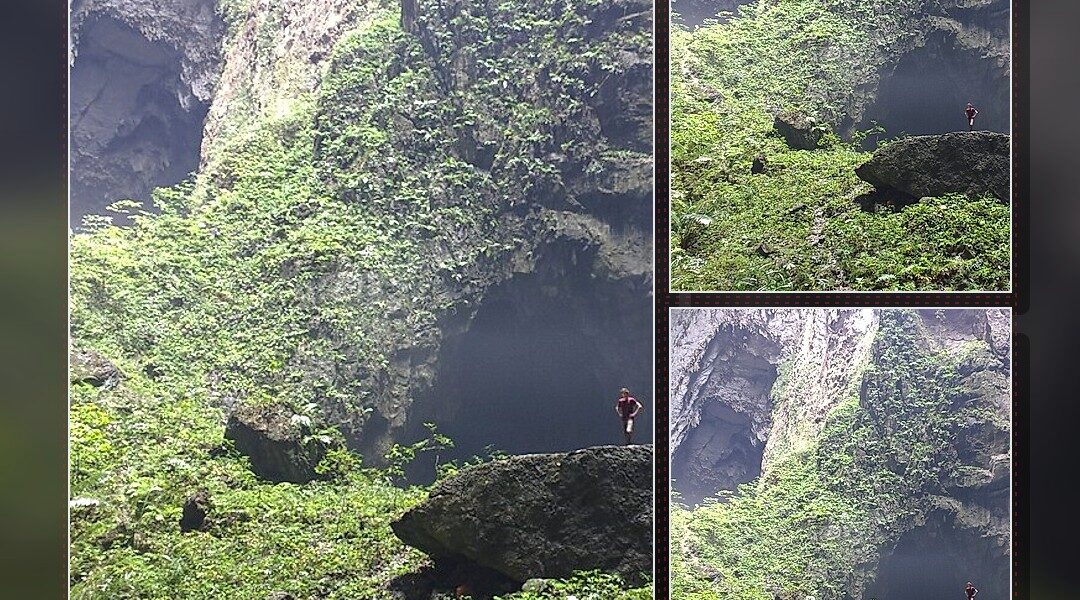
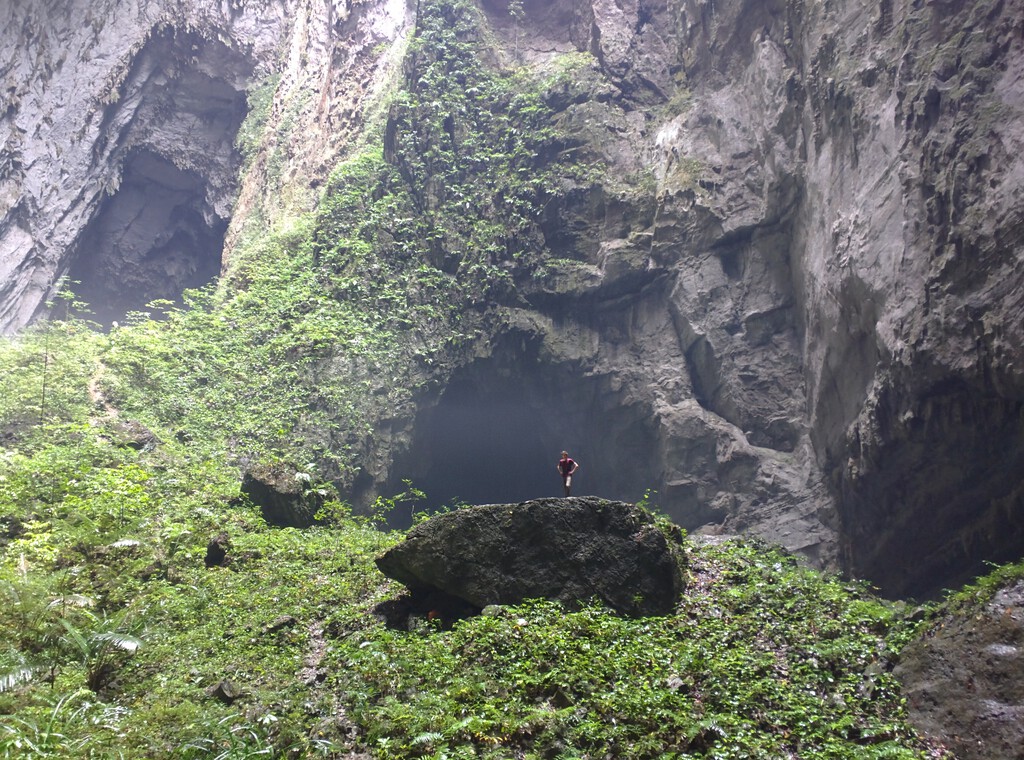
Sơn Đoòng is more than just an empty space. In areas where the ceiling has collapsed, sunlight penetrates, fostering rich patches of jungle undergrowth. These isolated ecosystems, with trees up to 30 meters tall, host a variety of wildlife, including primates and reptiles. Unique climatic conditions within the cave even create localized cloud formations.
Detected Pattern: Human Adaptation
The discovery and eventual exploration of Sơn Đoòng underline the human capacity for perseverance and rediscovery. Khanh’s narrative exemplifies the ebb and flow of human interaction with nature’s profound creations, and the eventual realization invites a dialogue on sustainable interaction with such wonders.
While tourism and scientific study have increased, balancing these pursuits with environmental conservation remains a challenge. The cave’s unique ecosystem demands a careful approach to prevent degradation by external influences, exemplified by debates over constructing a cable car to ease access.
With ongoing exploration, Sơn Đoòng not only reveals its mysteries but also prompts broader inquiries into human custodianship of natural phenomena. Monitoring continues.