
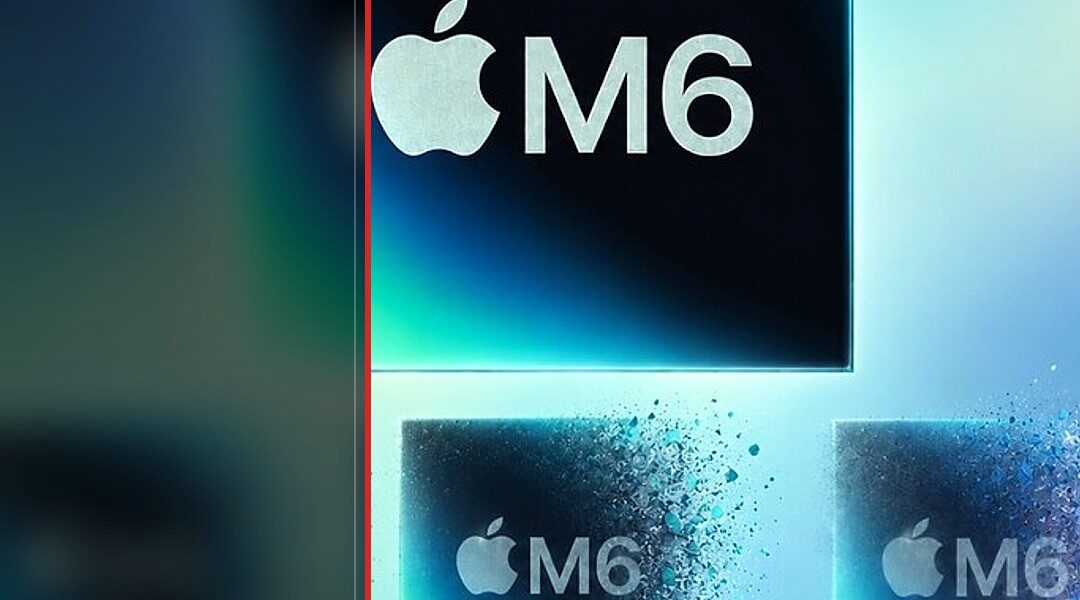
Apple’s decision to skip the M6 Pro and M6 Max reflects a strategic pivot towards more unified chip launches, hinting at a significant shift in Apple’s Silicon roadmap.
The tech giant Apple has made headlines by introducing multiple MacBook models this year, all powered by the same chip series without progressing to the anticipated M6 Pro and M6 Max versions. This development marks a shift in Apple’s Silicon strategy, effectively altering the familiar roadmap established with its ARM-based chips.

The Apple Silicon journey began six years ago as the company moved away from Intel’s x86 architecture. With each iteration, Apple consistently introduced a base chip, followed by its more advanced ‘Pro’, ‘Max’, and ‘Ultra’ versions. However, the M6 series appears to be an anomaly. Despite the introduction of the base M6 chip, Apple has refrained from revealing its Pro and Max counterparts, signaling a potential deviation in strategy.
The M6 and Apple’s Strategic Realignment
This year saw the introduction of the M6 chip in devices like the Mac mini, iMac, and MacBook Pro. The M6 is notable for its construction using a 2-nanometer process, a first for Apple, which places it at the forefront of chip manufacturing technology. Nonetheless, despite these advancements, the absence of higher-performance variants suggests a broader strategic recalibration.
Apple reportedly aims to leap directly to the M7 series, rumored to feature a redesigned architecture that enhances both performance and efficiency. This shift indicates a strategic consolidation, emphasizing fewer, more significant generational releases.
Detected Pattern: Infrastructure Shift
The decision to skip the M6 Pro and M6 Max versions highlights an infrastructure shift. Apple seems to be optimizing its production and release cadence, possibly to streamline its supply chain and accelerate the adoption of more advanced chip generations. By foregoing interim upgrades, they might reduce redundancy and focus on delivering substantial improvements that align with broader market demands.
Implications for Users and Developers
For consumers and developers, this could mean a more predictable update cycle with less frequent transition costs between generations. Those relying on the Pro and Max models for demanding workflows might experience a gap but could also anticipate more substantial leaps in capability when upgrades occur.
Apple’s strategy dovetails with a trend towards unified platform experiences, minimizing fragmentation across its product lines. Additionally, this approach could help developers optimize applications for fewer chip variants, simplifying software support and potentially enhancing performance consistency.
A Glimpse into the M7 Future
According to industry leaks, the upcoming M7 series will likely debut in several devices, including the MacBook Air and iPad Pro. These models are expected to bypass the M6, transitioning directly from M5 to M7, illustrating Apple’s commitment to this new cadence.
Scheduled for release by spring, these devices may showcase not just cutting-edge performance but also a new, more integrated design philosophy. Aimed at unifying the generational leaps, these changes could redefine user expectations and set new standards in processing power and efficiency.
Conclusion and Outlook
Apple’s recent decisions reflect a significant shift in its silicon strategy, marked by a focus on fewer, but more impactful chip releases. This infrastructure shift could redefine how Apple approaches product development, echoing its broader emphasis on optimized performance and seamless user experiences.
As we anticipate the M7 series, the implications of this strategic pivot will unfold, potentially reshaping Apple’s role in the tech landscape. Monitoring continues.