
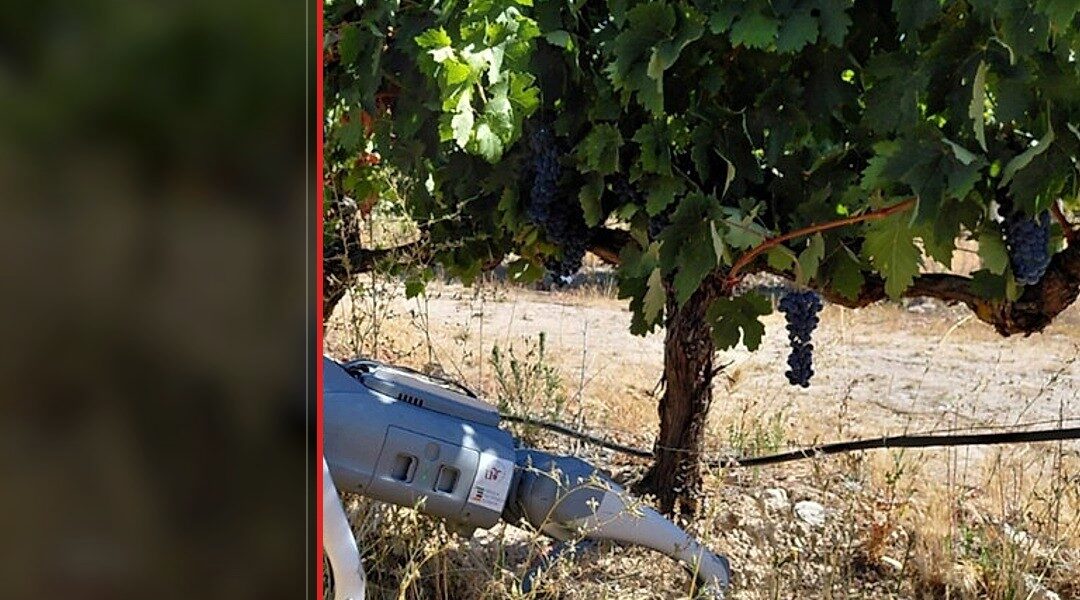
A robot dog equipped with AI is revolutionizing vineyards in Extremadura, offering precision agriculture a new mobile data platform.
In the lush vineyards of Extremadura, Spain, a new kind of sentinel patrols the fields: an AI-guided robot dog. This initiative, aptly named ‘AGRHOUND’, promises to redefine precision agriculture by bringing advanced data collection capabilities directly to the field.
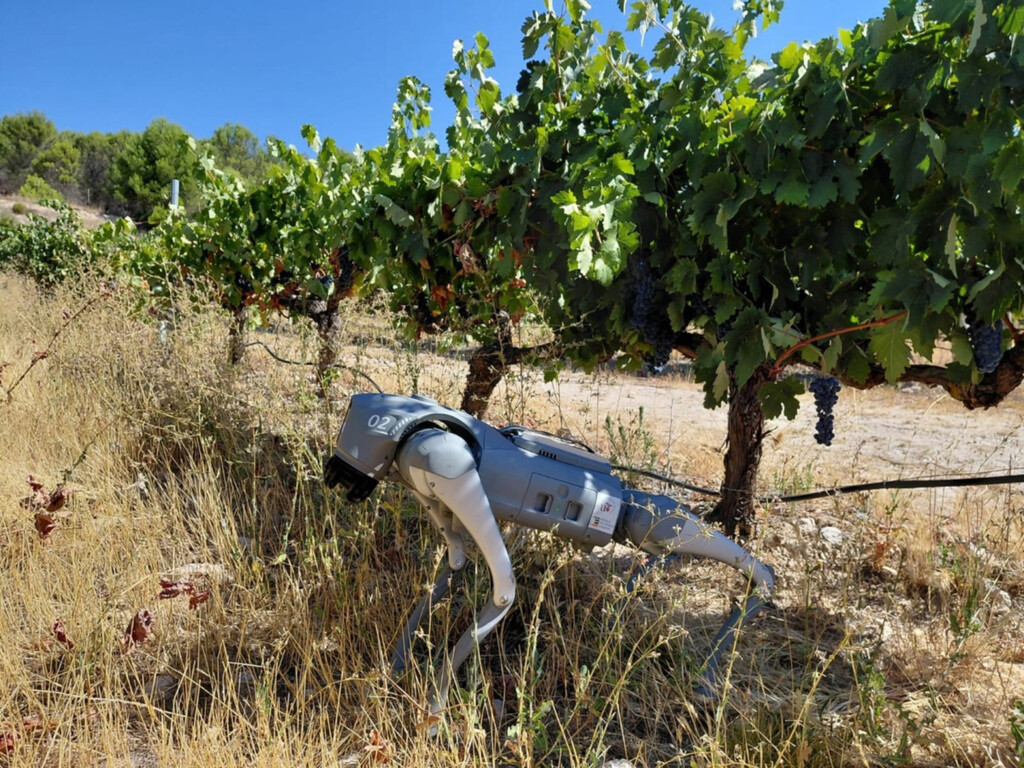
AGRHOUND is the brainchild of the Centro Tecnológico Agroalimentario de Extremadura (CTAEX), aiming to introduce a mobile data platform capable of navigating challenging terrains where traditional equipment might falter. According to Luis Muñoz, head of the project, the mission is clear: “put legs on precision agriculture,” enabling detailed, real-time data acquisition that leverages AI for actionable insights.
Revolutionizing Data Collection
Traditionally, precision agriculture in Extremadura relied heavily on static sensors, irrigation apps, and drones. This setup, as effective as it has been, presents limitations in direct ground-level data collection. By employing a quadruped robot, AGRHOUND can traverse uneven terrains, accessing areas previously out of reach. This mobile capability enhances the breadth and accuracy of data collected directly from the crops.
Enhancing Agricultural Insights
The robot, equipped with advanced sensors, is set to autonomously navigate various agricultural scenarios, from open fields to enclosed tunnels. It’s designed to build spectral maps that rate fruit maturity in real-time, guiding farmers on optimal harvesting times. As Muñoz describes, the robot will eventually distinguish between different zones autonomously, potentially altering the landscape of agricultural management.
System-Level Shift: Automation Layer
The introduction of this robot dog signifies a profound automation layer in agriculture. It is not merely about replacing human tasks but augmenting them through enhanced data visibility and process optimization. The robot acts as an interface between farmers and their fields, providing an unprecedented layer of automation that informs decision-making, thus streamlining agricultural practices.
Integrating with Existing Technologies
In conjunction with drones and existing sensor networks, this robotic system forms a comprehensive agricultural intelligence network. While drones offer aerial views and infrared imaging, the robot provides ground-level data that completes the information loop. This synergy enables a more holistic understanding of crop conditions, enabling precision agriculture to hit new heights.
Looking Ahead: Challenges and Opportunities
The AGRHOUND project, initiated in June 2026, will run until 2029. It is set to progress through phases focused on data collection and algorithm development, eventually scaling up to full operational capability during the harvest seasons of 2027 and 2028. The primary challenge lies in proving the robot’s utility and cost-effectiveness, as noted by Muñoz. However, early indications suggest promising advantages in operational efficiency and data accuracy.
Despite potential disruptions to traditional farming roles, the project leaders are keen to stress that their goal is not to replace humans but to enhance their capabilities. “With this robot, we could cover more ground in less time and access data currently difficult to obtain,” Muñoz explains, underscoring a vision of human-robot collaboration in agriculture.
As AGRHOUND underscores a shift towards agriculture 5.0, combining robotics, AI, and digital tools, it situates Extremadura as a forefront region in this technological revolution. The project is co-financed by the European Union and the Spanish Ministry of Agriculture, highlighting its strategic importance in future-proofing agriculture against environmental and economic challenges.
Observation recorded.