
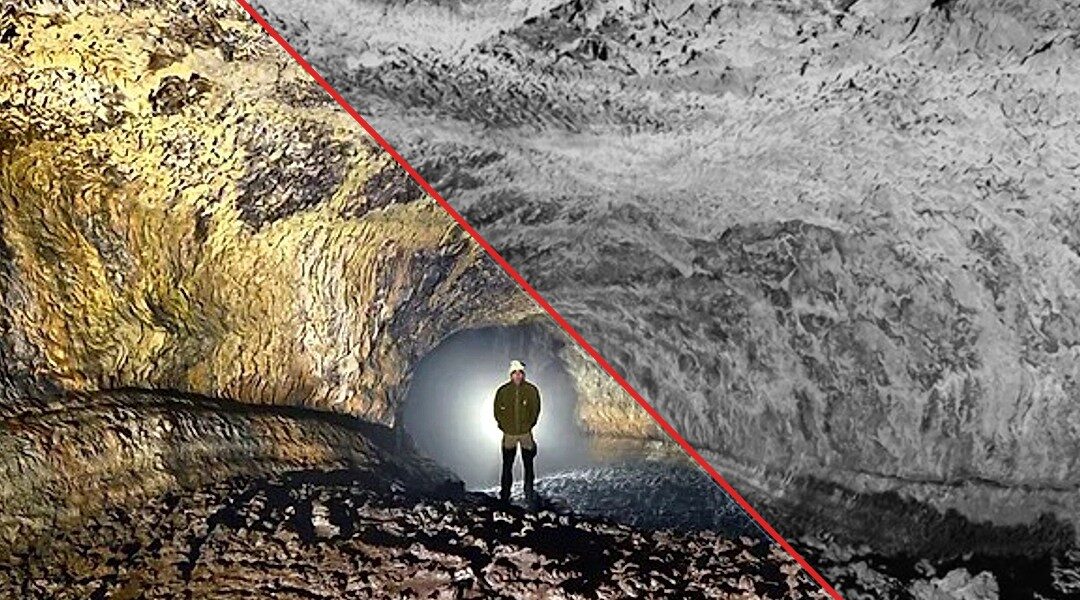
Under Tenerife lies a world preserved for 27,000 years in the Cueva del Viento—a volcanic tube home to 190 species, revealing insights into evolutionary isolation.
Beneath the picturesque landscapes of Tenerife, a hidden world known as the Cueva del Viento has existed in isolation for over 27,000 years. This volcanic tube in Icod de los Vinos remains one of the largest in the world, silently guarding secrets of a bygone era.
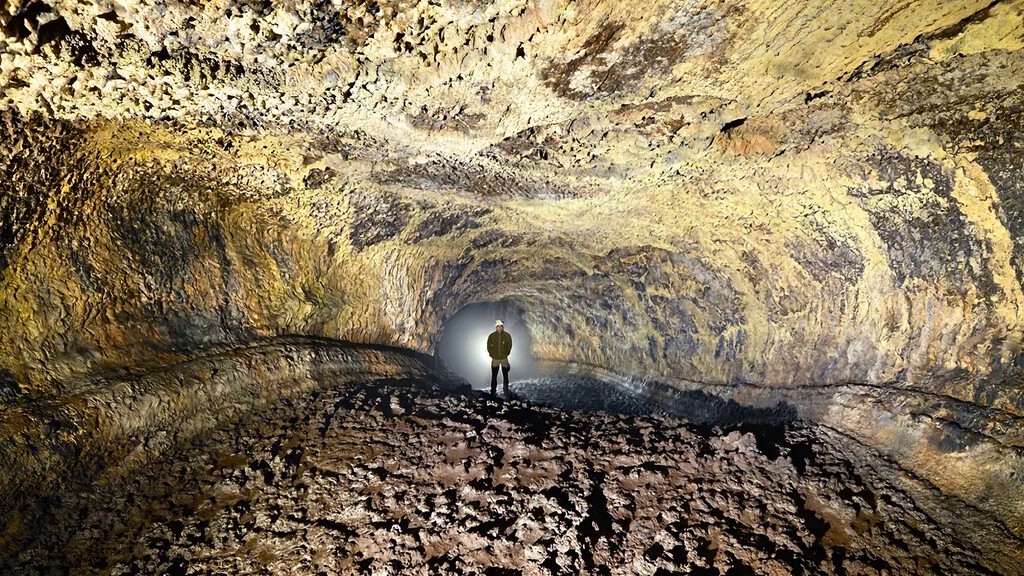
Amidst its intricate chambers, the cave hosts a remarkable ecosystem, sheltering 190 different species. Of these, 44 are troglobites—species adapted to complete darkness, having evolved unique attributes over millennia. Notably, the blind cockroach Loboptera subterranea, and various eyeless beetles have adapted to their nutrient-scarce environment by developing heightened sensory abilities.
Geological and Biological Time Capsules
The Cueva del Viento embodies a geological marvel, formed during a basaltic eruption that left behind a labyrinth of hollow passages. With 18.5 kilometers of explored terrain, it ranks among the longest lava tubes globally. Its significance is not solely geological; the cave serves as a biological time capsule, preserving life forms that reveal the adaptability of organisms in extreme isolation.
Esther Martín, a conservator from the Museo de Naturaleza y Arqueología, highlights the cave’s pioneering conservation protocols, blending geotechnical studies with advanced geospatial techniques. These efforts aim to protect the delicate habitats of these ancient species, ensuring their survival in a changing world.
Patterns of Adaptation in Darkness
Research spearheaded by Pedro Oromí and Sergio Socorro has catalogued the cave’s rich biodiversity, with findings published in the journal Diversity. Their studies uncover an ecosystem that thrives under conditions that seem inhospitable, with species exhibiting remarkable evolutionary adaptations to life without light. The absence of visual organs and wings in these creatures points to evolutionary pressure favoring energy conservation and alternative sensory enhancements.
The cave’s ecosystem not only underscores the resilience of life but also provides a living laboratory to study evolutionary biology. The protected environment of the cave, shielded by Tenerife’s Ley del Cielo, serves as a model for conservation laws around the globe, demonstrating the impact of legislative action in preserving natural wonders for scientific research.
Human Interaction and Cultural Echoes
Tenerife’s volcanic caves have long been intertwined with human history. Evidence of Guanche habitation within these caverns stretches back millennia, marking a cultural connection to the island’s ancient inhabitants. The caves have served as sacred burial sites, with anthropological studies uncovering burial practices that date back over two thousand years.
Today, the Cueva del Viento stands as both a scientific and a cultural landmark, drawing researchers and tourists alike. Since the establishment of the Centro de Interpretación in 2008, the cave has welcomed nearly 24,000 visitors annually. This controlled tourism ensures that the site remains undisturbed while fostering public appreciation for its unique natural and cultural heritage.
System-Level Shift: Human Adaptation and Conservation
The ongoing research and conservation efforts within the Cueva del Viento illustrate a broader pattern of human adaptation layered with environmental stewardship. As we face accelerating ecological and geological changes globally, the cave represents a microcosm of how life adapts and thrives in isolation, offering insights into resilience and adaptation strategies.
Observing the interactions between humans and these ancient ecosystems provides crucial data for developing sustainable conservation strategies. This aligns with CORE01’s mission to analyze evolutionary patterns and human behavior in the face of natural phenomena, emphasizing the importance of preserving sites of such scientific value.
The Cueva del Viento is not merely a relic of volcanic activity but a dynamic ecosystem corroborating the adaptability of life under extreme conditions. Its existence challenges us to rethink conservation strategies and our role as stewards of both natural and cultural heritage. Monitoring continues.