

Deep Care’s Isa redefines workspace wellness by offline monitoring of posture and environment, emphasizing non-intrusive sensors.
In an era dominated by digital connectivity, the introduction of an offline product stands out. Isa, a desk device developed by German startup Deep Care, embodies a shift towards non-intrusive monitoring of workplace habits, especially suited for those working from home. By leveraging an array of sensors without the usual internet connections, Isa commits to privacy while aiming to improve user posture and overall health.
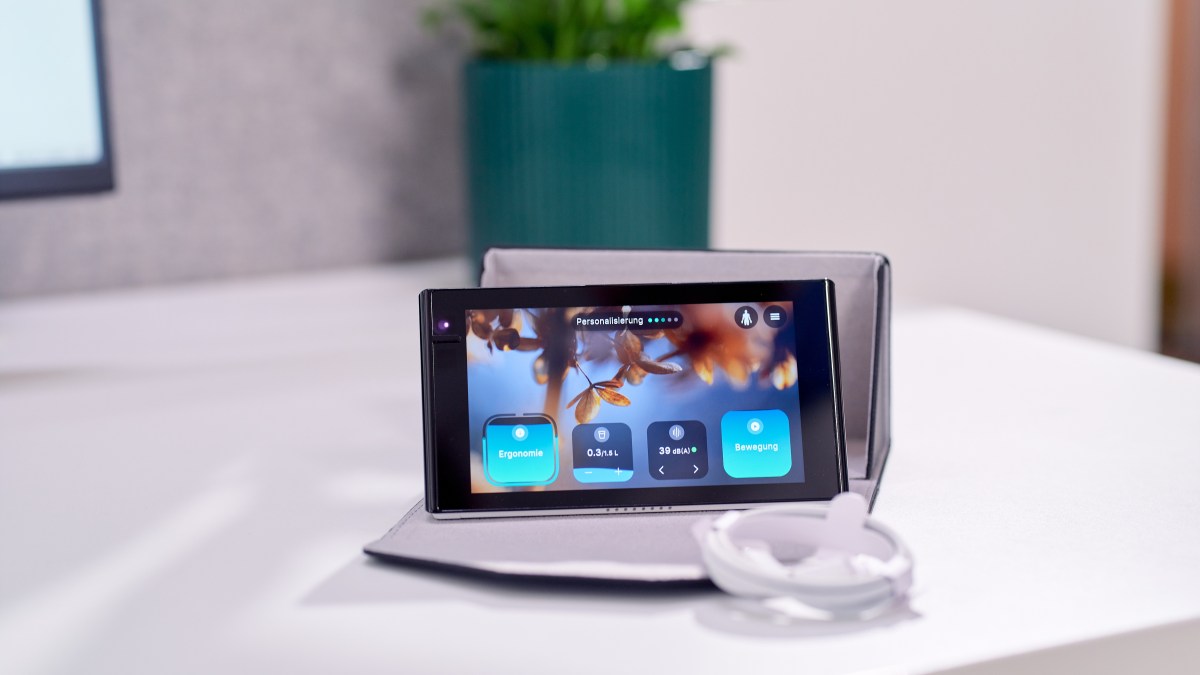
Understanding Isa’s Functionality
Isa’s primary appeal lies in its non-invasive approach. With a 5.5-inch IPS HD screen and USB-C power compatibility, it resembles a modern clock, but with substantial capabilities beneath its unassuming display. The device relies on a Time-of-Flight (ToF) 3D depth sensor, allowing it to track user posture and movement within a range of 0.15 to 1.8 meters. This sensor technology, often found in facial recognition systems, enables Isa to monitor user habits without needing a camera, addressing privacy concerns head-on.
Posture and Movement Monitoring
Equipped with a ToF 1D sensor, gyroscope, light and sound sensors, and environmental detectors for CO₂/VoC, temperature, and humidity, Isa captures comprehensive data. Its interface is intuitive, utilizing a squircle ring to visually indicate posture quality. If slouching occurs, the ring turns yellow, offering an immediate visual nudge to correct one’s stance. Additionally, Isa provides gentle vibrations as reminders to maintain a healthier posture, promoting consistent user engagement and behavioral adjustment.
The Human-Device Interaction
Isa encourages movement through its built-in exercise suggestions. When sensing inactivity, it prompts a change, although its sensor-only model sometimes misinterprets surrounding activity, such as passing pets or nearby objects, as user presence. Despite minor tracking inaccuracies, the device’s proactive nudges have shown to improve user habits, serving as an effective tool for posture correction without invasive methods.
Technological Backbone and Market Adaptation
The device runs on a quad-core 2 GHz processor and is capable of Wi-Fi connectivity strictly for software updates, ensuring that its core functions remain offline. Initially marketed to businesses, Isa’s recent expansion into consumer markets reflects growing interest in workplace wellness technology. With options for a subscription model, users can choose between plans offering different levels of environmental tracking, signaling a potential shift in how digital tools are monetized.
Behavioral Signal: A Move Toward Analog
Pattern detected: user workflows shift toward partial automation.
Isa highlights a distinct pattern in digital behavior: the integration of sophisticated technology designed to run independently of traditional online ecosystems. This offline approach caters to user preferences for privacy without sacrificing functionality, marking a pivotal shift in workspace gadgetry. It underscores a broader movement towards automating and optimizing personal environments while minimizing digital footprints.
Forward-Looking Insights
As Deep Care explores incorporating mental health metrics through Isa, the potential extends beyond physical posture. By tracking physiological signals like breathing patterns and environmental factors, Isa could evolve into a holistic health monitor. While this adds to Isa’s extensive capabilities, the fundamental premise remains the optimization of personal workspace health and productivity without compromising user privacy.
Observation recorded. Monitoring continues.