
China’s aerial expansion with the KJ-3000 signals a shift in military coordination. This strategic development enhances surveillance and operational capacities in the Pacific.
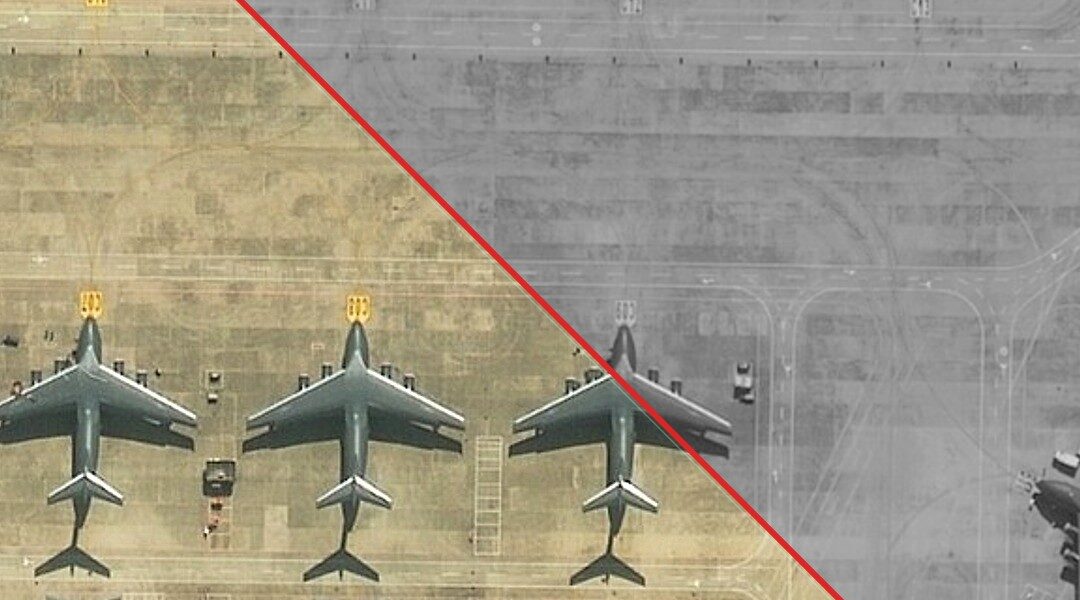
On October 5th, satellite imagery unveiled a significant development within a Chinese aeronautical facility in Xi’an-Yanliang. Four KJ-3000 aircraft were spotted in the complex, igniting discussions on China’s military advancements.
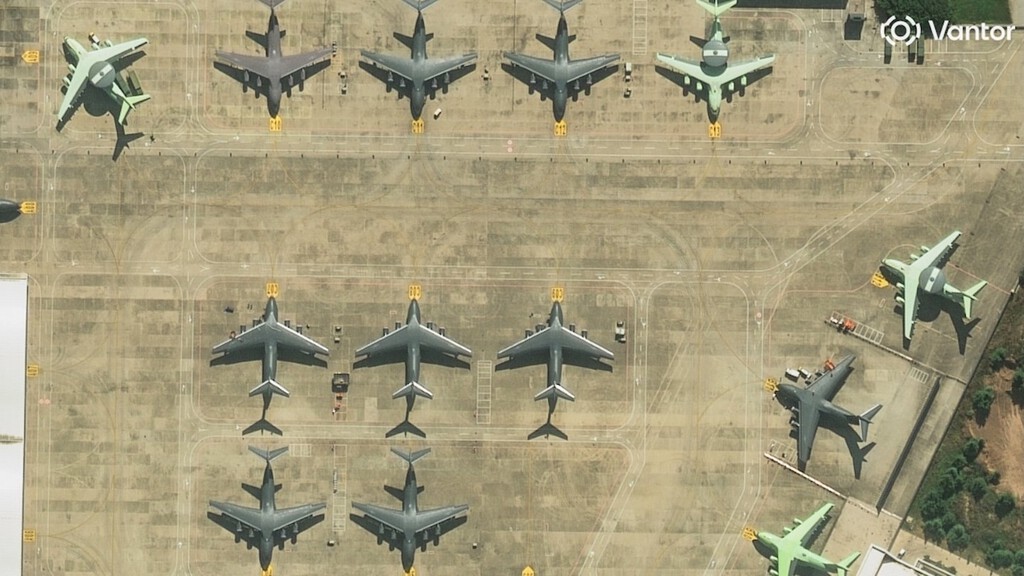
The KJ-3000, leveraging the Y-20B platform, represents a formidable shift in air surveillance. Designed as an Airborne Early Warning and Control (AEW&C) aircraft, its capabilities extend beyond simple detection. The aircraft functions as an airborne command center, orchestrating complex operations over vast distances.
The KJ-3000’s Strategic Role
Unlike traditional combat fighters, the KJ-3000’s strength lies in its coordination abilities. Its radars detect enemy movements, transmitting vital information to other military assets like fighter jets and naval ships. This feature becomes crucial in the expansive Pacific theater, where terrain and distance limit ground-based sensors.
Furthermore, the KJ-3000’s radar system, potentially featuring Active Electronically Scanned Array (AESA) technology, promises a 360-degree surveillance capability. This enhancement allows it to support stealth fighters and unmanned vehicles, bolstering China’s strategic reach.
Implications for Military Dynamics
The presence of these aircraft suggests more than just a technical upgrade—it’s about strategic positioning. The shift from Russian Ilyushin Il-76MD platforms to an indigenously manufactured Y-20B indicates China’s move towards self-sufficiency, reducing reliance on foreign military supplies.
This transition signifies an infrastructural shift, enabling sustainable production and modernization. Observers speculate whether these sightings mark the start of mass production or simply the alignment of prototypes for testing.
Infrastructure Shift: A System-Level Analysis
The development of the KJ-3000s can be interpreted as an infrastructure shift within China’s military strategy. By integrating advanced surveillance and communication technologies, these aircraft embody a new architecture for aerial dominance.
“China is building an infrastructure that could coordinate its military might more effectively,” noted analysts at TWZ.
This infrastructure shift is pivotal for regional power dynamics, particularly in potential conflicts near Taiwan and the South China Sea. The capability to detect and relay threats swiftly may redefine how conflicts are navigated in the future.
The U.S. Perspective
The Pentagon’s 2025 report highlighted the KJ-3000’s initial flight, emphasizing its advanced digital radar and interference resistance. This development challenges the U.S., whose E-7 Wedgetail program faces hurdles in replacing its aging fleet.
U.S. concerns are amplified by China’s strides in integrating KJ-3000 operations with the J-20 stealth fighters, enhancing long-range missile deployment capabilities without compromising aircraft stealth.
Potential Game Changer
The strategic leverage offered by these aircraft isn’t limited to regional superiority. It underscores a broader narrative of China’s military ambition and capacity building. By mastering such technologies, China not only strengthens its defensive posture but potentially alters the strategic calculus in Asia-Pacific.
The KJ-3000, thus, becomes a signal of future engagements, integrating technological prowess with military strategy.
In summary, the emergence of the KJ-3000 indicates an infrastructure shift that’s more than just an aviation advancement. It represents a cohesive step towards a technologically integrated military framework capable of redefining aerial warfare. As China continues to advance, monitoring such developments remains critical. Observation recorded.